
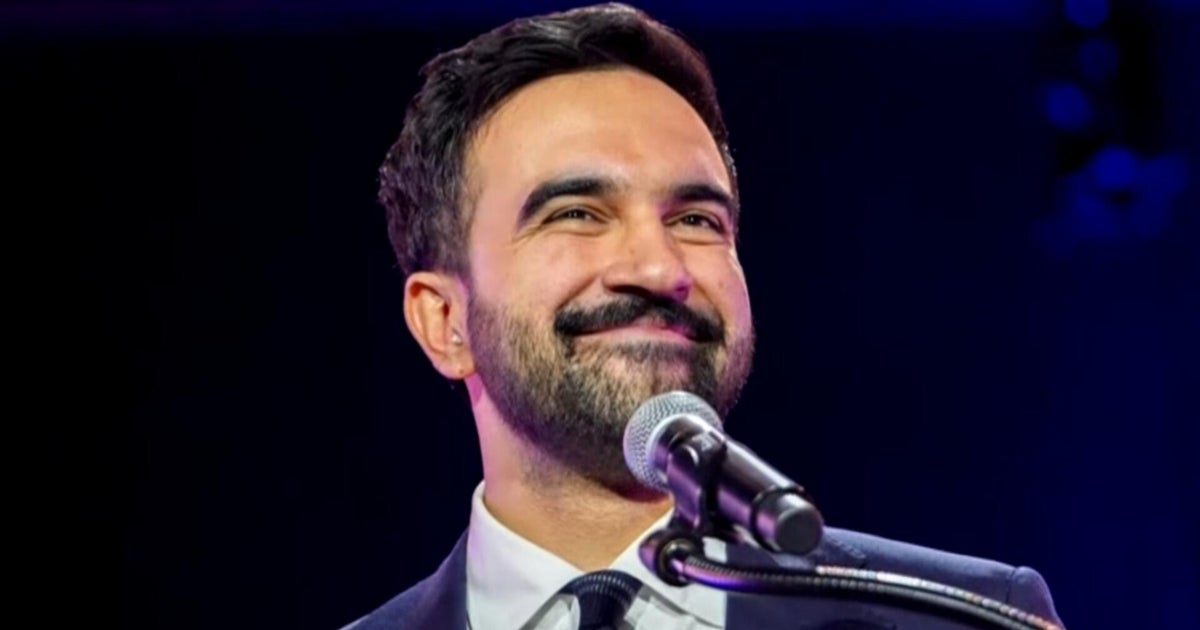
Zohran Mamdani promised during the New York City mayoral campaign to take a new approach to public safety, if elected.
Following his resounding victory on Tuesday night, all eyes will now be on how he tries to make good on many of his policy proposals, including potentially spending $1 billion on a Department of Community Safety, which he says would give civilians some of the responsibilities currently handled by police officers.
How the Department of Community Safety would work
The centerpiece of the projected winner’s public safety plan relies on mental health workers responding, before the NYPD, to certain situations involving emotionally disturbed individuals — like some homeless people on the subways.
Mamdani said he believes the current size of the NYPD is appropriate, and has not called for increasing the number of officers. However, he said he would instead change existing officers’ responsibilities, freeing up more of them to do what they signed up for and are trained to do, like respond to shootings, murders and other serious crimes.
“Our vision for a Department of Community Safety, the DCS, is that we would have teams of dedicated mental health outreach workers that we deploy to the hundred [subway] stations with the highest levels of mental health crises, to respond to those incidents and get those New Yorkers out of the subway system and to the services that they actually need,” Mamdani said in a September interview on CBS News New York’s “The Point with Marcia Kramer.”
In addition to the mental health response, the Department of Community Safety would be tasked with funding hate crime and gun violence prevention programs, his campaign has said.
Mamdani said he does not expect challenges finding enough people to fully staff the department.
“We have to pay people what they’re worth,” he said.
How the proposed DCS differs from B-HEARD
The Behavioral Health Emergency Assistance Response Division, or B-HEARD, is a pilot program currently in use in the city. It is similar to Mamdani’s proposal, but reports show approximately 60% of calls are ineligible for a social worker response because they involve suicidal people or other dangers where police are needed.
“Even if it is 60%, that would still mean 40% that you’re reducing from police responsibility that would allow them to [improve] their response times to serious crimes across the city,” Mamdani said.
Mamdani said part of the reason he ran for mayor was to see the promise of various pilot programs fulfilled, “because we’re not seeing it right now.”
According to testimony from a New York City Council hearing, the NYPD currently responds to approximately 180,000 calls per year involving emotionally disturbed individuals. Mamdani said he believes he can create a program similar to one in Oregon, where an overwhelming number of those types of calls were handled without police involvement.
“You always could call upon them, but knowing that the first instinct would be able to respond to them without asking the police to do so. It changed their [police department’s] nature,” Mamdani said.
More from CBS News