
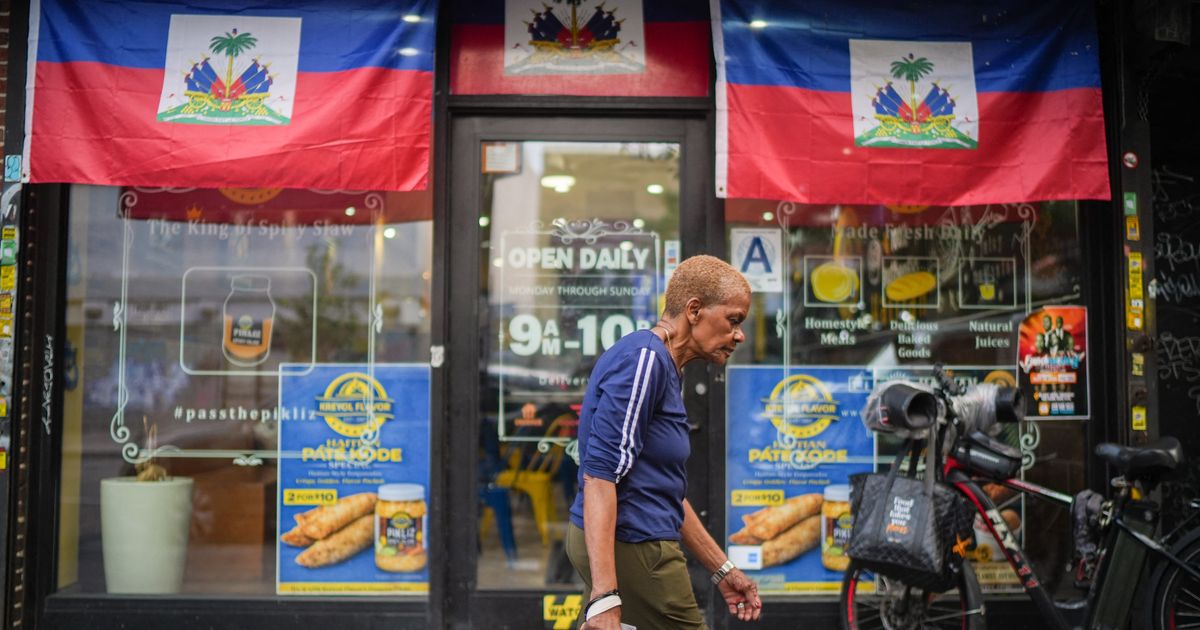
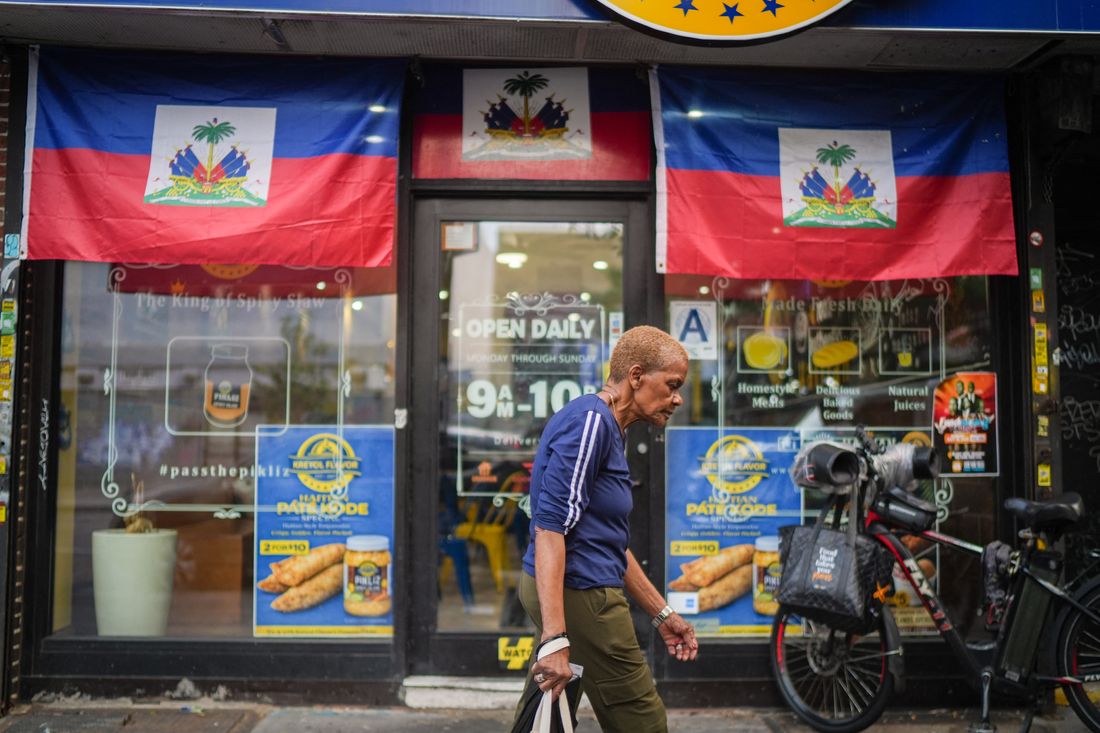
In Little Haiti, residents fear a coming immigration crackdown.
Photo: Ryan Murhy/AFP
In June, when the U.S. Supreme Court ruled the Trump administration could end the temporary protected status program for Haitians, it was clear that thousands of immigrants in the city would become vulnerable to deportation. Border czar Tom Homan had recently promised “more ICE agents than you’ve ever seen in New York City.” And nowhere seemed more exposed than Little Haiti, the enclave at the intersection of Church and Nostrand Avenues in East Flatbush that is the heart of one of the largest Haitian expat communities in the country. Since the federal government announced the official end of TPS for Haitians in July, people have been afraid to show themselves. “We’re seeing less folks outside,” says Rita Joseph, the city councilmember for the neighborhood.
So far, the city and its half a million undocumented immigrants have been spared the shock-and-awe approach that engulfed Minneapolis, Chicago, and Los Angeles. But that does not mean Homan’s pledge was an empty one. Instead of raids with camera crews in tow, the ongoing deportation campaign here has been “diffuse,” says Deborah Fleischaker, who was ICE chief of staff under President Biden. “It’s less of a show of force,” she says, “but the force is the same.”
ICE appears to be spreading across the city. There have been multiple sightings in Bushwick, Inwood, and East Flatbush. Detentions are on the rise with “at least 21 confirmed abductions” just in the last week of July, according to Murad Awawdeh, head of the New York Immigration Coalition. (The count the previous week was two.) As we speak in Little Haiti, Joseph is interrupted by an alert on her phone. “ICE is in Corona,” she says, reading from a group chat. “They picked up one person.”
It’s uncertain whether ICE’s operation will look like this through the summer or if we are just seeing the prelude to a larger surge. The threat of masked federal agents storming the streets still hangs over New York. The Trump administration has not backed down from its pledge to increase deportations. “It’s closing time,” a Homeland Security spokesperson told me when I asked about the efforts to remove TPS recipients from the city. “You don’t have to go home, but you can’t stay here.”
In theory, no city should be better prepared for ICE. Like more than one in three New Yorkers, Mayor Zohran Mamdani is an immigrant. He campaigned on a vow to “fight each and every day” to protect immigrants in the city. But that promise — like the one he made to arrest Israeli prime minister Benjamin Netanyahu to enforce the ICC’s arrest warrant for charges of war crimes — also has Mamdani running into the limits of his power. A sanctuary city can provide legal aid and refuse help to a federal government bent on removing undocumented people from their homes. But the mayor cannot stop federal agents from enforcing the law. There is a wide gap between his rhetoric and what he, or any other elected official in New York, can actually accomplish.
Local officials are not totally powerless, however. To handle the unseen churn of deportations in the courts, New York City has allocated $153 million for immigrant legal services, and more money is expected to be announced soon. Both the mayor and the police department have made clear that “it is not the mission of the NYPD to participate in federal civil immigration enforcement.” Still, there is tension between police and activists, and there have been incidents where it’s unclear if the NYPD is fully divorced from ICE.
In May, City Councilmember Sandy Nurse says, cops held off protesters as federal agents dragged a Nigerian migrant through the ambulance bay of Wyckoff Heights Medical Center. The mayor said there had been “no prior coordination” between the NYPD and ICE at the Bushwick hospital. But Nurse, who was on the scene that night, says it was obvious the coordination “was not ad hoc.” During the standoff with protesters, an NYPD officer suggested the mayor and his antagonistic stance toward ICE would not last. “Who’s Mamdani?” asked Captain James Wilson, who was later transferred out of the precinct. “He’s a temporary.”
“We just want to know how the police plan to operate,” Nurse tells me. “What is the risk of showing up to defend our community?” With the lack of clarity about ICE enforcement, migrants I spoke to have expressed a fear of leaving home or going to work. “I have been driving a car with a driver’s license for the last 28 years,” one Salvadoran man who is about to lose TPS tells me. “And suddenly I will be without work authorization and I can get arrested for driving.”
Some think the administration could have been more prepared from the beginning. In December, a month after Mamdani’s election, Stephanie Delia, the president-elect of the Haitian American Lawyers Association of New York, warned this moment would come. A few days after the federal government announced the end of TPS for Haitians, Delia was part of a meeting at City Hall that included Haitian community leaders speaking for TPS recipients in the boroughs. She says she told the mayor’s team the scramble to prepare legal services was unacceptable: “We’re doing the same damn thing today that you were doing months ago, and people are going to suffer. Immigrants believed — hell, I believed — in you.”
Some New Yorkers have pushed back directly. In Bushwick, protesters have screamed at ICE agents to stop knocking on doors without a warrant. A 72-year-old woman recorded ICE interactions in Inwood (and was pepper-sprayed in the face by a masked officer). In Elmhurst, federal agents who took an injured detainee to the hospital had their tires slashed.
The state has tried to avoid the violence between federal officials and protesters seen in other cities. “If we saw anything of the scale we saw in Chicago or Minneapolis,” Governor Kathy Hochul says, “New York would be a tinderbox. It would just explode.” She tells me she has urged the president in the past not to send ICE agents to New York City. And in May, she made modest inroads to protect New Yorkers from ICE, creating a new pathway for people to sue the agency if their rights are violated and blocking agents from entering schools or shelters without a warrant. “The big part was to stop the agreements localities had with ICE where they would use local police officers as ICE agents for purposes of civil immigration,” Hochul says. “I don’t want local cops being distracted from their jobs.”
But for many politicians, there is a helplessness to watching the immigration system at work. They have found themselves serving as activists and community organizers: texting lawyers, attending protests, and arranging legal aid.
On a Wednesday morning in August, I met Brad Lander — the likely next representative of the Tenth Congressional District — as he sat with his backpack at his feet in the last row of a federal immigration courtroom on Varick Street. The judge, a former ICE prosecutor, sped through the cases of children who had been separated from their parents or adult siblings and were calling in on video through a translator.
In a previous visit, Lander was able to secure an advocate for a detained child who did not have representation. But today he could only throw up his hands in frustration as the judge told more than a dozen undocumented children sitting around a table in an anonymous federal detention room that they had just a few weeks to find an attorney. She also told them the government was not responsible for paying for their right to a lawyer in federal immigration court. “Did you understand everything I said to you today?” the judge asked. Lander couldn’t help but laugh under his breath. “They’re all kids,” he said to me. “It’s not meaningful to ask them if they understood.” For now, there is little he can do in federal courts like these. “Many times you go,” he says of the proceedings for separated children, “you’re bearing witness.”
Thank you for subscribing and supporting our journalism.
If you prefer to read in print, you can also find this article in the August 10, 2026, issue of
New York Magazine.
Want more stories like this one? Subscribe now
to support our journalism and get unlimited access to our coverage.
If you prefer to read in print, you can also find this article in the August 10, 2026, issue of
New York Magazine.