
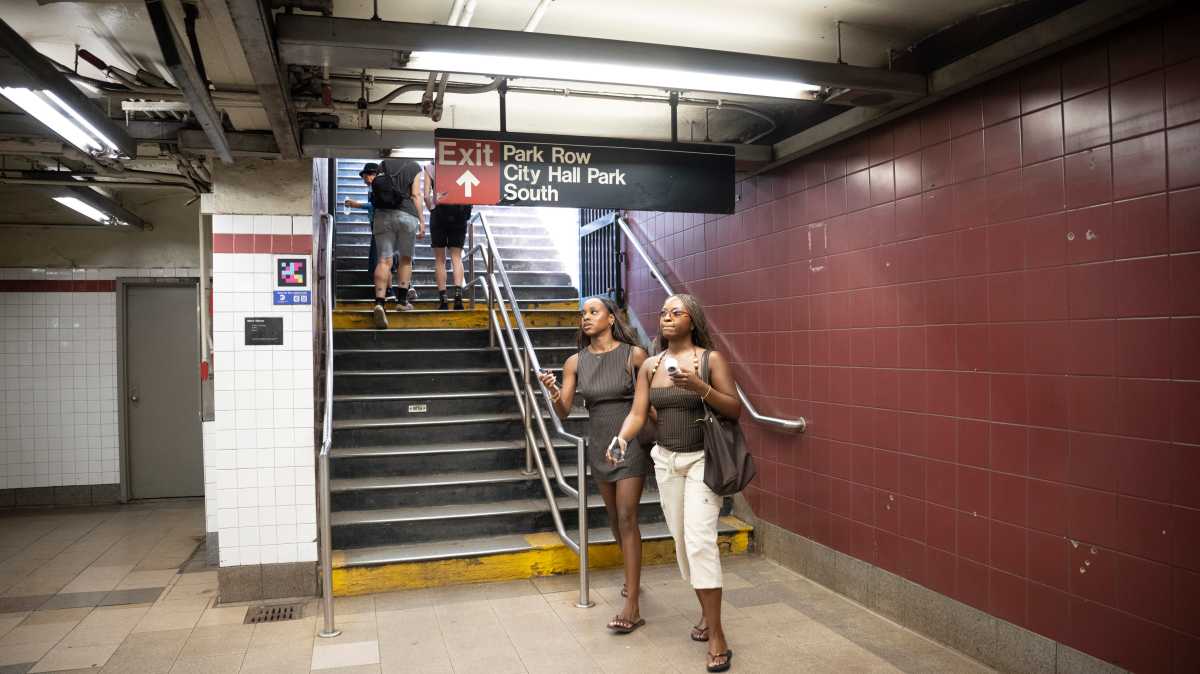
But riders may soon be granted some relief from the sweaty conditions, as MTA Chair and CEO Janno Lieber and Mayor Zohran Mamdani announced Monday that they will study technology designed to remove heat from subway stations through the end of this year.
The state-run MTA and city will study Thermal Energy Network (TEN) technology in the Brooklyn Bridge-City Hall 4/5/6 station and attached Chambers St J/Z station over the next few months, officials said during an Aug. 10 news conference on Chambers St’s abandoned center platform.
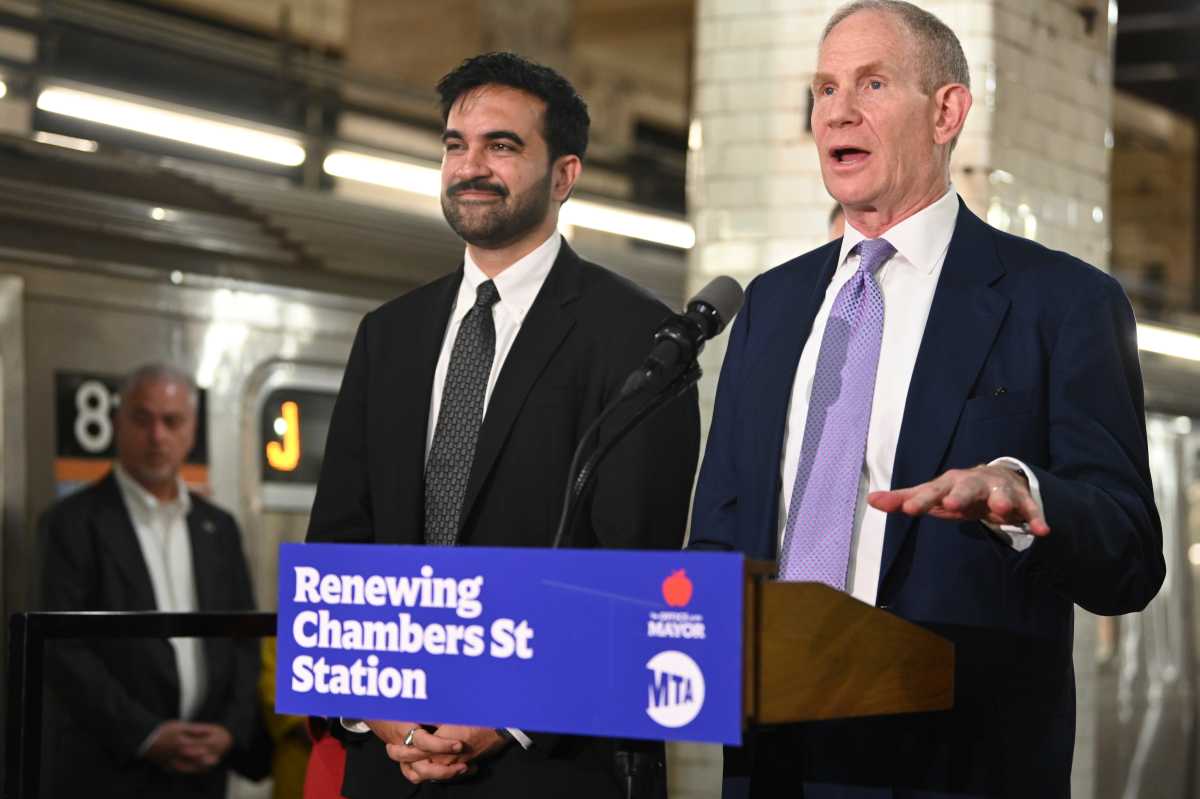 MTA Chair and CEO Janno Lieber and Mayor Zohran Mamdani announced the transit agency and city are studying technology to remove heat from train stations. Monday, Aug. 10, 2026.Photo by Lloyd Mitchell
During the event, Lieber acknowledged that the best way to prevent riders from waiting on boiling-hot platforms is to have trains arrive more quickly and consistently. But he said they are still looking at methods for lowering station temperatures.
“The best way to combat the experience of excessive heat is with fast and reliable train service, so people get on and off the platforms as quickly as possible into an air-conditioned subway car,” Lieber said. “But at the same time, we are exploring a lot of possible solutions to make the stations more comfortable, starting with the feasibility study.”
The $800,000 study comes after the MTA last week announced a broader project to overhaul the Chambers St station, one of the most dilapidated in the system. The transit agency is seeking a contractor to take on the project, for which it has not yet provided an estimated cost.
The technology, which officials said has never before been tested in an American transit system, is supposed to capture heat, store it, and transfer it to buildings for use during the year’s colder months. It aims both to cool stations down and create a more sustainable energy source as the effects of climate change continue to put pressure on the power grid.
The study is being conducted jointly by the MTA, the city Department of Citywide Administrative Services (DCAS), and the Mayor’s Office of Climate and Environmental Justice. It seeks to identify both how much it can lower temperatures in the station by and how much it would save the city on heating costs.
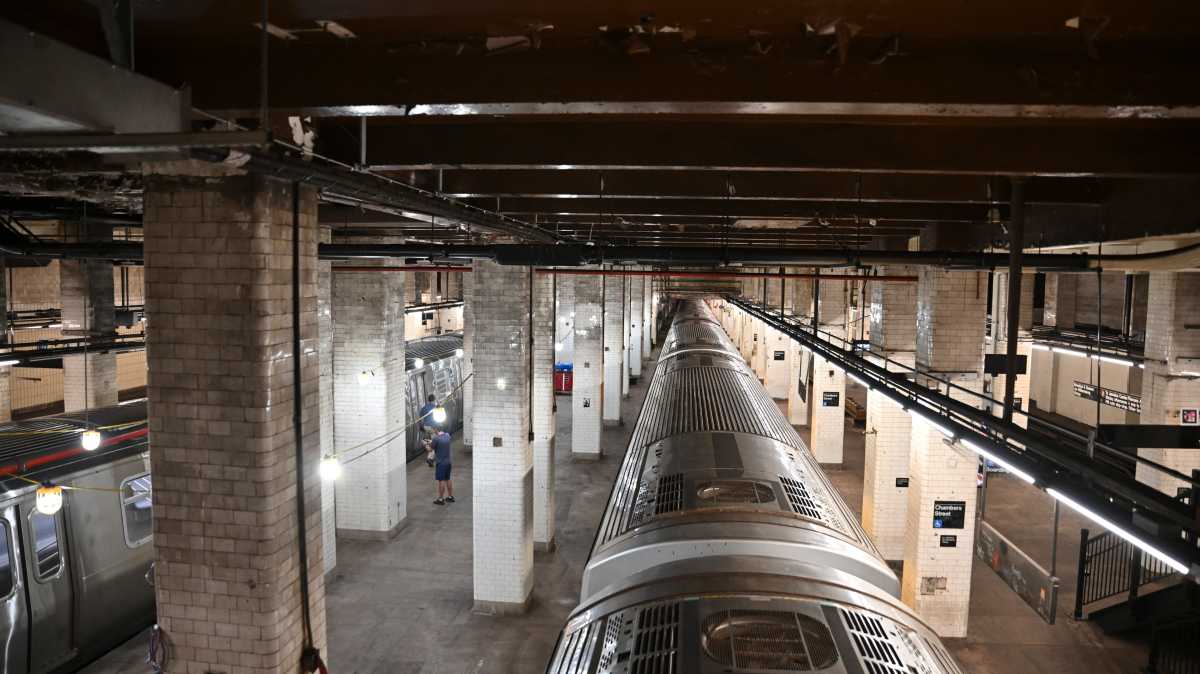 A view of the Chambers St J/Z station, where the MTA and the city will be studying technology to capture heat and transform it into energy. Monday, Aug. 10, 2026.Photo by Lloyd Mitchell
Officials noted that they chose the station complex not only because of its piping connections to the municipal buildings above it, but also because Brooklyn Bridge City Hall is one of the steamiest subway stations in the system — reaching an average temperature of 96 degrees Fahrenheit last summer.
“Anyone who has stood on a subway platform in August knows that our stations do not just get hot; they turn into underground saunas,” Mamdani said. “This thermal energy network feasibility study will explore the possibility of using the heat that accumulates in this station over the summer to heat the municipal campus above us come winter.”
The city government buildings that could be heated by the technology, Mamdani said, include City Hall, the David Dickens Municipal Building, the Tweed Courthouse — home to the city Department of Education — and the Surrogate’s Courthouse.
The TEN system involves the MTA boring 500 to 600-foot-deep holes right beneath the abandoned center platform in the Chambers St station, officials said. The boreholes will capture and store heat from the station complex until winter, when a series of pumps and pipes connected to the holes will transfer the stored heat into nearby municipal buildings for warmth.
However, the study itself will not involve digging any holes, according to MTA spokesperson Kayla Shults.
Lieber said the MTA believes the platform is the “most advantageous location relative to both the underground conditions and also the connectivity to the underground piping network that feeds City Hall and the other buildings that are served by this connected network.”
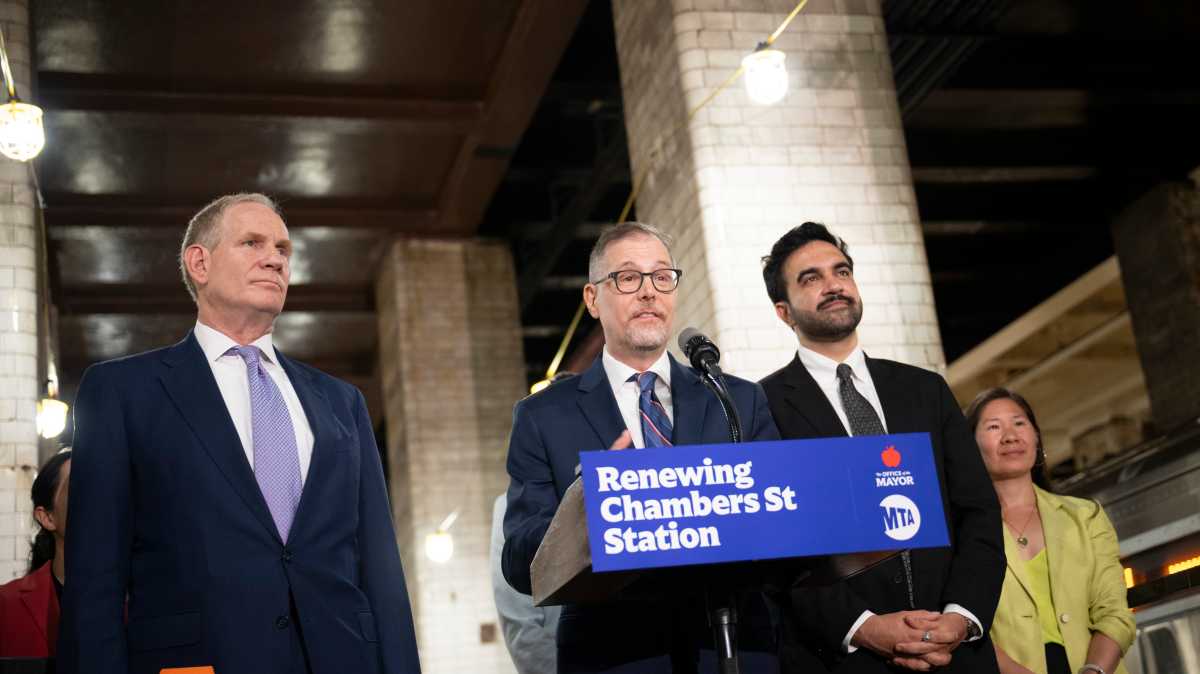 City Comtrollper Mark Levine. Monday, Aug. 10, 2026.Photo by Lloyd Mitchell
City Comptroller Mark Levine, who was also present at the event, said they could replicate the heat capture model across the five boroughs if the study proves successful.
“It can be applied in many, many, many other places,” Levine said. “Subway stations, but also other heat-producing facilities all over the city … This could be a model which we can take citywide to bring energy resiliency and more clean energy and solve problems in hot parts of the city as we confront global warming.”