
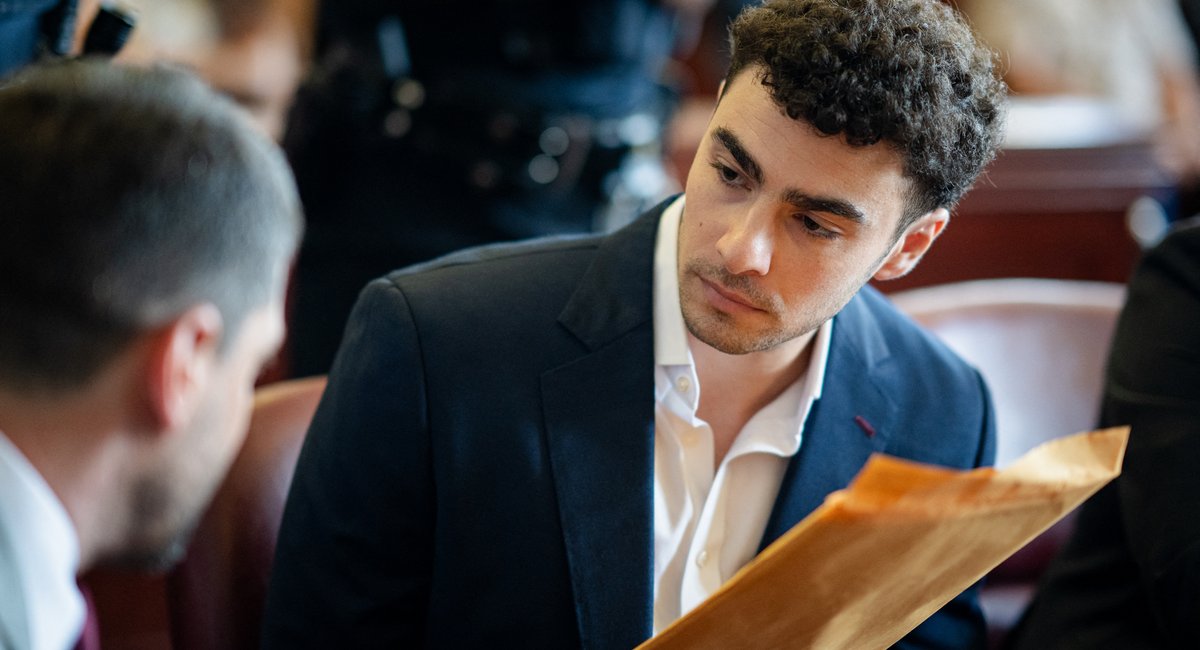
Luigi Mangione appeared in court on Tuesday for what is expected to be his final appearance before a high-profile criminal trial next month.
Mangione, 28, has pleaded not guilty to second-degree murder and other state charges in the 2024 killing of UnitedHealthcare CEO Brian Thompson. He also faces stalking charges in federal court.
Prosecutors have accused the Ivy League graduate of following Thompson to New York City and shooting him outside a Midtown hotel. They say a notebook he had with him when he was arrested described his plans to “wack” a health insurance CEO.
The case has garnered international attention, sparking condemnation from law enforcement and fear among some executives in the country’s economic capital. Meanwhile, a devoted pack of supporters has flocked to Mangione’s court appearances and flooded him with mail at the Brooklyn detention center where he is being held pretrial.
Mangione sat quietly at the defense table in a gray suit as reporters, social media influencers, supporters and other onlookers filled virtually every seat in the 13th floor Manhattan courtroom.
Justice Gregory Carro said jurors will remain anonymous at the upcoming trial, which means their names won’t be shared with the public. Typically, potential jurors identify themselves in open court when they’re questioned and selected to serve in a trial. But in high-profile cases, their names are sometimes withheld to protect their privacy and safety. The state legislature passed a law in 2024 that allowed courts to hide the names and addresses of jurors when they believe a trial could pose a threat to their safety and wellbeing.
Given the attention to the case, the court is taking various steps to expand access to the media and the public during trial, Carro said. He said a larger number of reporters than initially expected will be allowed to sit in the courtroom, and an overflow room will also be available for additional members of the press and public.
Mangione’s attorneys filed a letter last month objecting to any process in which court staff and the Manhattan district attorney’s office “hand-pick the reporters permitted to attend.” They said their client has a Sixth Amendment right to a “fully public, open and unbiased trial.” The defense asked for a hearing to find out whether the DA’s office was involved in choosing which members of the press would be allowed in the courtroom.
The DA’s office denied any role in the process in its own letter to the judge last week and said the Office of Court Administration was solely responsible for the trial’s media access plan. Court officials have compiled a list of press who must line up early before each court appearance but have guaranteed spots in the courtroom, including Gothamist.
“The defense’s baseless accusation thus appears to be nothing more than an attempt to spread misinformation about this case and delegitimize the proceedings,” Senior Trial Counsel Joel Seidemann wrote to the judge.
In court Tuesday, Carro said the DA’s office never participated in discussions about court access.
“Any suggestion that the district attorney is involved is simply incorrect,” he said, adding that the defense’s allegations of secrecy is “a reckless mischaracterization.”
“I don’t want to hear any more about this,” he said.
After discussing courtroom access, prosecutors and Mangione’s lawyers approached the judge’s bench to quietly discuss the jury selection process.
Carro said each side had submitted a proposed questionnaire for potential jurors and asked the prosecution and defense to each weigh in on the questions they agree or disagree with before he makes a final decision.
Barely 15 minutes after the proceedings started, the judge wished everyone a good rest of their summer, and the once-full courtroom emptied out.
This story has been updated with additional information.