
The firing of thousands of Haitian TPS workers is a direct consequence of Mullin v. Doe, yet significant constitutional questions remain as to whether the implementation of that decision deprives a uniquely vulnerable population of due process, equal protection, and other rights protected by the Fifth, Tenth, and Fourteenth Amendments.
But Mullin did not answer every constitutional question. While the Supreme Court addressed the federal government’s authority to terminate TPS, it left unresolved whether the manner in which state and local governments implement that decision creates independent constitutional concerns of their own.
In the wake of Mullin, New York City has moved to terminate Haitian TPS employees, resulting in the loss of employment, economic security, and participation in pension systems built through years, and in some cases decades, of public service. The Court accepted the government’s argument that its actions reflected a general opposition to TPS rather than hostility toward Haitians.
Yet the practical impact was anything but equal. The Court itself recognized that approximately 350,000 Haitian nationals were affected compared with roughly 6,000 Syrian nationals. That disparity matters.
Equal protection jurisprudence distinguishes between discriminatory intent and discriminatory impact. A policy may be facially neutral while imposing overwhelming burdens on a particular population. Here, the burden falls predominantly upon Haitians, a population that is overwhelmingly Black, immigrant, and uniquely vulnerable because of Haiti’s continuing political instability, humanitarian distress, violence, food insecurity, and governmental collapse. Whether a race-neutral explanation ends that inquiry remains an open constitutional question.
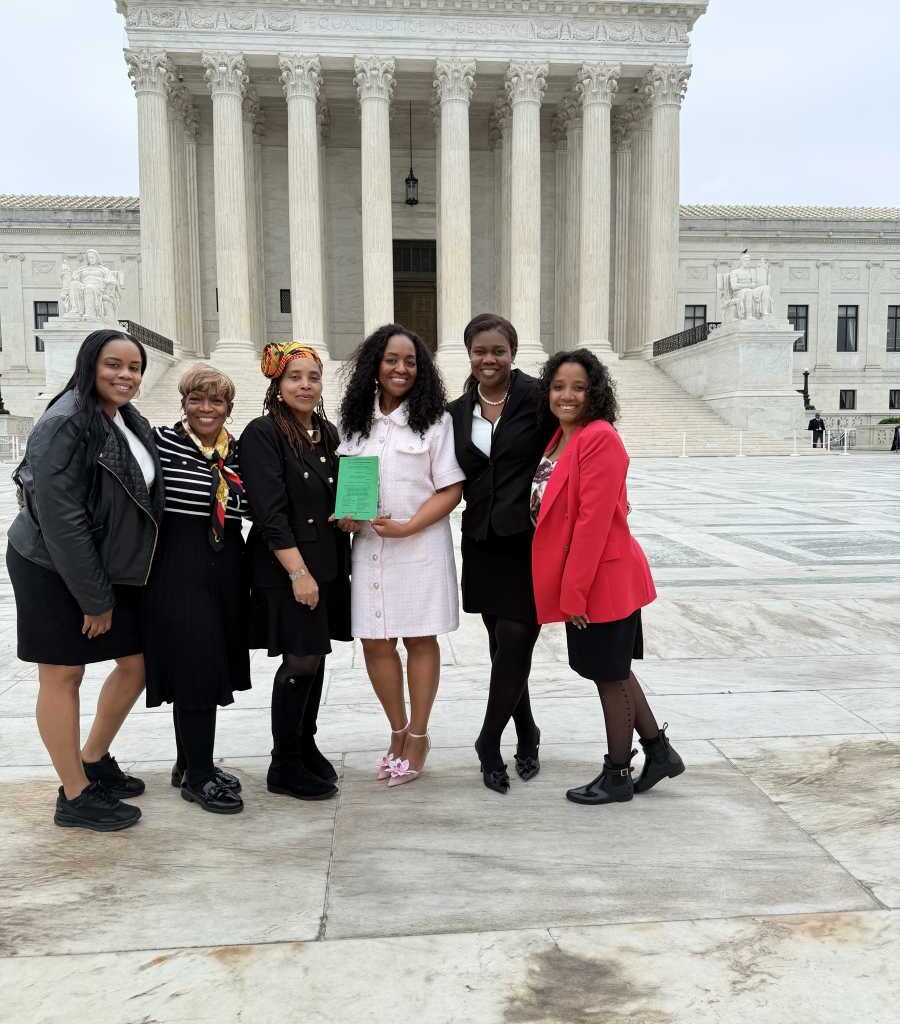
 Rodneyse Bichotte Hermelyn is an Assembly member representing the 42nd Assembly District in Brooklyn. She is also chair of the Brooklyn Democratic Party.
The issue becomes even more direct when New York City’s actions are examined independently. Public employment, pension rights, accrued benefits, and statutory employment protections may constitute property interests protected by the Due Process Clauses of the Fifth and Fourteenth Amendments. Employment and pensions are more than wages. They represent economic security, reliance interests, and property accumulated through years of service.
When workers are handed pink slips because of a change in immigration status, serious questions arise regarding what process is constitutionally required before government action deprives individuals of those interests. The guarantees of due process embodied in the Fifth and Fourteenth Amendments cannot be reserved for some and denied to others.
Likewise, the Equal Protection Clause of the Fourteenth Amendment requires scrutiny when government action disproportionately impacts a discrete and identifiable population.
The Tenth Amendment presents an additional question. While immigration regulation belongs primarily to the federal government, New York City retains independent constitutional responsibilities.
A sanctuary city should not merely ask what it must do. It should ask what lawful measures remain available to protect its residents consistent with constitutional principles. The relevant inquiry is not whether federal immigration law controls. It does. The question is whether municipal compliance relieves the City of its own constitutional obligations.
Ultimately, the unresolved issue after Mullin is not whether TPS may be terminated. The Court answered that question.
The remaining question is whether New York City’s response adequately protects due process, equal protection, property interests, and the constitutional rights of a uniquely vulnerable population before compliance with a federal mandate becomes a justification for constitutional abandonment.
Rodneyse Bichotte Hermelyn is an Assembly member representing the 42nd Assembly District in Brooklyn. She is also chair of the Brooklyn Democratic Party.