
Mayor Zohran Mamdani may have capped rents for tenants in stabilized apartments, but for the rest of the city, the cost of renting just keeps going up.
Average, median and average per-square-foot rents rose to a record in Manhattan in July, with the median rent reaching $5,000 for the first time, 6.4% higher than a year ago, according to a new data tracker from real estate expert Jonathan Miller and industry publication The Real Deal.
All three metrics also hit records in Brooklyn, with median rent now at $4,500, a whopping 17% higher than a year ago.
Several Possible Factors
Miller attributed the increase in part to rising mortgage rates, which have meant New Yorkers who would like to buy homes can’t afford to and have remained in their rentals, diminishing the supply of available units.
But the 2025 FARE Act, which largely eliminated brokerage commissions paid by new tenants, may be playing a role in declining available apartment inventory in both Manhattan and Brooklyn. Miller said he thinks landlords are holding units off the market while they try to figure out how to avoid paying the brokerage fee.
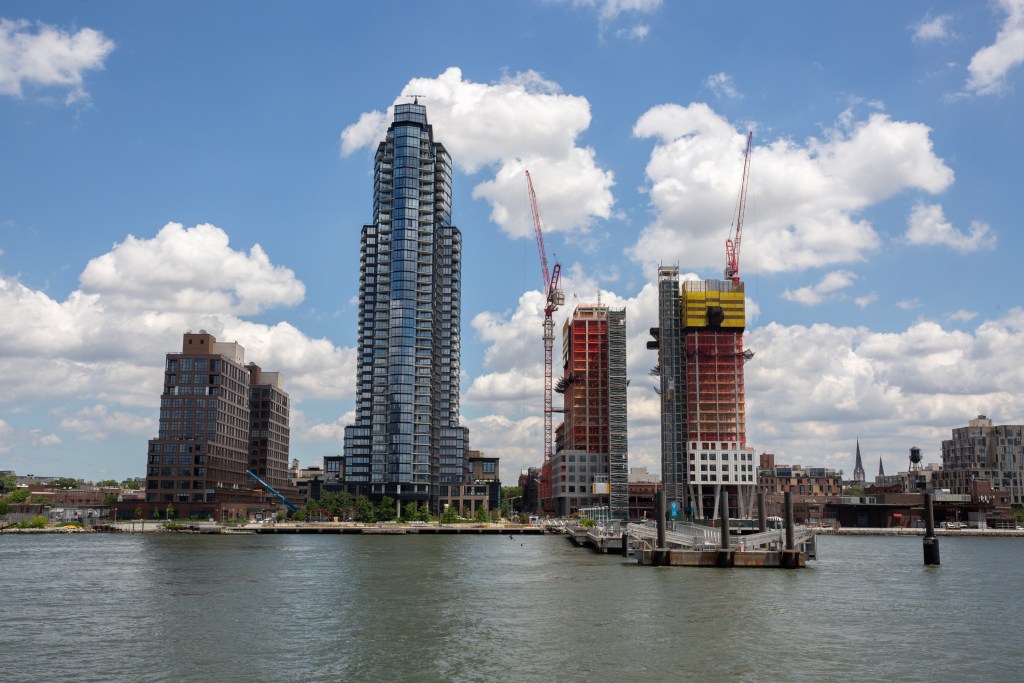 New residential units go up along the Greenpoint waterfront, June 27, 2024. Credit: Ben Fractenberg/THE CITY
Only 6,000 new leases were signed in Manhattan in July, a 20% decline. In Brooklyn, the 3,000 new leases were down by almost a third.
Other real estate experts have said landlords whose buildings include both stabilized and market-rate apartments would increase rents on the market-rate units to offset the rent freeze on regulated ones.
Apartment rents tend to rise during the summer, when many New Yorkers move, and then level off in the fall. Miller said he isn’t sure that will happen this year.
“I think that rents will continue to rise since mortgage rates are expected to rise, given the forces embedded in the economy, such as tariffs, the Iran War with its higher energy and transportation costs, and a new chair of the Federal Reserve” who is signaling that interest rates may have to increase, Miller said.
Related