
Sometimes medical care starts with a court filing.
The attorneys at LegalHealth, a division of the New York Legal Assistance Group, are embedded in hospitals to litigate their way out of obstacles that harm public health.
The New York City’s public hospital system just offered the program — the nation’s largest medical-legal partnership — a new $23.7 million contract for up to the next seven years. In the current climate of Medicaid disruptions and immigration crackdowns, LegalHealth’s director, Julie Brandfield, told amNewYork Law that the organization has all hands on deck trying to uphold access to medical services.
Brandfield summarized the program ethos with an anecdote about an uninsured young man whom LegalHealth lawyers helped to meet the Medicaid eligibility requirements after he was diagnosed with leukemia.
“He said, ‘My doctor didn’t save my life, my lawyer did,” Brandfield recounted.
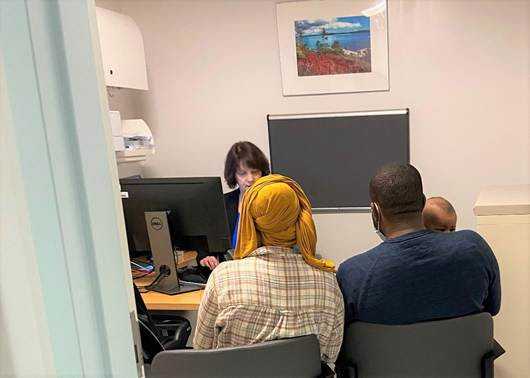
LegalHealth’s staff of 54 lawyers and paralegals receives referrals from 38 hospitals and healthcare organizations and operates 13 brick-and-mortar sites across the city’s public hospitals. Its services range from helping patients access insurance for life-threatening illnesses to finding legal avenues to remediate violations like asthma-triggering mold in housing court to keep clients out of the emergency room.
Lately, the team has been helping clients to keep their SNAP benefits after the federal government implemented new work requirements in June. They are anticipating they will be helping patients appeal unjustified Medicaid terminations in January, when the federal government begins implementing its work requirement as a result of the Republican megabill H.R. 1, which President Donald Trump signed last summer.
“Hopefully one day we’ll be in a different position where we’re not just putting out fires, but we’re rebuilding the rights that we’ve lost,” Brandfield said.
 Julie BrandfieldPhoto via NYLAG
Over the 25 years that the program has been operating, its main areas of focus have consistently been insurance, immigration, and housing issues, Brandfield said. Its staff is independent from NYC Health +Hospitals, but effectively functions as a specialized unit within the hospital system, combining medical evidence with legal advocacy in response to patient referrals that doctors and healthcare providers file for them.
Immigration cases could be on behalf of undocumented immigrants, immigrants who are naturalized or people somewhere in the process of seeking naturalization. While New York City does have more robust healthcare for non-citizens through programs like NYC Cares, undocumented patients generally only have access to care at the public hospital systems and emergency Medicaid.
If undocumented immigrants are facing severe, chronic health conditions like organ failure or bone marrow transplants, they often can’t get long-term care under emergency Medicaid alone. LegalHealth steps in to investigate their immigration history, including filing FOIA requests for old petitions, to find documents that could help them qualify for coverage.
“We do the digging that’s necessary to determine whether or not this person may be eligible for health insurance,” Brandfield said.
Insurability also extends to a variety of clients who are not immigrants. Staff often help older clients who are dual eligible for Medicare and Medicaid navigate complex rules to access home care services for hospital discharge or they help litigate complex appeals for services like 24-hour hospice care.
In the realm of housing, help low-income patients resolve instability and hazardous living conditions that impact their health. When hospital workers identify that extensive mold is causing asthma in their patients, it takes an attorney to follow up and demand that the landlord fix the problem in housing court. Sometimes, attorneys can send a demand letter that solves the problem. Other times they have to litigate further against recalcitrant landlords.
The model is aimed at providing legal services as another tool at doctors’ disposal to address the social determinants of health, Brandfield said.
“The medical legal partnership model really entails training the healthcare providers on how the law can be used to address social determinants of health,” she said. “After we start partnering with an entity, we’re going to train first so that the doctors and social workers know what the legal issues are that their patients might be confronting, so that they can make the referrals to us.”