
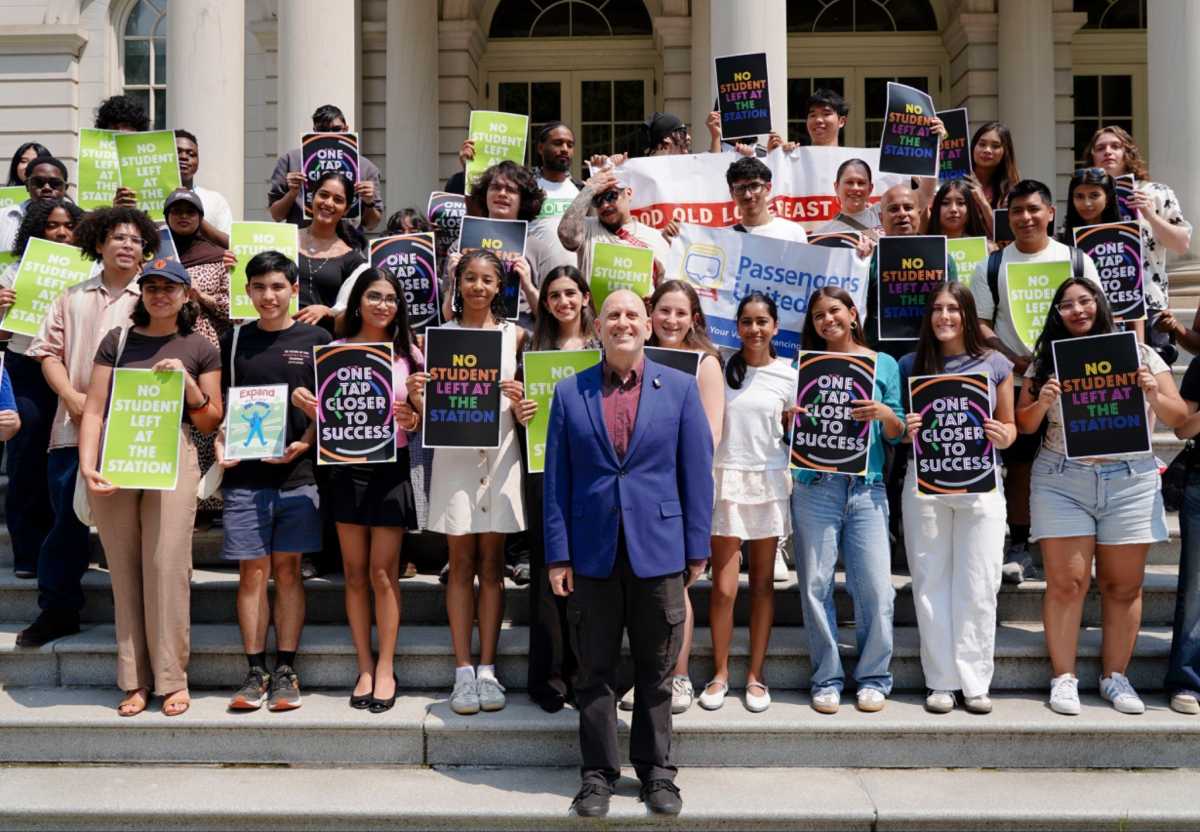
A group of New York City students rallied Thursday to call for improvements to the student OMNY program, the joint MTA-DOE initiative that provides four free trips on public transportation per day to students who live more than half a mile from their school and do not receive service from a yellow bus.
They asked for more durable, plastic transit cards, saying the current paper student OMNY Cards are too flimsy, easily damaged, and frequently fail at the turnstiles, leaving the city’s young people to pay out of pocket or find alternative means of transportation to school, summer jobs, extracurricular activities, and internships.
Brooke Goldberg, a rising high school senior, reminded those at the Aug. 12 rally that access to the city’s transit system is essential for students to lead a full life.
“Transportation is vital to our education,” Goldberg said. “Transportation connects us to our schools; It connects us to our classmates from all across the city; it connects us to our jobs and after-school activities.”
Goldberg and her fellow young advocates from Council Member Harvey Epstein’s District 2 youth council surveyed about 700 NYC students and found that an overwhelming majority had experienced card failure due to damage. More than 85% of the students surveyed said that normal wear and tear, exposure to moisture, or even a slight bend had rendered one or more of their student OMNY cards unusable.
The youth council shared its findings, recommendations, and some of the anonymous NYC students’ responses in a new report, released on Wednesday.
“It is really annoying when your card doesn’t work, and you have to ask the person to open the door or let you in,” one student quoted in the report said. “Sometimes I miss my train trying to tap my card a gazillion times.”
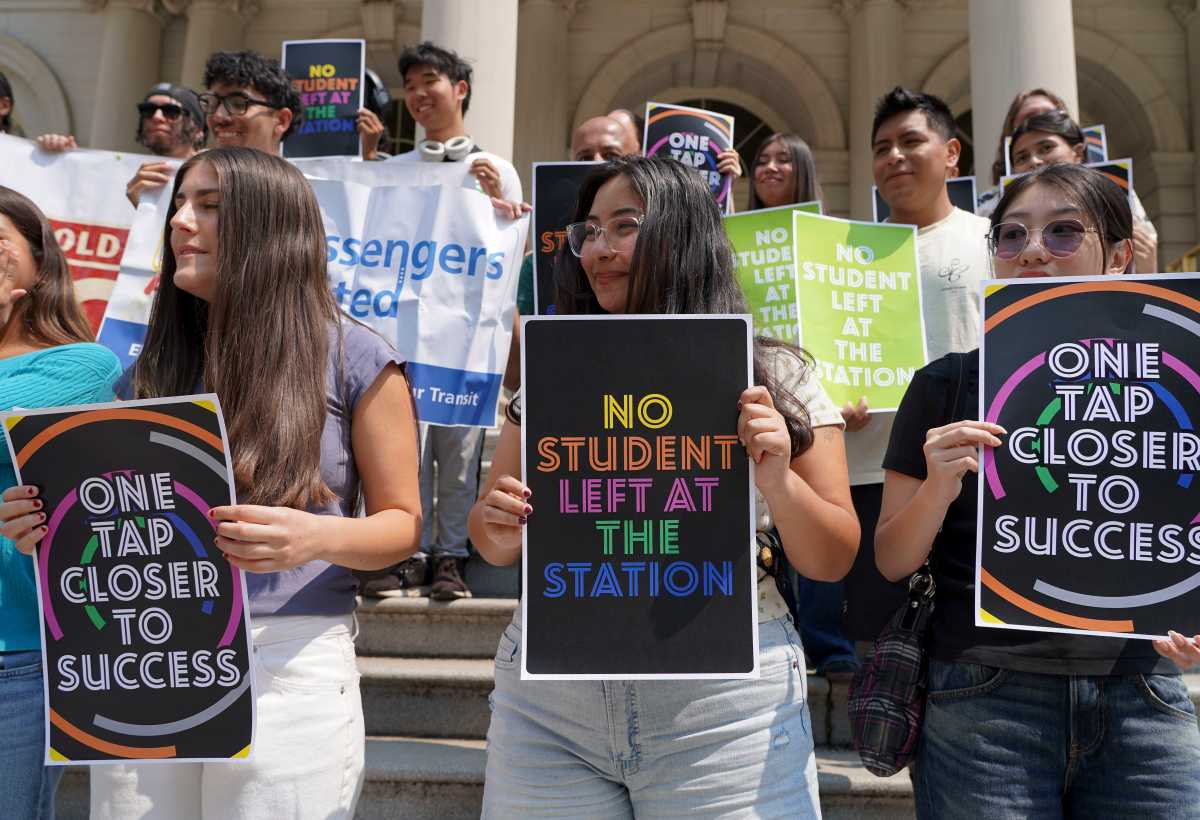 The youth council shared its findings, recommendations, and some of the anonymous NYC students’ responses in a new report, released on Wednesday.Gerardo Romo / NYC Council Media Unit
Others said their card would stop working completely without any sign of damage. One student said that their OMNY card suddenly stopped working one day and they finished out their internship paying out-of-pocket for transportation.
An MTA spokesperson told amNewYork in a statement that the agency welcomed the feedback and is planning upgrades to the program.
“We appreciate the feedback from student customers,” an MTA spokesperson said. “The MTA plans to provide plastic sleeves to students to protect current cards, with a durable plastic version of the Student OMNY card coming in time for the 2027-2028 school year. In addition, we are piloting a program this year that will allow students to tap with their phones just like other riders are already doing today.”
Epstein, whose office hosts the youth council, said that the city has worked to help provide NYC students with effective transportation options, but emphasized that students deserve to be able to focus on their on their education, rather than their commute.
“Students shouldn’t have to worry about whether they’ll be able to get to school because their transit card bent in their backpack, or stopped working without warning,” said Epstein. “The student OMNY program has made tremendous progress, but our work isn’t finished.
Students seek easier ways to replace lost, damaged OMNY cards
Exacerbating the issue are the replacement protocols for getting a new card, according to the young transit activists. The report said that individual schools had different procedures for issuing replacement cards to students, but a majority, 69% of respondents, reported having a hard time getting a new card. Many said they waited over a week and around 20% of students surveyed said they had requested new cards, but never received them.
The group argued that sturdier plastic cards could solve many of these issues by providing a more reliable tap and reducing the need for replacement cards after damage or failure.
The report went on to suggest that kids and teens be offered a digital card they can store on their phones, compatible with Google and Apple Wallet.
The report also calls for greater access to the program, which currently sets eligibility restrictions based on how far away students live from their school, and whether they can be served by a public school bus. But that model, the youth council’s report argued, is short-sighted and leaves some students without free, effective transportation to jobs, extracurriculars, sports, and other key aspects of education.
Co-president of the Youth Council, rising high school senior Maya Morozov, said that students have won gains in transit, but challenged the student OMNY program to do more.
“We want the promise of the OMNY card to be realized for the students of New York City: for public transportation to be accessible, free and reliable, always,” Morozov said.