
To this day, it’s considered one of the largest inland oil spills in American history, dumping hundreds of thousands of gallons of crude oil into the St. Lawrence River.
Fifty years ago, the “Slick of ’76” caused significant damage to the Thousand Islands region.
What You Need To Know
On June 23, 1976, the NEPCO 140 ship hit a shoal in the St. Lawrence River, spilling 300,000 gallons of crude oil into the water
The disaster killed thousands of fish and birds, and Save the River says it damaged the ecosystem to the point it has not yet fully recovered
Cleanup lasted four months, and was stopped with the oil left over declared able to degrade itself; it cost $8 million, which is more than $30 million today
“Nobody was fishing. Nobody was swimming. They were just cleaning up, you know, and dead animals. It was it was it was horrible,” Save the River Executive Director Bridget Wright said.
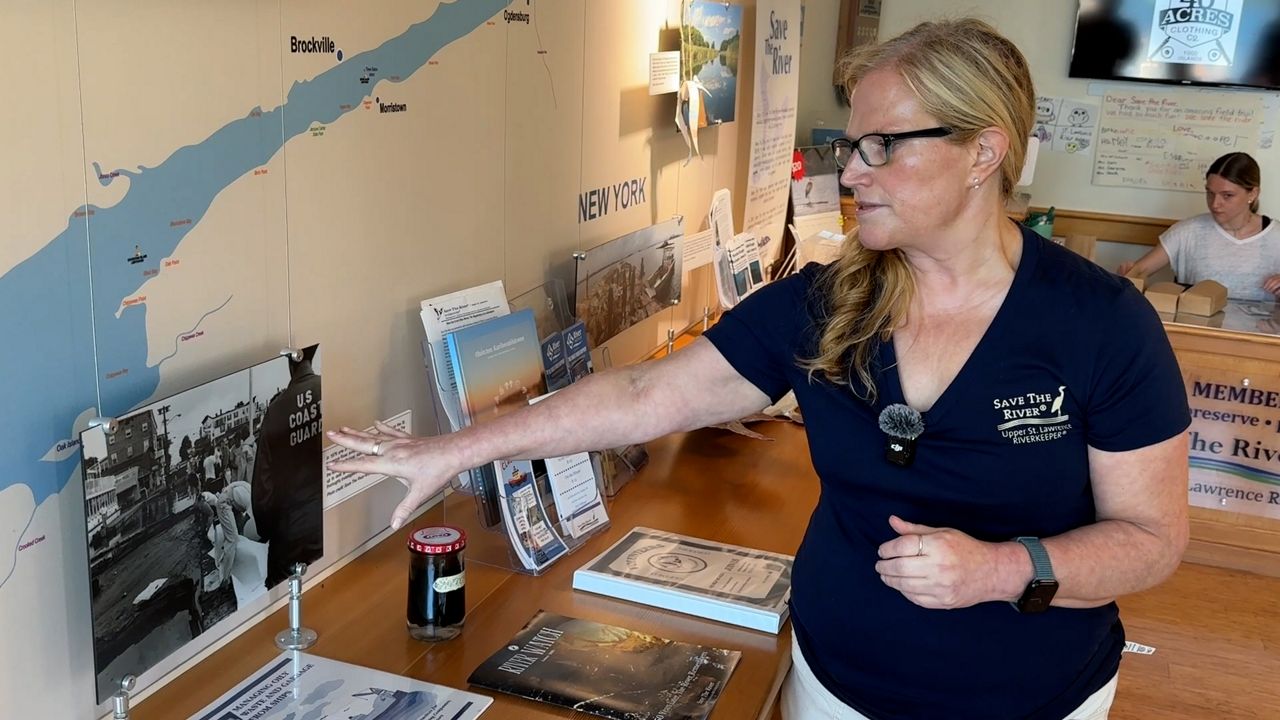
“Look at their boat and their pants, their hands. I mean, it’s just them coming in after, after mucking, they would muck all day,” Wright continued, looking at a photo of cleanup efforts.
The barge NEPCO 140 on the St. Lawrence River in Alexandria Bay hit a shoal on June 23, 1976, letting 300,000 gallons of thick crude oil flow into the river.
“It was devastating. There was many, many, many deaths of fish and birds and wildlife,” she said.
It touched approximately 300 miles of shoreline and led to the creation of Save the River, the organization Wright now leads.
“This is actual from the spill. We just kind of kept it as like a little artifact,” she said, pointing to a jar of oil on display at Save the River’s Clayton home. “They had brooms and disposable pads that they would just keep mopping it up every day for months and months and months and months.”
Four months and $8 million later — that’s $36 million in today’s figures — cleanup efforts were stopped. Oil that remained would be expected to degrade on its own. But to this day, Wright says the spill is still very much a part of the Thousand Islands region.
“So many people have called us and said, ‘We still have the stain on our rocks from where the oil stained it.’ I think there will always be a scarring of the river from this,” Wright said.
Today, boats are back on the water. Swimmers are back in it. But Save the River says it will continue its fight to ensure the river never goes through what it did a half a century ago.
Wright says she still very much fears an incident could happen again, especially as shipping spreads into the winter. While many say the economic benefits are a massive positive for the region, advocates like Wright say the region isn’t prepared for a spill when the river is freezing over.