
I have been fascinated by the history of the British monarchy for most of my life.
I love the castles. The pageantry. The history. The coronations. The hyper-complex protocols of deference. The extraordinary continuity stretching back through centuries. If a documentary about the royal family comes on television, there’s a good chance I’ll watch it.
For years, though, I’ve found myself asking the question: Why?
Why should someone like me — someone who believes deeply in democracy, equality and the inherent worth and dignity of every person — be so captivated by monarchy? Moreover, the people who live within constitutional monarchy seem to value these as well yet love their kings and queens.
Shouldn’t those ideas be at odds with one another? The more I thought about it, the more I realized they aren’t.
In fact, our continuing fascination with constitutional monarchy may be one of the most encouraging signs of humanity’s moral evolution.
There was a time when kings ruled by force. Their authority was unquestioned. To challenge the crown could cost you your property, your freedom or your life. Society was built upon the assumption that some people were simply born to rule, by either divine right, brute force or both, while everyone else was born to obey.
Today, much of Europe still has kings and queens. But something remarkable has changed. They no longer reign through tyranny. Instead, they reign through symbolism.
People no longer gather to affirm the divine right of monarchs. They gather to celebrate history, continuity, tradition and shared identity. The pageantry remains, but the coercion has largely disappeared. The ritual survives after the domination has been carefully excised.
Social psychologists often distinguish between dominance and prestige. Dominance says, “Respect me because I have power over you.” Prestige says, “Respect this because it represents something meaningful.” Those are profoundly different relationships.
Modern monarchies have evolved into institutions of prestige rather than dominance.
They remind us that human beings don’t simply crave power. We also crave belonging. We long for rituals, stories, symbols and traditions that remind us we are part of something larger than ourselves.
The remarkable part is not that these longings still exist. The remarkable part is that we have learned a way to satisfy them without surrendering our freedom.
Perhaps that is what true social progress is supposed to look like. Not destroying everything we inherited, transforming it.
The monarchies of the world are far from the only examples experiencing a transformative shift toward a shared autonomy.
Marriage has evolved from a legal exchange of property into a partnership of equals. Education has become an opportunity rather than a privilege. Many religious communities continue to evolve from defining themselves by exclusion toward defining themselves by hospitality. Is this progress uniform? Of course not. But the trend is highly visible. And continuing.
Again and again, humanity seems to perform the same social miracle. We preserve the part that nourishes the human spirit while slowly letting go of the part that diminishes human dignity.
We keep the ceremony. We lose the tyranny. We keep the beauty. We lose the domination. We keep the belonging. We lose the subjugation.
I find that deeply hopeful. It suggests that history is not merely a sequence of revolutions in which one system replaces another. Often, history is a long process of refinement. We gradually discover what an institution was trying to accomplish at its best, and then we patiently remove everything that prevented it from becoming that.
That feels like wisdom. It also gives me hope for institutions still struggling to find their better selves. Democracy is still evolving. So is religion. Education is still expanding, despite attempts to narrow it. Our understanding of leadership is still evolving, but our preferences are steadily winning. (Why do you think the old boys are fighting back so hard? They know it too.)
Perhaps all of these evolving institutions are following the same trajectory as monarchy — not toward abolition, but toward transformation. Toward forms that preserve what helps human beings flourish while abandoning what keeps human beings small.
Maybe that is one of the great stories of civilization. Not that we have become less human than our ancestors, but that we have become better at recognizing one another’s equal worth.
That is why I still enjoy watching a royal procession. Not because I wish to live under a king. But because I can see, hidden within all the robes, crowns and ceremony, a quiet reminder of just how far humanity has already come.
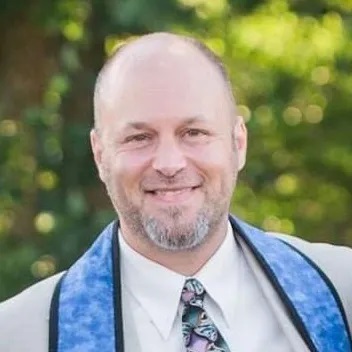
Wil Darcangelo, M. Div., is an ordained Unitarian Universalist minister of the First Church of Lancaster at the Bulfinch Meetinghouse in Massachusetts, progressive theologian and essayist on optimistic spirituality in the Information Age. Follow him on Substack, Facebook, Instagram, TikTok and YouTube.