
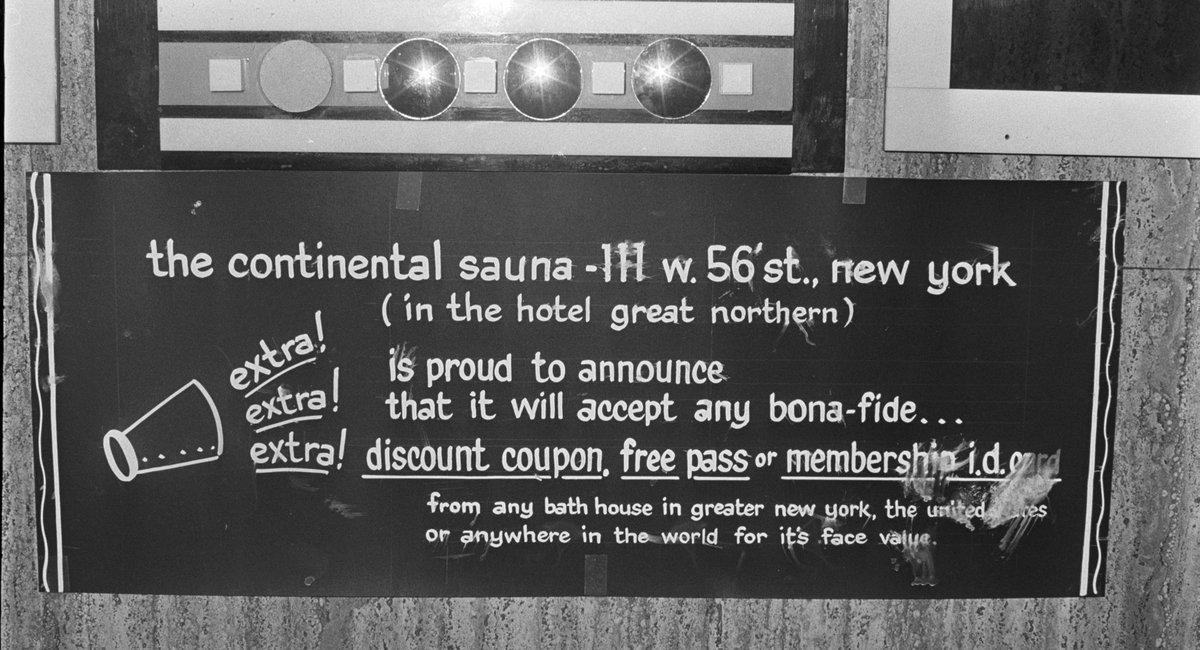
State lawmakers hoping to lift an effective ban on New York City’s gay bathhouses may have a long road of regulatory hurdles ahead — even if the legislation passes. Nevertheless, one cosponsor of the bill said he remains optimistic.
“We have the benefit of many, many cities around the country and around the world, who allow these kinds of businesses,” said state Sen. Erik Bottcher, who introduced legislation alongside state Assemblymember Tony Simone that would repeal the state’s existing prohibitions on adult saunas — places where adults can engage in sexual activity — and create a system for licensing and operating these spaces.
Bottcher said he doesn’t think that establishing the appropriate regulatory framework for future bathhouses will be an issue. In part, he said, because the bill would follow in the footsteps of other municipalities that have already trodden the same path, including Minneapolis, which lifted its ban in June, and San Francisco, which did the same in 2020.
“We understand that this was just introduced, and [the ban has] been on the books for 40 years, so it might not happen overnight,” Bottcher said shortly after introducing the bill. “But we do want it to happen. We do want to get this done as soon as possible.”
The proposal comes more than four decades after a change to the state’s health code during the height of the AIDS epidemic in 1985 outlawed adult establishments where “high-risk sexual activities” took place, according to the decision. Then-Mayor Ed Koch used the state provisions to crack down on gay bathhouses in the city, including enlisting city health officials to enter saunas while undercover.
The process of opening gay bathhouses could still take some time and would need to overcome bureaucratic hurdles.
Even if the bill – dubbed the Public Health Modernization Act – clears the Legislature and is signed by the governor, it would not immediately pave the way for bathhouses to open. The measure would take effect 180 days after becoming law and it directs the state health department to “consult” with public health experts before writing new rules governing how the businesses are licensed and operated, including minimum health and safety standards.
These new rules and regulations must also include standards “to promote the health and safety of patrons and employees, consistent with modern public health strategies focused on wellness education and harm reduction,” per the legislation.
In San Francisco, permitting issues have delayed the opening of the city’s first gay bathhouse despite its ban being lifted six years ago. A required city hearing for the adult establishment still has yet to be scheduled. In an interview, Bottcher said he doesn’t think setting up these parameters will be an issue for New York.
“We should be able to draw from the best practices from cities all over and ensure that we have the best regulations anywhere,” he said.
Bottcher also said that both Gov. Kathy Hochul and Mayor Zohran Mamdani received a “heads up” about the legislation before its introduction.
A City Hall spokesperson confirmed officials were reviewing the legislation. Hochul’s office did not respond to requests for comment. The state health department did not respond to Gothamist’s requests for comment.
‘The safest places for gay men to go’
Before the 1985 ban went into effect, gay bathhouses had been in business in New York City for more than a century, with the first recorded police raids of one such establishment taking place in 1903, according to historian George Chancey, who teaches at Columbia University and is the author of “Gay New York: Gender, Urban Culture, and the Making of the Gay Male World, 1890–1940.”
Then, police raided a gay bathhouse in the basement of a now-defunct hotel known as The Arlington, once located at the corner of Broadway and 55th Street in Manhattan. Officers apprehended 78 men and arrested 26 of them, Chauncey said.
Chauncey said there were at least three gay bathhouses operating full time in the city by the 1920s, including the Everard Baths at 28 West 28th St. in Manhattan — which was eventually raided in 1919 — and the Lafayette Baths on Lafayette Street – raided in 1916 and 1919.
“The baths, in some ways, were the safest places for gay men to go,” Chauncey said. “They were very rarely raided. And they were enduring spaces that lasted for decades.”
Chauncey continued: “They were places that people went who were just beginning to explore their sexuality, where they could meet other men with the same interests.”
Some of the establishments were even outfitted into sites for political action. The League of Women Voters once helped establish a voter registration drive at the St. Marks Baths in Manhattan ahead of the 1980 and 1985 elections.
‘We didn’t even know it was HIV’
Bathhouses became a source of controversy by the 1980s, culminating in Koch’s move to shut down the adult establishments throughout the city. Chauncey said gay activists and health advocates at the time felt it was a counterintuitive decision, ultimately barring people from a place where they could be better-educated during a time of crisis.
”There were debates within the gay community, amongst gay men, with some people feeling it was such an urgent health crisis, and we understood so little about how HIV was transmitted,” he said. “In fact, in the early days, we didn’t even know it was HIV – that a place that brought people together to have sex should be shut down to protect people.”
Veteran gay activist and New York native Allen Roskoff — who heads the Jim Owles Democratic Club, one of the city’s most influential progressive and LGBTQ+ advocacy organizations — was 20 years old when he visited his first gay bathhouse in 1971. He said the establishments offered refuge in New York City, where he sometimes feared the consequences of being outed as gay.
“You never knew who you were going to meet at the baths. You never knew,” Roskoff said. “But it was a place where you could be your genuine self. People didn’t have to pretend they were straight.”
He continued: “It was a place where you could feel good about who you are, and you received self-assurance from people who are out, and people who are comfortable and people who will tell you that it’s okay to be yourself.”
Roskoff — who co-authored the New York City Gay Rights Bill of 1986, the nation’s first anti-discrimination bill of its type — recalled once losing three teaching positions within the same year after he was outed at work. He also said he was kicked out of his own family.
Comparing those times to the modern day, Roskoff said that bathhouses of the future could attract people seeking a break from dating apps and modern hookup culture.
“At the baths, you see who you’re getting, you see who you’re communicating with,” he said. “You see who you wanna cuddle with and who you wanna be genuine with. There’s no reason not to be yourself when you’re at the baths, you know? You’re in a towel most of the time.”
Ultimately, Roskoff said, he thinks those who have never visited one of these bathhouses beforehand are in for a treat.
“What would I say to the young gay youth? Drop your towel and come on in.”
Changing times
But the political landscape has changed since the bathhouses closed in the 1980s, due in part to the gay liberation movement, as well as medical advancements, including frequent HIV testing and the availability and widespread use of PrEP, a medication that severely reduces the risk of contracting the virus during sexual contact.
HIV cases in the city reached a record low in 2013, with a reported 2,832 New Yorkers diagnosed with HIV and another 1,784 with AIDS —– a sharp decline from a decade earlier, with 7,744 new HIV cases and 5,422 AIDS cases. Recent data also showed a slight increase in HIV cases in New York City, as previously reported by Gothamist.
City data showed that 1,791 people were diagnosed with HIV in 2024, representing a 5.4% increase from the year prior. It’s the fourth year in a row that there’s been an increase in HIV cases locally.