
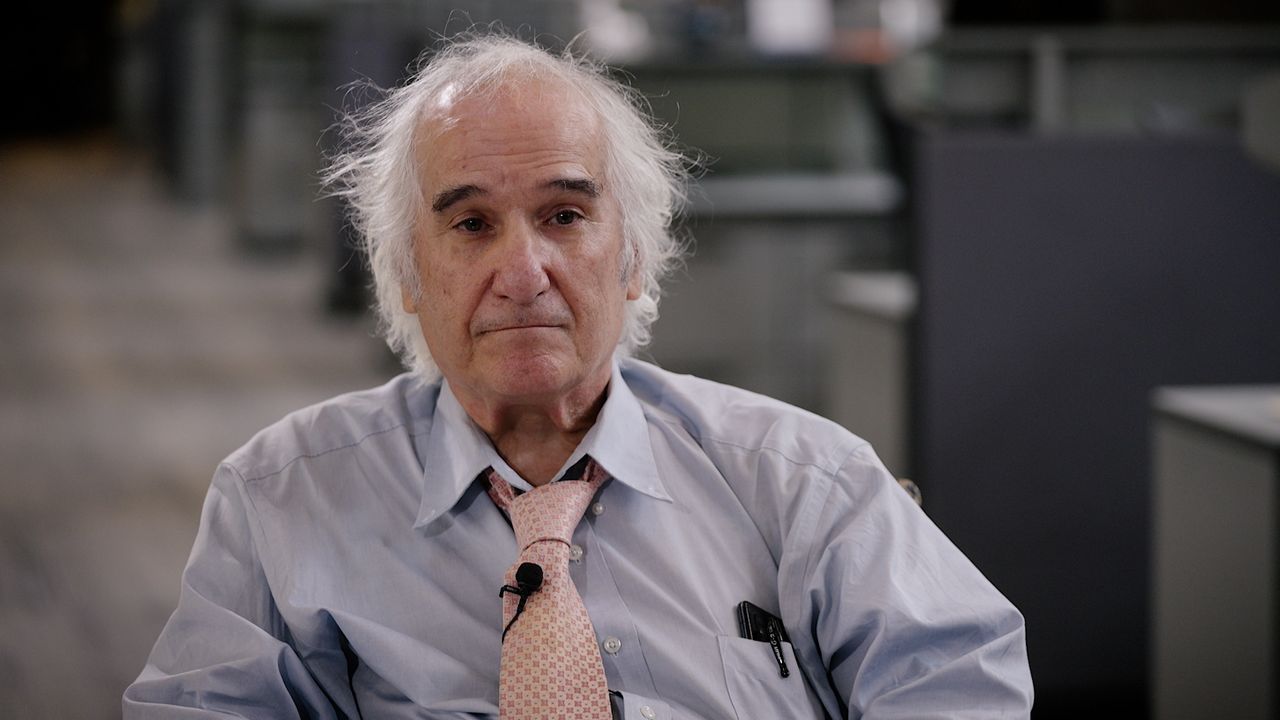
Joel Kupferman was sitting inside a New Jersey diner, watching alongside everyone else, as nearly 3,000 people died in the World Trade Center. And amid the horror, his brain started to go elsewhere.
“My environmental justice training and experience kicked in,” he said. “And I just knew that there was going to be some type of environmental hazard that’s being spread all over lower Manhattan.”
He said his concern only grew when he heard federal, state and city officials insist the air in lower Manhattan was safe.
“The concentrations are such that they don’t pose a health hazard,” then-EPA Administrator Christie Todd Whitman infamously told reporters about the agency’s testing for potential toxins in lower Manhattan.
That was on Sept. 13, 2001.
It was around that time Kupferman got a phone call from someone in leadership at the New York City Police Benevolent Association.
“You’ve got to help me,” Kupferman remembers the man saying on the phone. “My guys are spitting up blood.”
Kupferman said he had no idea how he would be able to get to the area by the World Trade Center.
The PBA delegate had an answer for that. He told Kupferman to meet him at the PBA’s staging area. That’s where Kupferman was given PBA hat and jacket. And he walked right into the site.
“It looked like a dust storm that was down there,” Kupferman said.
That was Sept. 18, one week after the towers fell.
The day before, much of lower Manhattan reopened, including the New York Stock Exchange.
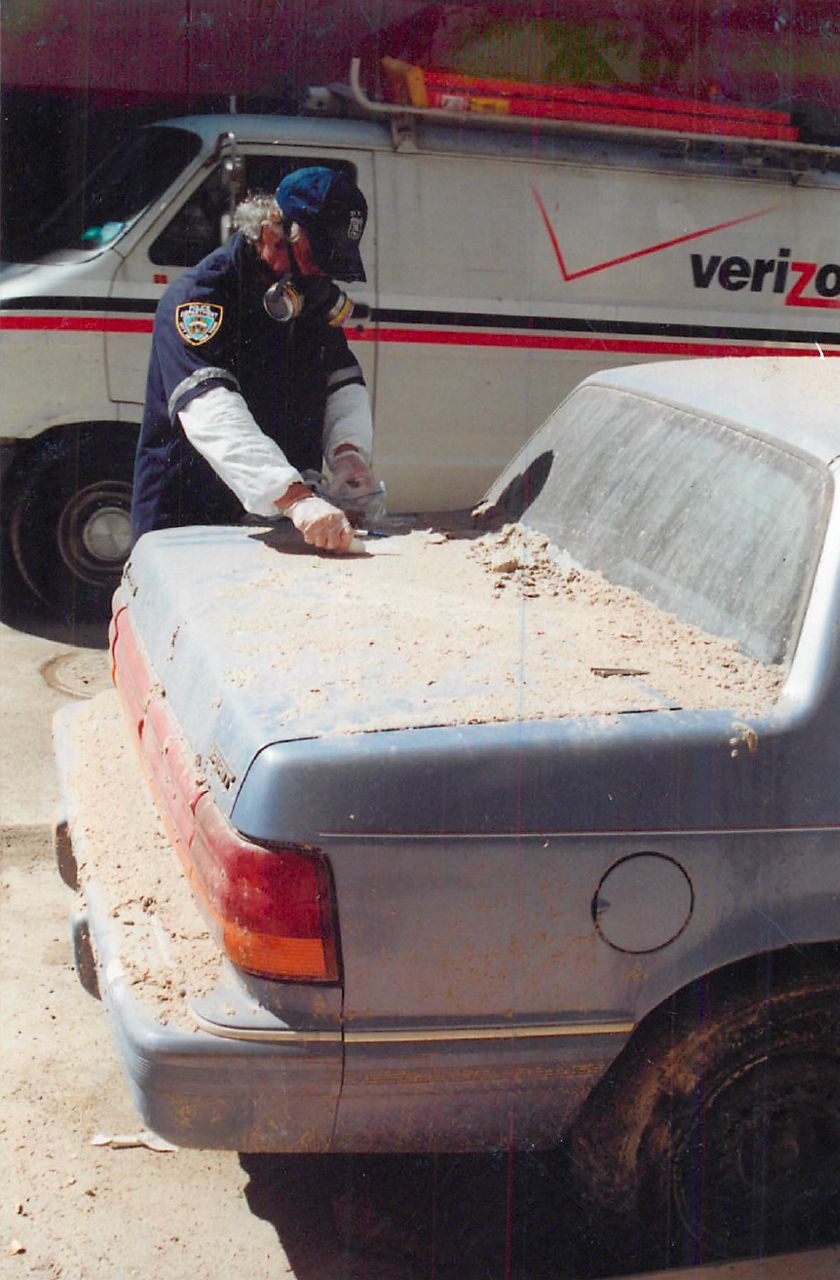
He took a sample of the dust from outside a post office building on the corner of Church Street and Vesey Street.
“I used very extensive equipment called a MetroCard,” Kupferman told NY1 in an interview this summer. “I scooped up that for the samples, put it into a few bags.”
A few weeks later, Kupferman said he got the test results back from two separate labs, including one frequently used by the city.
“When I saw the test results, I felt that this is one of the largest environmental disasters taking place,” Kupferman said he remembered thinking.
He said the results showed the dust contained elevated levels of asbestos, along with a lot of fiberglass, lead, volatile organic compounds and heavy metals. And then there was the pulverized concrete, so small that it was invisible to the naked eye.
“So there’s a myth that if you can’t see something, it’s not bad. The smaller particles you can’t see are even worse,” Kupferman said. “The larger particles get caught in the nose. The smaller particles get caught in your lungs. The smallest goes right into your stomach and into the bloodstream.”
Kupferman said he witnessed first-hand the dangers of asbestos exposure because his dad worked at the Brooklyn Navy Yard, where workers inhaled the fibers in the mid-20th century.
“One day, while at work, he went into the bathroom and didn’t come out for a while,” Kupferman recalled. “And I went in to get him, and I saw he was white. And at that time, he just looked at me, his eyes rolled, and he just spit up blood all over me.”
When he took his test results from lower Manhattan to city, state, and federal officials, he said they disagreed with what he said.
He said some even called him unpatriotic.
Kupferman said he took his findings to the Daily News, which published a piece titled “Toxic Zone” on October 26, about six weeks after 9/11. It detailed Kupferman’s findings.
Government officials vehemently pushed back on the report.
“I think that type of article is kind of one of the worst you can write considering all the work that has been done from day one to provide information to assure them,” said William Muszynski, the acting director for region 2 of the EPA at the time.
At the time, Kupferman told NY1 he believed people in lower Manhattan were in danger.
“The trouble is that people aren’t just walking down in front of the World Trade Center. You have thousands of people working and living here,” he said in a NY1 story from October 2001.
At that point, New Yorkers had been back to much of lower Manhattan for several weeks.
“It will show its long-term effects probably years later, but I’m here working and I have to work,” one New Yorker told NY1 then.
In the weeks after 9/11, about 40 percent of firefighters were complaining of what was called the World Trade Center cough, leading to sore throat, chest irritation and a persistent cough.
“We have to be understanding and aware of the fact that they inhaled the largest single exposure to particulate matter probably in the history of the United States,” Dr. David Prezant, the deputy chief medical officer of the FDNY at the time, said in an interview with Cheryl Wills.
When it came to cleaning inside buildings in lower Manhattan, that responsibility largely fell on the owners.
Documents obtained by NY1 show in February 2002, the city’s Department of Environmental Protection sent letters to building owners asking for their test results, despite most of lower Manhattan reopening more than four months earlier. Some owners responded that they didn’t know they needed to do any testing.
In April, the recently elected Mayor Michael Bloomberg asked the EPA to study the potential impacts of the dust on homes in lower Manhattan, according to the EPA.
By 2003, an inspector general report on the EPA criticized some of the early decision-making.
“EPA’s early statement that the air was safe to breathe was incomplete in that it lacked necessary qualifications and thus was not supported by the data available at the time,” the report states, while noting it would take years to truly settle whether the air was safe to breathe.
The number of illnesses connected to the exposure to toxins in lower Manhattan went beyond people who responded to the rubble.
The Sept. 11 Victims Compensation Fund has paid out $16.8 billion to more than 71,000 people since October 2011 due to their exposure to toxins in lower Manhattan.
More people have died from illnesses connected to the toxic air in lower Manhattan than on day of the terrorist attacks, according to the 9/11 Memorial and Museum.
“When I see people suffering and dying today,” Kupferman said this summer, “I feel this angst that they were just sort of used. They weren’t told the truth.”