
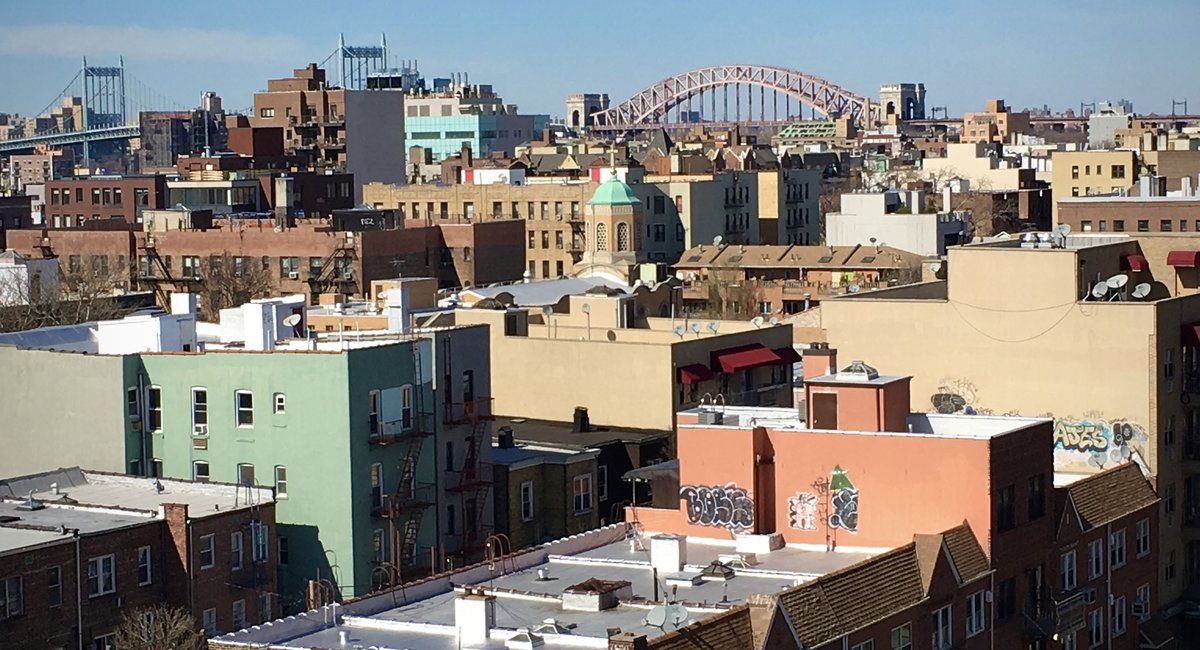
Could Staten Island add close to 17,700 homes over the next five years? What about 13,000 for the Upper East Side, and another 5,500 in Bensonhurst?
A new report from the city’s housing agency says they’ll have to if New York has any hope of solving its current housing shortage while catching up with future population growth.
The analysis from the Department of Housing Preservation and Development finds that the city needs 700,000 new homes spread across every corner of the five boroughs to keep pace over the next decade.
City officials say the eye-popping metric offers a new way to frame the extent of the housing crisis, and the expansive work required to solve it. The report, known as the “Fair Housing Growth Strategy,” is the first of its kind under 2023 legislation mandating a citywide housing blueprint. It sets specific but nonbinding neighborhood-by-neighborhood development targets and describes the citywide efforts necessary to address the current problem while keeping up with the city’s future population growth.
“To overcome our housing crisis, we need every neighborhood in every borough to do its part,” Housing Commissioner Dina Levy said in a written statement describing the report as “a roadmap to a fairer and more affordable city.”
New York City has its work cut out for it. The number of available apartments has plummeted to a near-six-decade low, according to the city’s most recent housing survey, and home sales and rental prices continue to surpass historic highs.
Mayor Zohran Mamdani has pledged to fuel the construction of 200,000 new apartments for low- and middle-income renters over the next decade through neighborhood-level rezonings, more development on city-owned lots and public subsidy to ease construction costs. But so far, affordable housing development ticked down in the first half of the year, according to an analysis by news site City Limits.
Many factors are driving the sluggish pace of affordable housing construction. Developers are splitting larger projects into multiple, smaller buildings to qualify for state tax breaks while skirting higher wage rules, even as industry trade groups and elected officials advocate for more development. And the Mamdani administration only recently unveiled its housing plan.
But last year, the city added its largest number of new apartments for all income levels since 1965, according to the Department of City Planning. Changes contained in ballot measures approved by voters last year are also fueling new construction.
The city’s housing agency arrived at the 700,000 figure under the terms of the 2023 law that required it to produce a five-year “growth strategy” for the city that also sets nonbinding construction goals for all 59 community districts.
Analysts with the Department of Housing Preservation and Development determined that the five boroughs need 290,000 homes to address the current shortage, another 240,000 to keep up with typical population growth and another 170,000 to meet “future need.”
Reaching those goals will depend on building more housing in every section of the city, said Councilmember Farah Louis, a Brooklyn Democrat who is backing a plan to rezone a large section of the borough south of Prospect Park.
“Even in communities like Central Brooklyn, where we have seen consistent housing production, we must do more to ensure that new homes are truly affordable and accessible to the neighbors who call these communities home,” Louis said in a statement.
The report carves the city into “high-growth,” “medium-growth” and “low-growth” districts based on how many new homes they added between 2016 and 2025 and uses a complicated formula to set construction targets for each area to reach over the next five years.
The target for Staten Island’s Mid-Island district, for example, is 5,015 new homes. The region is considered a “low-grower,” because its 52,000-unit housing stock grew at a rate of just 0.24%, placing it in the bottom third of all community districts, according to the report. Likewise, the community district that covers Bensonhurst in South Brooklyn, another “low-growth” area, has a target of 5,500 new homes to add to its existing 72,195.
The Upper East Side, with 140,545 existing units, was also regarded as “low-growth” and has a target of more than 12,700.
In contrast, Astoria, Queens — considered a “high-growth” neighborhood with just under 99,000 homes — has a target of nearly 10,000 new units, while the “high-growth” district that includes Hunts Point in the Bronx has a target of around 2,100 new units to its existing 21,000.
Other neighborhood targets include:
6,405 new units in Forest Hills and Rego Park, Queens5,840 in East Flatbush, Brooklyn10,270 in Williamsburg and Greenpoint, Brooklyn6,180 in the Bronx’s Soundview and Parkchester neighborhoods5,595 in Harlem in Manhattan
The measure mandating the report was sponsored by then-City Council Speaker Adrienne Adams as a way to guide future development decisions and counter local backlash to new housing in areas that produce few units. But the document is nonbinding, meaning neighborhoods do not have to adhere to the goals set for them.
Adams, a Queens Democrat, is now running alongside Gov. Kathy Hochul as the Democratic nominee for lieutenant governor. Hochul previously unveiled a proposal to create binding development targets for each of the city’s community districts, along with every other town in the state, in 2023, before scrapping the plan in the face of suburban backlash.
In a written statement, Hochul campaign spokesperson Ryan Radulovacki said the governor and Adams “know we can’t make housing in New York affordable without building more of it.”