
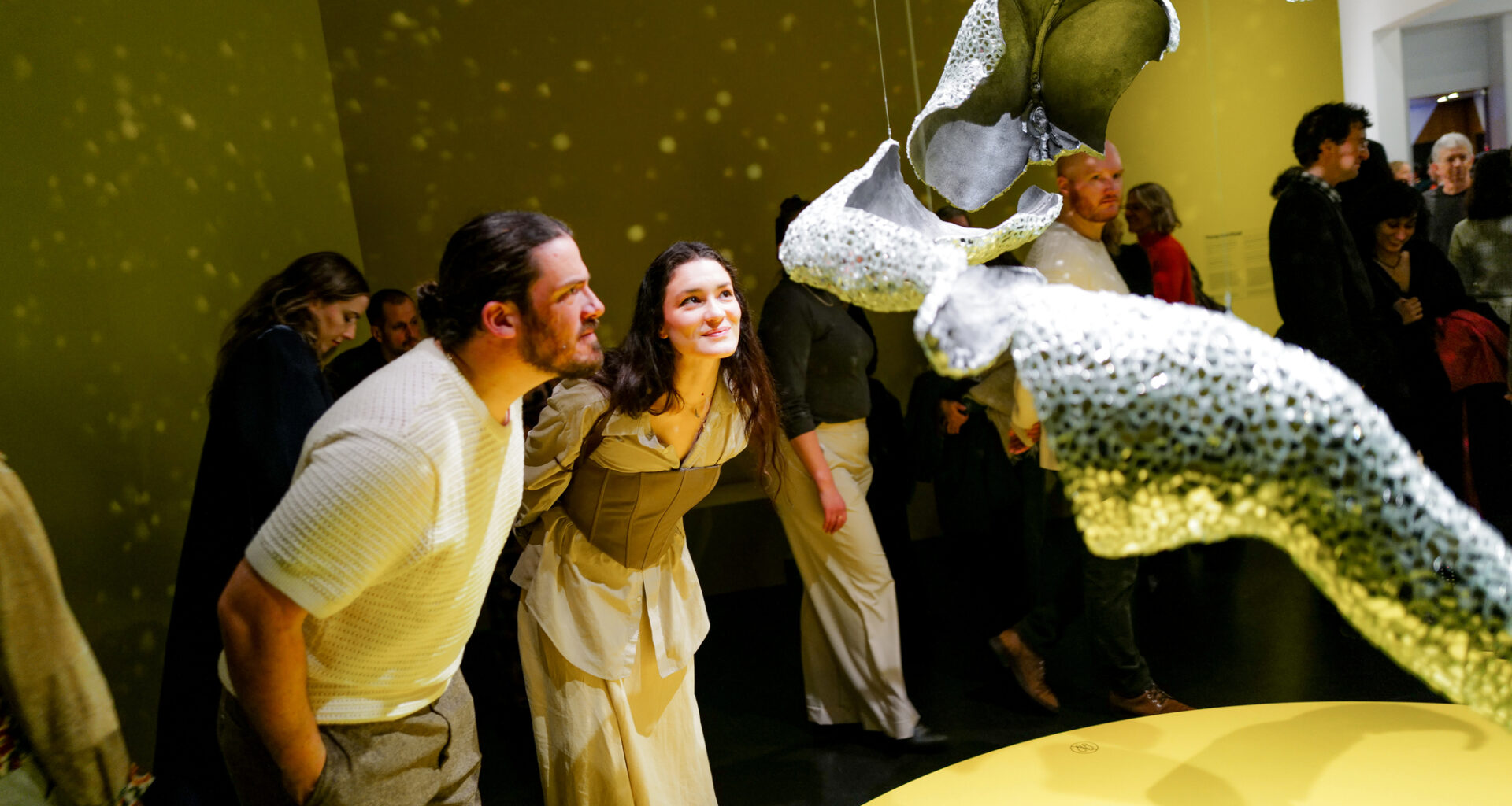
If the word we: 59th Carnegie International
Carnegie Museum of Art
May 2, 2026–Jan. 3, 2027.
Pittsburgh
Whitney Biennial 2026
Whitney Museum of American Art
March 8– August 23, 2026.
New York
In Minor Keys: Venice Biennale
Multiple sites
May 9–November 22, 2026.
Venice
It’s 2026, and three vast museum surveys coincide, with the shared aim of informing the public about what’s new. What contemporary art most authentically responds to our present cultural dilemmas? Let’s see! Nowadays challenging art is made everywhere. So the goal is to present a full sampling of that work, revealing the ideals and struggles which animate cultural life. Ambitious? Certainly. Realistic? Debatable.
I have reviewed many Carnegie Internationals, Whitney Biennales, and a couple of Venice Biennales. These reviews are difficult to write, because there is a great deal of new art to consider and because judging what’s happening right now is difficult.
First, it’s helpful to understand the chronology. Biennials didn’t develop until the late nineteenth-century. When in 1797 Napoleon abolished the Venetian Republic, he established public gardens at the east end of the city. Those spaces are now used to house the Venice Biennales. Aware that the larger public could not afford to travel to see art, Andrew Carnegie brought the world’s art to Pittsburgh. And now the Carnegie, housed in the museum, also includes some sites in the community, encouraging visitors to look around in Pittsburgh. In emulation of his procedure, there are many exhibitions everywhere. Carnegie tied his museum into this format, declining to build a large permanent collection. (Eventually, however, the museum changed that policy.) The Whitney Biennale is the youngest of the three. It was founded in 1932 and, for at least a few iterations, work was publicly available for purchase.
With 110 artists in this year’s Venice Biennale, 61 in the Carnegie International and fifty-six artists and collectives in the Whitney Biennial, these exhibitions are devilishly difficult to review. Once some years ago in Venice I spent a full week, and still didn’t get to all of these satellite exhibitions. What’s needed is not a laundry list, but a sense of the elusive, very real feelings these marvelous shows inspire. This year The Carnegie has been under-reported, no doubt because Venice is a more seductive destination than Pittsburgh. Life in a time of superabundant information means there are more interpretations than can be ever be meaningfully aligned. It took me a while to see that this obvious dilemma, how to interpret this plenitude of art, itself contained the answer to my dilemma. I discovered that by working on a different task, my forthcoming book about Naples.
I look at the historic center as a whole, as if it were an installation, one large work of art with many parts. Naples, an artwork, creates a new form of aesthetic experience, which is deeply original and completely engaging. In pre-modern Naples, luxury meant plenitude. Today, what defines luxury is restraint. The development of the public art museum displays presenting artworks sparsely on large walls is part and parcel of this process. In a crowded modern city there is no greater luxury than empty space! The sensory overkill of the Neapolitan churches, where there is so much to see on every side, and also above on the ceiling and below on the richly decorated floor, perfectly exemplifies the luxury of the old regime. Understanding Naples, so I now realize, is like judging these busy Bianneles.
At the Carnegie, Gabriela Pinilla’s Colombian political images caught my attention. As did David Roy’s photographs of rocket launches, and Zhai Yao’s A Few Ordinary Parallel Lines. At the Whitney, I admired Teresa Baker’s abstract paintings made of unfamiliar materials. And I was fascinated by the clothing made by CFGNY and the sculptures by Emilie Louise Gossiaux. And at the Venice Biennale the single-minded sculpture to the entrance by Chief Demond Melancon was impressive.