
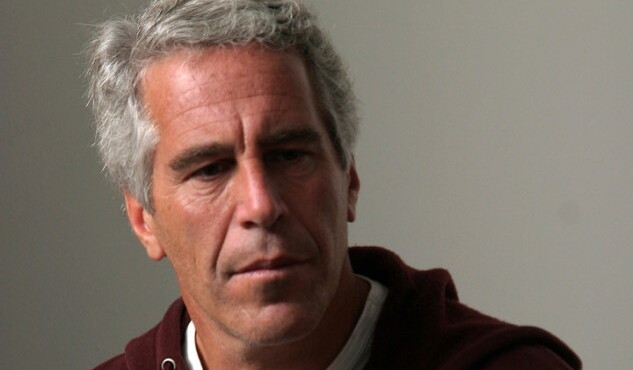
Six women who say they were sexually assaulted by Jeffrey Epstein are suing his estate and its co-executors for damages under New York City law.
The women brought their claims under New York City’s Gender-Motivated Violence Act, a broad civil rights law that allows survivors of such violence who were harmed prior to Jan. 9, 2022, to sue their abusers.
Darren K. Indyke and Richard D. Kahn, co-executors of Epstein’s estate, “played critical roles in enabling Epstein’s acts of gender-motivated violence against Plaintiffs by providing Epstein the necessary financial and legal support for his sex trafficking operation by which Plaintiffs were victimized,” the complaint filed in New York Supreme Court Wednesday says.
Epstein’s estate, Indyke, and Kahn agreed earlier this year to pay $35 million to resolve outstanding legal claims by at least 40 victims who sued in federal court. That agreement followed a payment by the Epstein Victims Compensation Program of $121 million to 136 claimants and a later $48 million settlement on behalf of 59 victims.
Each of the women in Wednesday’s complaint say they ranged from 16 to 24 years old when, between 2001 and 2005, Epstein began committing acts of gender-motivated violence against them in New York.
The complaint cites a similar state court lawsuit brought by seven other women earlier this year under the GMVA.
The trial court judge in that case, Adam Silvera, largely rejected Indyke and Kahn’s motion to dismiss the matter, disagreeing with the co-executors that the city law claims are preempted by state law.
He did dismiss the punitive damages claims, saying it’s not an appropriate remedy against an estate.
Enabling Violence
Indyke, the financier’s attorney, and Kahn, Epstein’s long-time accountant, violated the GMVA by enabling Epstein’s violent acts, the plaintiffs say.
Indyke “conspired with Epstein” by managing and facilitating the financial side of his sex trafficking operation, counseling the financier on general financial and legal matters pertaining to the operation, and funding the facilities where Epstein sexually abused the plaintiffs, the complaint says.
Kahn “was a de facto financial manager of Epstein’s sex trafficking operation,” the complaint continues.
While Kahn managed the expenses, Indyke withdrew cash in amounts that didn’t trigger federal reporting, the complaint says. Epstein and entities he owned paid more than $16 million to Indyke and $10 million to Kahn.
Much of the background information in the plaintiffs’ complaint comes from a 2025 Wall Street Journal article detailing Kahn’s and Indyke’s Epstein ties.
The plaintiffs have and will continue to incur medical expenses and other economic damages as a result of the physical injury, psychological and emotional distress, mental anguish, and embarrassment that they’ve sustained from Epstein’s violent acts, the complaint says.
Kahn and Indyke are liable for compensatory and punitive damages, the plaintiffs say.
Indyke and Kahn “emphatically reject the allegations that they were complicit in or in any way knowingly facilitated Mr. Epstein’s sexual abuse or trafficking — conduct that by all accounts occurred behind closed doors, in secluded locations, and at times when neither Mr. Indyke nor Mr. Kahn was present,” Daniel H. Weiner, a lawyer for the Epstein estate, said in an email.
“Not a single woman has ever accused Mr. Indyke or Mr. Kahn of committing sexual abuse or witnessing sexual abuse, nor claimed at any time that she or anyone else reported to them any allegation of Mr. Epstein’s abuse,” added Weiner, who’s a partner at Hughes Hubbard & Reed LLP.
Hughes Hubbard, Patterson Belknap Webb & Tyler LLP, and Troutman Pepper Locke LLP have represented, respectively, Indyke, Kahn, and the Epstein estate in similar cases in federal and state court.
The plaintiffs are represented by Merson Law PLLC.
The case is Christiansen v. Indyke, N.Y. Sup. Ct., docket number unavailable, complaint 8/19/26.