
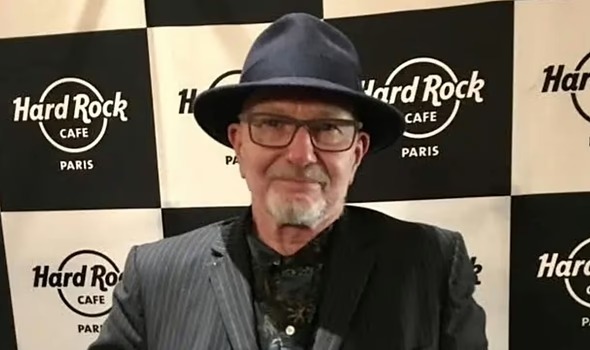
 Photo Credit: Facebook
Barry Mitchell, the bassist who played a brief but foundational role in Queen’s earliest lineup before the band settled on the classic quartet that became one of rock’s most famous acts, died on August 17, 2026, in the U.K., at the age of 80.
Before joining Queen, Mitchell had already built a career in Britain’s underground rock scene, playing with Crushed Butler, a band later known as Tiger and widely credited by music historians as one of Britain’s first proto-punk acts. That background put him in the room when Queen, then still finding its footing, needed a new bassist after founding member Mike Grose departed the group in mid-1970.
Mitchell joined Queen in August 1970, becoming the band’s second bassist following Grose’s brief three-gig tenure earlier that year. Over roughly five months, Mitchell played 13 live shows alongside Freddie Mercury, Brian May, and Roger Taylor, a period during which the band was still performing in small venues with no indication of the global stardom that awaited them. In a 2018 interview with Rolling Stone, Mitchell recalled that Queen at the time bore no resemblance to the cult act they would later become, saying he simply didn’t see the potential in the band during his short stint with them.
Despite the brevity of his time in Queen, Mitchell’s contribution to the band’s foundation proved more lasting than his tenure suggests. He is credited with laying down many of the original bass lines for early Queen songs including “Liar” and “Son and Daughter,” material that would carry forward into the band’s studio recordings even after his departure. John Deacon, who joined Queen in February 1971 to complete its classic and enduring lineup, would later develop his own live variations on some of the bass parts Mitchell had originally written, a detail that speaks to Mitchell’s quiet but real influence on the band’s formative sound.
After leaving Queen in January 1971, following a brief interim period in which the band performed two shows with bassist Doug Bogie, Mitchell stepped away from the music industry for a number of years before returning in the 1990s, performing with the group Jayne Raydio.
News of Mitchell’s death was confirmed by Queen’s official archivist, Greg Brooks, who paid tribute to him on social media, writing that his anecdotes at fan conventions had offered rare insight into the band’s earliest days and that he would be greatly missed.
Mitchell is remembered by Queen’s fanbase and historians as a quiet but essential link in the chain that led to the band’s classic lineup, a musician who helped shape some of Queen’s earliest recorded material during a period when the band was still very much unknown, before John Deacon’s arrival completed the group that would go on to become one of the most successful rock acts in history.