
Across Long Island, suburbanites echo the same refrain in every village hall where a housing development is on the agenda: “We don’t want our neighborhood to look like Queens.”
Over 100,000 new residents have been added to Long Island in the past 20 years, with a modest annual growth rate far below 1%, but activists in the villages where most of the housing is being added are not happy with the influx of people onto the already crowded island.
In Mineola, where the village board has approved over 1,000 new units in the past 20 years, more than any other village on Long Island, resentment is growing. Seventeen-year-old activist Thomas Breslin, who was born and raised in the village, got involved in local politics because of the changes he saw in his community.
“There’s huge concern that our village is going to look like Queens, [but] we want to maintain our suburban character,” Breslin said.
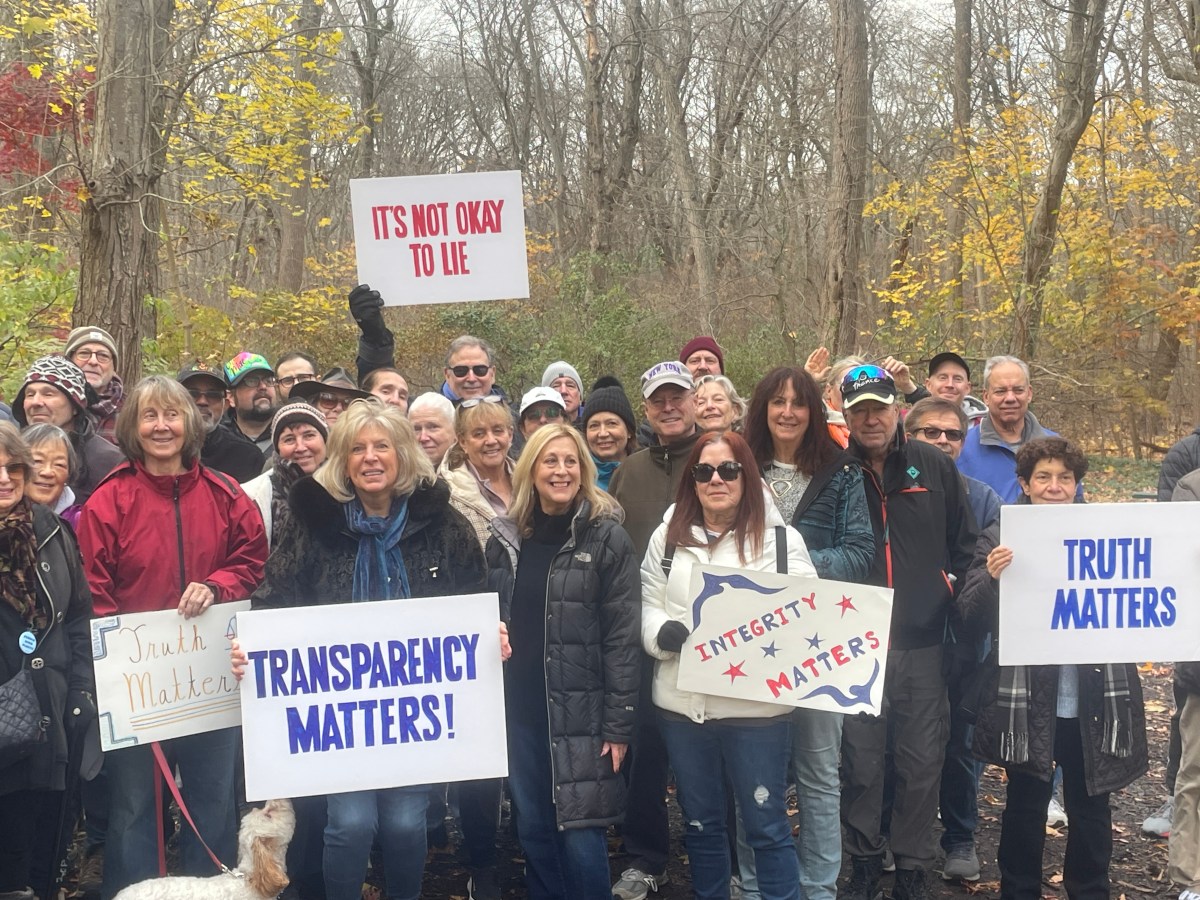
In Great Neck, another area of Long Island that has seen some of the fastest development, residents have organized several campaigns against projects on the peninsula.
“Developments are being haphazardly put up throughout the peninsula,” said activist Nancy Sherman. “It will change the character of the community.”
Not-in-my-backyard, or NIMBY, activist groups like these are common throughout Long Island’s 96 villages, and they share similar tactics, organizing strategies, and arguments.
Not-in-my-back-yard activists claim their villages will see increased traffic, a burden on schools, and strain on plumbing if apartment buildings are approved and cast themselves as the defenders of suburbia.
These NIMBYs often organize public pressure campaigns on WhatsApp channels or Facebook groups like All Things Mineola, which has 6,300 members, or Great Neck Guardians and Save Kings Point Park, which each have over 1,000 members.
“Is it too late to keep Mineola suburban?” one user wrote.
“Again more queens coming to Mineola. So glad I didn’t return. What a great town it was,” wrote another.
Residents flock to board meetings in protest of the latest development, and it often gets ugly. Residents lob accusations at board members, mayors shout back at their neighbors, and lawsuits against the village are announced.
In one meeting in Great Neck earlier this year, a resident shouted at the board, “It disturbs me to learn that the park, our state legislature, private entities, development companies, and others are engaging in a partnership that is occult.”
After a heated exchange, another resident was kicked out for refusing to end his filibuster.
Lawsuits claiming that a village did not comply with the State Environmental Quality Review Act or their village code before approving construction are common.
In Williston Park, residents have commenced a lawsuit blocking the construction of an 18-unit apartment building, arguing that the building does not have appropriate setbacks.
In Great Neck, residents have brought a SEQRA lawsuit against the United Mashadi Jewish Community of America and the Village of Kings Point for attempting a land-swap to build a parking lot for the organization’s 54-foot-tall community center.
And in 2022, Sherman and several others successfully blocked the demolition of a 100-year-old car dealership to build a 75-unit apartment building in the Village of Thomaston with a SEQRA lawsuit. After the village backed down, activists got the board to declare the building a landmark. Since their victory, Sherman has won a seat on the village board along with two other activists, Jay Chagrin and Aaron Halpern.
Thomaston Mayor Steve Weinberg said he was shocked by the community’s response.
“I got to experience the no-holds-barred, ‘we’re gonna attack you on every front. We’re gonna commence a lawsuit. We’re gonna file criminal complaints,’” he said. “The opposition’s position was they didn’t want any change in the community.”
Ultimately, Weinberg and the board backed down.
“Even if I think something is a good idea, if my residents are against it, I’m not gonna do it. They have an important voice in this process,” said Weinberg.
Village of Great Neck Mayor Pedram Bral was elected after running a campaign criticizing then-Mayor Ralph Kreizman’s approval of a 191-unit apartment complex, but he has since changed his mind about the project’s benefits and development in general. Bral said he is focused on making Great Neck more affordable and has overseen the construction of several apartment buildings during his tenure.
“One of the driving forces for me is that, if we want to make sure that Great Neck is affordable 10-15 years from now, that our children can still afford to stay in Great Neck, we need to increase the number of living spaces and apartments,” said Bral.
Mineola Mayor Paul Pereira said he has also received considerable pushback from residents over developments.
“They think we’re building too high, too quick, too dense, and that we’re losing this kind of suburban feel,” Pereira said, but he warned that looking at what is said on Facebook groups does not give an accurate picture of the community.
“I don’t really pay attention to what is said on social media,” he said. “I think that gives a skewed picture of what the public really thinks.”
One reason for opposition against multi-family housing often lurks in innuendo: race. Nassau County has been ranked the most segregated county in the US, and increased density threatens to upset the status quo of de facto segregation. In 2017, the Village of Garden City was found to have discriminatory housing policy with “the Court conclud[ing] that some of the expressions by Garden City residents of disapproval for affordable housing reflect[ing] race-based animus.”
In Suffolk County, the 10th most segregated county in the country, Lindenhurst Mayor Michael Lavorata said some of the concerns he has heard from residents over a new apartment building were racial.
“Some people, I hate to say it, they pull the racial card,” Lavorata said. “What do you mean by ‘those people’ are gonna move in? Stop. This is America. Anyone can live where they want.”
Beyond multi-family housing developments, mayors in smaller villages across Long Island say they have faced similar backlash when making any change to their community.
Mayor Porscha Lyons of South Floral Park, the smallest village in New York by area, said residents pushed back against selling a vacant parcel of land to build a single-family home, and in Roslyn Estates, Mayor Adam Koblenz said residents were upset over the installation of an antenna.
In Munsey Park, the village received grant money to improve one of its nature parks. Mayor Lawrence Ceriello said they planned to add benches and replace some trees, but rumor spread they were going to transform it into a sports park.
“Word spread that we were planning to put basketball courts,” said Ceriello. “At one of the meetings, people came in and they wanted to hang me.”
Despite the intense pushback he received, Weinberg said that residents’ voice in their community is a reason to live in a village.
“It’s probably the most efficient form of government there is and the most responsible form of government there is,” he said. “You’ve seen what happens to a village that dares to do something its residents don’t want. It’s gone.”