
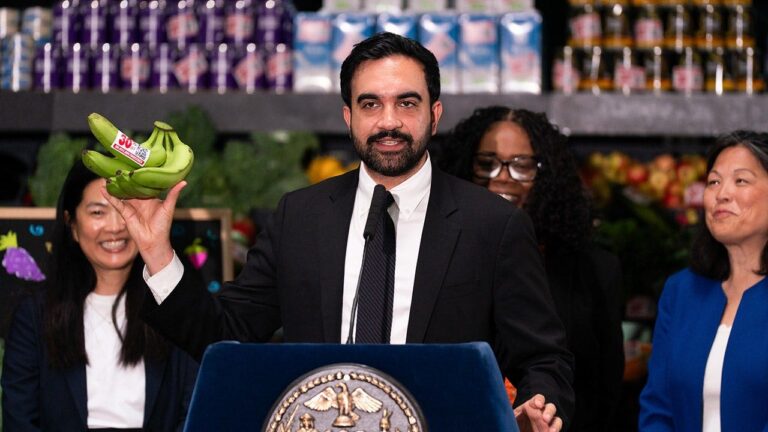

NEW YORK (VINnews) — New York City taxpayers may face costs on two fronts under Mayor Zohran Mamdani’s plan for government-owned grocery stores, first through a $70 million commitment to open five municipal outlets and potentially again through tax breaks, incentives and zoning benefits aimed at supporting independent grocers that must compete alongside them.
Subscribe to our Daily Roundup Email
City officials are examining ways to ease expenses for private grocery operators as the administration advances taxpayer-subsidized stores that will receive low- or no-cost real estate, city-funded buildouts and other subsidies. The New York City Economic Development Corporation, which is overseeing the program, said it is not currently considering grant programs for existing grocers. It is, however, exploring tax abatements, incentives and zoning benefits through existing initiatives such as the FRESH program and Mamdani’s OPEN for Small Business package of reforms intended to reduce fines, fees and bureaucracy.
The five stores — one planned for each borough — are expected to sell a core basket of everyday staples at prices 30% below those of comparable retailers. Private operators selected through a request for proposals will handle day-to-day operations, including staffing, merchandising and product sourcing. The city will set pricing requirements and operating standards, provide the locations and absorb major occupancy costs.
The first store is projected to open in Hunts Point in the Bronx by the end of 2027. Additional sites are planned for East Harlem (including construction at La Marqueta expected by 2029), Brooklyn, Queens and Staten Island, with all five targeted to open by the end of Mamdani’s first term. The mayor has allocated $70 million in capital funds for the project.
Mamdani has described the model as a way to lower grocery bills by eliminating costs such as rent and profit margins. Grocery prices in the city have risen substantially in recent years, outpacing national averages in some measures.
Critics argue the approach shifts costs to taxpayers and risks harming private businesses. Adam Lehodey, a policy analyst at the Manhattan Institute, said the advertised 30% savings amount to an illusion because “taxpayers will foot the bill for millions of dollars in subsidies, and they will operate on government-owned land with rents waived. New Yorkers will still be paying the full price, just indirectly.” He also warned that artificially low prices could encourage reselling and create shortages.
E.J. Antoni, chief economist at the Heritage Foundation, said a 30% discount at stores that typically operate on roughly 2% profit margins “is simply a loss for taxpayers who will have to make up the difference.” He added that the prices would harm small businesses that lose sales to the subsidized outlets.
An EDC official previously indicated the agency was reviewing complementary policies and programs, including grants and incentives, to support other local independent businesses in the neighborhoods. The corporation later clarified to Fox News Digital that grants are not under active consideration at this time.
Mamdani’s office referred questions about the plan to the EDC. The stores are intended to generate additional foot traffic that could benefit nearby businesses, according to the agency.
Follow VINnews for Breaking News Updates