
Brooklyn is greener than it used to be but has fallen short of the city’s goal of 30 percent tree canopy to reduce flooding, pollution, and temperatures.

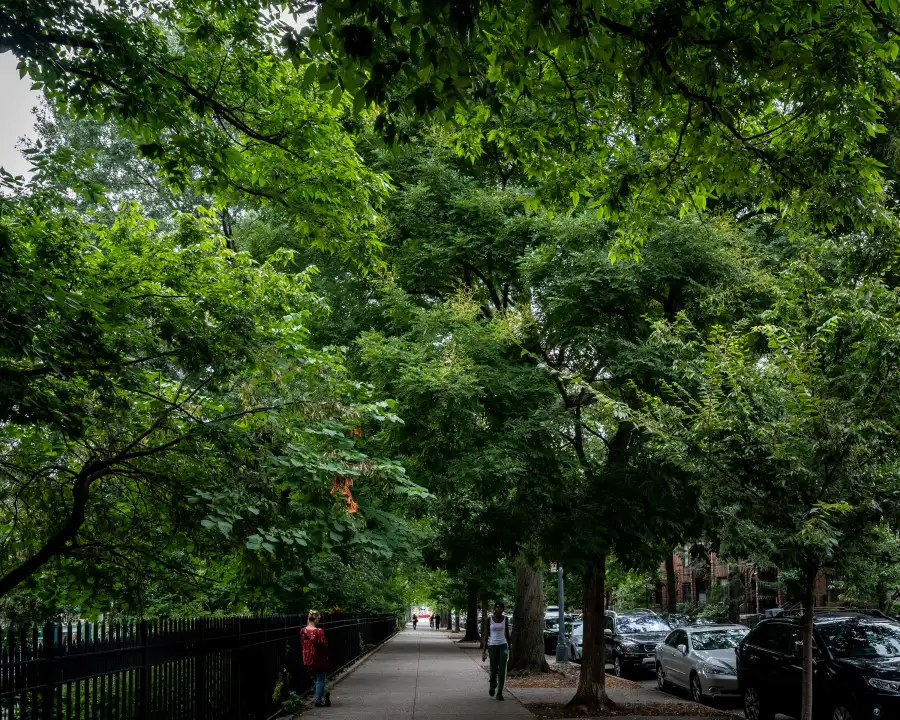
The city’s Urban Forest Plan aims to expand and protect New York City’s tree canopy, with a goal of reaching 30 percent coverage by 2040. Photo by Gabriele Holtermann
by Gabriele Holtermann, Brooklyn Paper
As summers grow hotter due to the climate emergency, New York City is taking a crucial step toward addressing the devastating impacts of climate change on people and the ecosystem with a new plan for city trees.
The Urban Forest Plan aims to expand the tree canopy — the land covered or shaded by trees — as part of the city’s long-term climate resiliency strategy, outlining ways to equitably increase tree canopy coverage to 30 percent by 2040 by adding an average of 700 acres per year for the next 14 years.
Led by the Mayor’s Office of Climate and Environmental Justice in collaboration with the NYC Parks Department, City Parks Foundation, Partnerships for Parks, Natural Areas Conservancy, and The Nature Conservancy, with support from WXY architecture + urban design, the plan serves as a roadmap to preserve existing tree canopy on public and private land, plant more trees, and expand the network of people caring for the ecosystem.
Michael Treglia, lead scientist for The Nature Conservancy’s New York Cities Program, is excited about the comprehensive plan for New York City’s urban forest.
“The city’s never had a holistic kind of approach to thinking about the tree canopy that really provides so many benefits to New Yorkers in lots of different contexts, especially thinking about heat as we’re dealing with these heat waves and such, but also in terms of flooding,” Treglia told Brooklyn Paper.
The plan builds on efforts in the last 15 years or so to plant bioswales with trees covering 30 percent of New York City by 2017 to absorb rainwater and reduce temperatures. In Brooklyn, largely treeless blocks from Fort Greene to Ocean Hill and Brownsville were greened with trees and native plants.
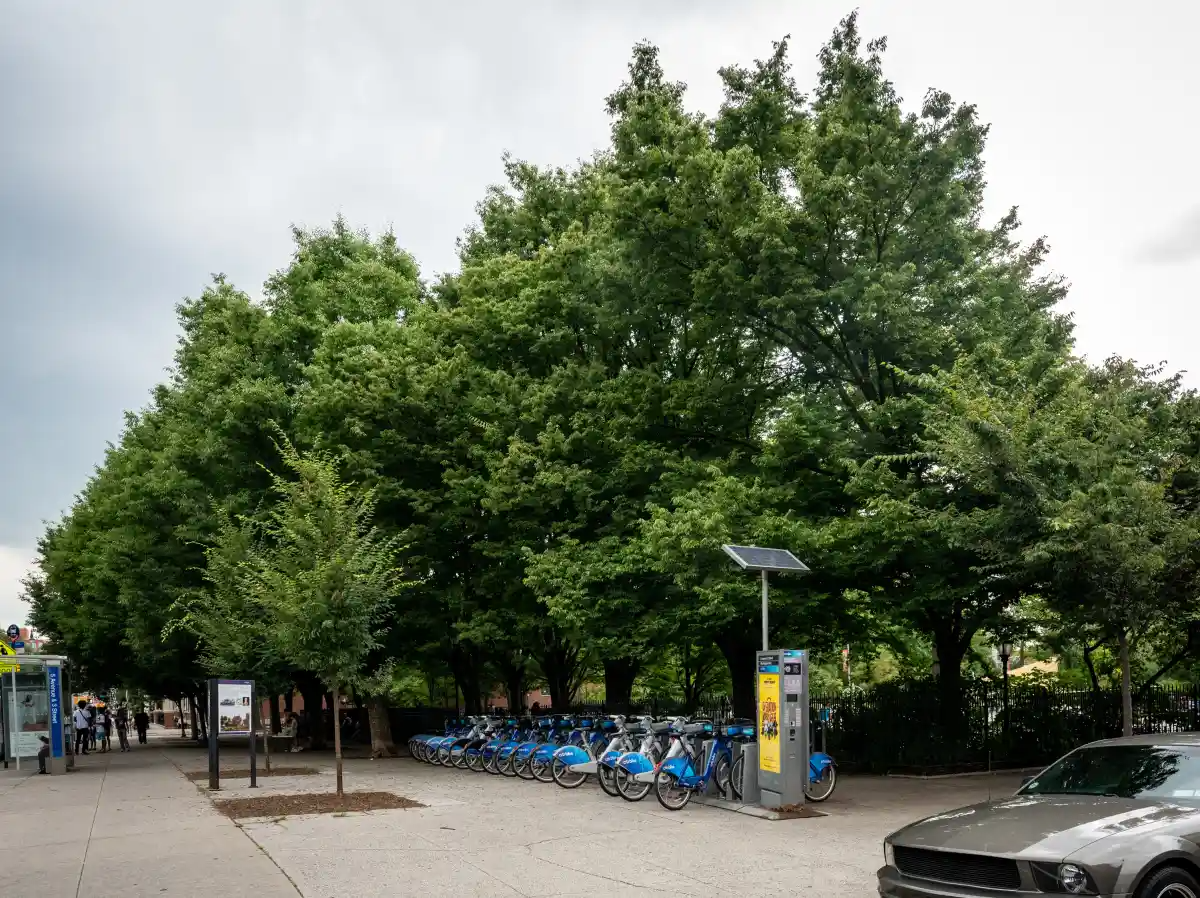 The Urban Forest Plan aims to equitably expand the tree canopy. Photo by Gabriele Holtermann
According to 2021 data, tree canopy covers 23.4 percent of New York City, or approximately 45,000 acres. Since 2017, canopy coverage has grown by 1.2 percent. However, canopy coverage remains unevenly distributed across the five boroughs. Staten Island has the largest canopy coverage at 33.4 percent, followed by Queens at 26.7 percent, the Bronx at 22.7 percent, and Manhattan and Brooklyn at 19.5 percent each.
However, Environmental Justice communities in New York City — neighborhoods with unhealthy levels of air pollution and, consequently, greater health risks — have 19 percent tree canopy coverage, compared with 26 percent in other areas. In all boroughs, there are neighborhoods with canopy levels far below borough or citywide averages. In Brooklyn, the neighborhoods with the lowest canopy coverage are Sunset Park West, at 10 percent, and Gravesend and Bensonhurst, at 13 percent.
The benefits of trees in an urban setting are numerous: They are natural air conditioners, lowering surface and air temperatures by providing shade and cooling, and can cool city streets by up to 2 degrees Farenheit. Forested natural areas are, on average, 6 degrees cooler than surrounding neighborhoods. Trees protect against harmful UV rays, provide habitat for wildlife and pollinators, improve air quality, reduce greenhouse gas emissions, and manage stormwater runoff.
New York City’s 7 million existing trees remove 1,100 tons of air pollution and sequester an estimated 51,000 tons of carbon per year, helping to slow the pace of the climate emergency. They also reduce stormwater runoff by 69 million cubic feet.
More trees also improve public health by reducing cases of acute respiratory illnesses and lowering instances of heat-related illnesses and deaths. Studies have shown that nature can positively impact mental health and reduce blood pressure and stress.
“Trees provide lots of benefits, especially in this context of climate change,” Treglia explained. “Trees are not the the full solution to any of these problems, but as we think about the city, [or] any global megacity, as we’re dealing with the climate changing world, trees and other nature based solutions are really a critical part of a more resilient and livable city that people can thrive in, while also supporting biodiversity and just a more verdant landscape that people can enjoy.”
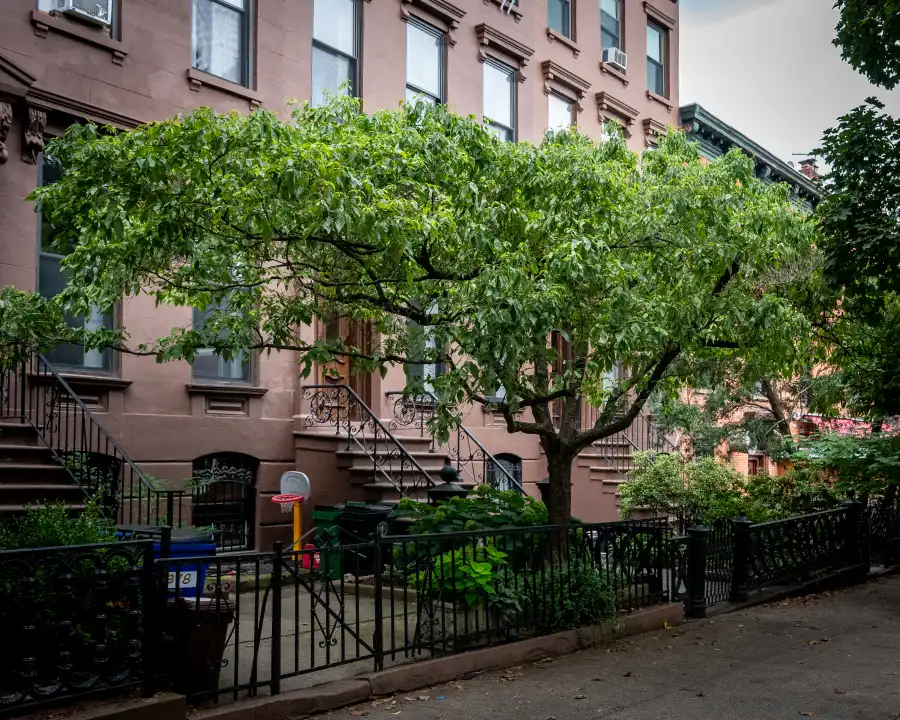 The benefits of trees in an urban setting are numerous. Photo by Gabriele Holtermann
Achieving the goals of the UFP requires cultivating current and new stewards of the urban forest, from strengthening volunteer stewardship practices and opportunities to expanding urban forestry-related jobs.
Treglia contrasted the new strategy with the MillionTreesNYC initiative launched under former Mayor Michael Bloomberg as part of PlaNYC, which focused on encouraging sustainable projects across the city. While he credited the earlier program with contributing to gains in tree canopy, he said the current plan goes further by pairing planting with long-term stewardship and protection. Planting large numbers of trees is valuable, he said, but “without having long-term maintenance, long-term plans, and maintenance of the trees that were already present, you know, it’s not really certain what the long-term changes will be.”
“The Urban Forest Plan is really looking at trees and tree canopy holistically across the city, not just on public property but also on private property, and thinking about how people can be engaged in what we refer to as the New York City urban forest,” Treglia said, acknowledging that the tree-planting initiative under Mayor Bloomberg was valuable but different. “Being able to look holistically through the lens of tree canopy really requires thinking about not just planting new trees, but also how do we really protect and preserve and steward the trees that we have across the landscape.”
Editor’s note: A version of this story originally ran in Brooklyn Paper. Click here to see the original story.
Related Stories
Email tips@brownstoner.com with further comments, questions or tips. Follow Brownstoner on X and Instagram, and like us on Facebook.