
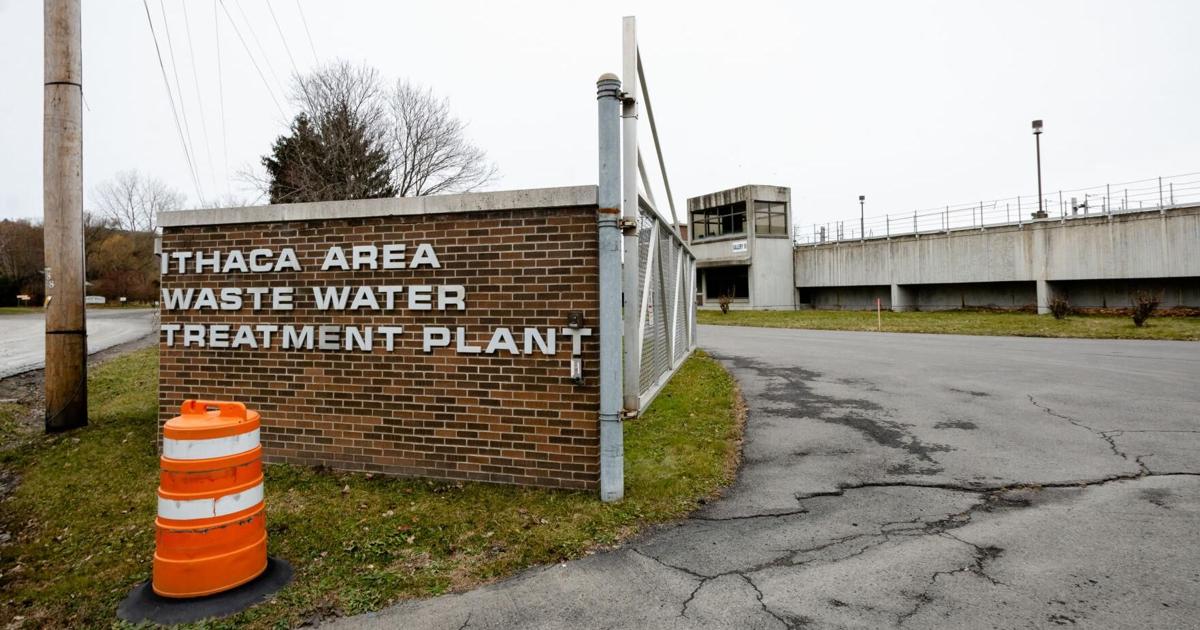
Four Tompkins County municipalities secured a total of $135,000 in state grant funding to protect local drinking water and wastewater infrastructure against cybersecurity threats.
State Sen. Lea Webb announced Aug. 6 that the awarded funds are from the state’s Strengthening Essential Cybersecurity for Utilities and Resiliency Enhancements (SECURE) grant program. A total of $200,000 was awarded to municipalities in Webb’s district.
The City of Ithaca received $75,000 in state funding to bolster its water infrastructure against cyber threats. Specifically, the City of Ithaca received $50,000 for general municipal cybersecurity upgrades and $25,000 targeted for a drinking water system cybersecurity assessment.
Other county municipalities that received grant funding include the Village of Dryden ($25,000 for its SECURE Grant), the Village of Freeville ($10,000 for its SECURE Grant Application), and the Village of Trumansburg ($25,000 for its Wastewater SECURE Grant Assessment).
The Ithaca Times emailed each municipality for comment but did not receive responses before publication.
Other municipalities in Webb’s district that acquired the state funds include the City of Cortland ($25,000 each for its water and wastewater treatment plant cybersecurity assessments) and the Town of Virgil ($10,000 each for its water and wastewater SECURE Grant assessments).
“Our wastewater and drinking water systems are cornerstones of public health, and it is absolutely critical that we continue to provide localities with funding to help them make improvements,” Webb said in a press release. “This funding will help municipalities strengthen their cybersecurity posture against dangerous cyber threats. Clean water is essential to public health, and as infrastructure systems increasingly rely on digital and internet-connected technologies, we must continue to invest in safeguards against cyberattacks.”
Webb said the SECURE grants and free technical assistance from the Environmental Facilities Corporation help local governments meet state cybersecurity standards for drinking water and sewer systems.
New York state’s website says the SECURE grant program offers municipalities “the tools to prevent, detect, and respond to increasingly sophisticated and dangerous cyber threats to critical water infrastructure while strengthening services that millions of New Yorkers rely on every day.”
City of Ithaca Public Information Officer Alan Karasin said the funds ensure the city’s compliance with state cybersecurity regulations by Jan. 1, 2027. The requirements are set by the state Department of Health and the Department of Environmental Conservation.
Karasin said the funds will be split between two city treatment systems. Karasin said the city will allocate $50,000 to its wastewater treatment plant and $25,000 to its water treatment plant. Karasin said both grants aim to strengthen security for the plants’ supervisory control and data acquisition (SCADA) platforms, the software and technology that runs the infrastructure.
“SCADA systems are used to control tank levels, pumping systems, blowing equipment, chemical feed rates, communications, alarm systems, and general notifications,” he said.
The city already implemented security controls and policy requirements mandated by the state Department of Health, according to Karasin. He said the city benefits from shared services through the New York State Division of Homeland Security and Emergency Services, including examination of local infrastructure risks and enhanced asset protection. He said the grant funding will be used to close security gaps and confirm ongoing compliance and resilience.
Karasin said the water treatment plant received upgrades in 2016, but its security system needs to be enhanced to meet new state requirements. Karasin said the wastewater treatment plant, built in 1986, relies on a basic SCADA system that requires a “complete upgrade.”
“The good news is both the WTP and WWTP are largely stand-alone systems meaning that they aren’t generally connected to the wider internet,” Karasin said.
Historically, the city has paid for these security and system assessments using operating funds and capital improvement projects, according to Karasin. He said the water treatment plant receives routine cybersecurity audits through the city’s broader cybersecurity program.
Philip O’Dell is a news reporter for the Ithaca Times and Finger Lakes Community Newspapers, covering various topics that include local government and crime. Reach him via email at philip@ithacatimes.com.