
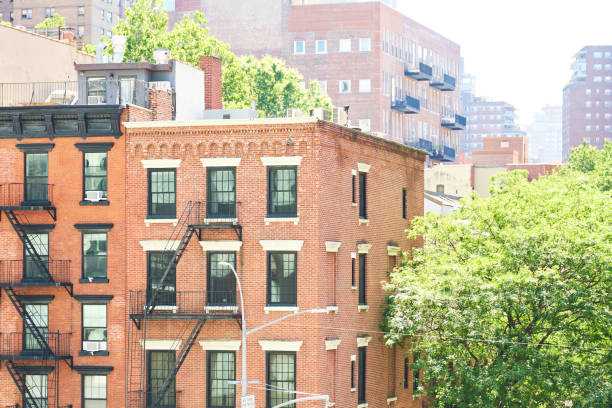
New York City recently released a draft report of its Fair Housing Growth Strategy, which went into detail the number of housing units needed across each borough now and in the future to ensure a healthy vacancy rate. The city will be releasing its first full Fair Housing Growth Strategy in October, with additional reports set to be put together and released every five years.
The main purposes behind the Fair Housing Growth Strategy are to answer how much housing is needed across New York City to support a healthier and more affordable housing market and how this housing should be distributed to advance fair housing goals.
Based on the five-year housing production targets required to be made by Local Law 167 of 2023, 350,260 new homes need to be built by 2030 to meet half of New York City’s long-term housing needs. This includes 87,555 affordable homes, 26,255 deeply affordable homes and 13,130 homes for homeless households. The five-year home preservation target is 100,000 homes.
Queens has a targeted five-year total goal of 86,455 new homes being built across its 14 community districts in the borough by 2030. This would include 21,605 affordable homes, 6,475 deeply affordable homes and 3,240 homes for households experiencing homelessness.
Queens Community District 1, which includes Astoria and Queensbridge, has the most targeted new homes to be built, at 9,890. This district also leads the way with 2,470 planned affordable homes, 740 planned deeply affordable homes and 370 planned homes for households experiencing homelessness.
The targeted five-year totals for new homes across the other boroughs of New York City include 106,435 in Brooklyn, 85,685 in Manhattan, 54,010 in the Bronx and 17,675 in Staten Island.
There were 26,605 affordable homes, 7,985 deeply affordable homes and 3,985 homes for homeless households called for in Brooklyn, 21,420 affordable homes, 6,420 deeply affordable homes and 3,215 homes for homeless households in Manhattan, 13,505 affordable homes, 4,050 deeply affordable homes and 2,025 homes for homeless households in the Bronx and 4,420 affordable homes, 1,325 deeply affordable homes and 665 homes for homeless households in Staten Island.
New York City is currently experiencing one of the tightest housing markets in its history, largely due to decades of underproduction. As of 2025, only 1.41% of apartments across the city were available to rent, reflecting a scarcity of available housing.
The Fair Housing Growth Strategy is meant to provide New Yorkers with a greater choice to move through an increase in housing production, including in areas that have historically not added much housing or have limited affordable options. Additionally, a greater choice for more stability to allow people to stay in their current homes is another priority. This will be achieved via preservation and tenant protections, as well as investments and programs that can empower communities and accommodate growth.
Making significant additions to housing across New York City can help address several common issues contributed to by housing shortages. Such issues include high rents, multiple families occupying a single apartment, an overextended shelter system and adults not being able to leave their childhood homes or find a place they can afford to live in without relying on a roommate.