
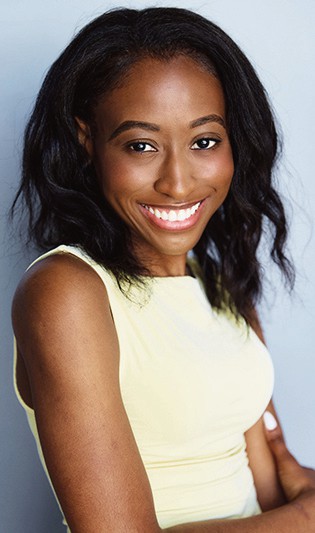

Asia Gordon is a Queens-born, New York-based filmmaker, actor, writer, executive producer, visual artist, senior graphic designer, and creative director. A graduate of the High School of Art & Design and the School of Visual Arts, as well as a Meisner-trained actor from the William Esper Studio, she brings a distinctive visual perspective to every project, blending cinematic storytelling with design to create visually driven stories that explore perception, emotion, and the complexities of the human experience.
With more than nine years of experience in design across media, entertainment, and marketing, Asia has led the creative development of brand campaigns, digital content, and visual storytelling, including work with iHeartMedia. Her design background informs every stage of her filmmaking, from shaping the visual language and creative direction to building immersive, story-driven worlds.
As an independent filmmaker, Asia is the creator, writer, executive producer, and lead actor of the psychological thriller Quiet Wing, an Official Selection of the 2026 Big Apple Film Festival and recipient of the Audience Choice Award at the 2026 New Faces New Voices Film Festival. The film reflects her commitment to creating opportunities for emerging artists while exploring themes of perception, emotional vulnerability, and the complexities of the human mind. She is currently developing Takers, a vertical micro-drama series, expanding her work into emerging digital storytelling formats.
Passionate about authentic representation and mental health awareness, Asia strives to tell stories that encourage empathy, foster connection, and spark meaningful conversations through film and art.
 NB: Other than the amazing diversity, what do/did you love most about living in Queens (or Queens in general)?
AG: What I love most about Queens is the balance. Growing up in Jamaica, Queens, I always felt like I got the best of both worlds. I could hop on the train and be in Manhattan with all that fast-paced city energy, but I was also close to Long Island, the airports, parks, malls, and neighborhoods that had more of a suburban feel. You can be on Jamaica Avenue where it’s loud, with music, food, streetwear, and people everywhere, and then go to another part of Queens and walk down these quiet blocks with beautiful houses and completely different architecture. Growing up around all of that made me a chameleon. I learned how to walk into different environments, still be myself, and be curious about the people around me. I’m naturally an observer, so I’m always taking in the smallest details, and that’s definitely carried over into my work as an artist. I also love the convenience of Queens, you can find almost anything you need without leaving the borough. Over the years, I’ve definitely seen things change. Prices have gone up, there’s been more development, and some of the businesses and places I remember growing up are no longer there. I remember going to the movies near Green Acres Mall all the time as a kid and then heading to the mall afterward, and that theater isn’t there anymore. At the same time, Queens still feels like Queens to me. Every neighborhood has its own personality and energy, and even as things change, that sense of identity still feels very much alive. I think that’s something I appreciate even more now that I’m older.
NB: How does Queens inspire you? What are some of your favorite places to be inspired in Queens?
AG: Queens inspires me visually, but also through the people and the different energy you get from each neighborhood. I was a very introverted kid, so I was always observing everything around me, how people dressed, how they talked and carried themselves, the architecture, the music, even little things happening on the corner. Jamaica Avenue was almost a sensory overload growing up. It was loud and in your face, with streetwear stores, so many different smells from the food, roasted almonds being sold on the street, people yelling and selling things, and just constant movement. Jamaica Ave. also had its own urban language and street slang. There was a certain way people talked, dressed, moved, and communicated with each other that was specific to that environment. You had to pay attention to your surroundings, and I think growing up around that made me very observant, which is something I use all the time. Forest Hills inspires me in a completely different way. As a kid, I would look at the houses around 71st-Continental and think, “I’d love to live here someday.” I still love grabbing a matcha and pastry and walking through the back streets looking at the houses. Some of the architecture has this almost Gothic feeling that makes me feel like I’ve stepped into another place, and as a filmmaker, I naturally start imagining characters and stories there. Forest Hills, Astoria, and Long Island City are probably my favorite places in Queens to just wander, find a new restaurant or bookstore, and take everything in. I’ve realized that I don’t always have to sit down and force myself to be creative to find inspiration. Sometimes I just need to walk around, people-watch, listen, and let my mind wander.
NB: What advice do you have for readers hoping to develop their writing, acting, directing, filmmaking, or performing practice? Is artistic talent innate and/or can it be taught/developed? How important is daily practice? Do you ever experience performance anxiety?
AG: I think some part of being an artist is innate. You might naturally have that curiosity, imagination, or need to express yourself, but you still have to develop the talent. I’ve studied art and design, filmmaking, and acting, including Meisner training, and I’m still learning. I think that’s important, always remain a student. But my biggest advice is honestly to just start. It’s okay to embarrass yourself. It’s okay to try something, mess up, and not be great at it right away. Take risks. That’s how you figure out what you’re capable of. Practice is important too, but I don’t think it has to look the same every day. Practice could be writing, acting, watching a film, studying a performance, going to a museum, people-watching, or just paying attention to what’s happening around you. I’ve been an artist since I was five, drawing cartoon characters while watching Cartoon Network, and I grew up really shy and introverted, so I definitely understand being nervous. I don’t think you ever have to completely get rid of that feeling. Sometimes you just have to do it scared. Prepare as much as you can, trust the work you’ve put in, and don’t force the things you can’t control. I also believe that whatever you have to give to this world has a purpose. If there’s an idea that keeps coming back to you, or something was planted in your head that you can’t stop thinking about, I think it’s there for a reason. You owe it to yourself to at least try and see where it takes you.
NB: How important are personal connections and communication/networking in your industry?
AG: Personal connections and communication are really important in this industry, but I don’t really like looking at it as just “networking.” I think it’s more about building genuine relationships with people. The film is very collaborative. You can have an amazing idea, but you can’t do everything by yourself. You need actors, crew, producers, designers, and people who believe in what you’re trying to create. I also think people remember how you make them feel and how you treat them. Talent is important, but so is being someone people actually want to work with again. I try to be genuinely interested in what other people are creating instead of going into a conversation thinking, “What can this person do for me?” Sometimes the best connections come from simply talking to someone, supporting their work, exchanging ideas, and staying in touch. You never know where a relationship might lead, but I think it has to start from a genuine place. For me, it’s about building a community of creatives, not just building a contact list.
NB: What is the best piece of advice you’ve ever received? What is something you wish you knew a decade or two ago?
AG: One of the best pieces of advice I received came from an acting teacher of mine, Bruce. I remember being nervous and hesitant about performing, and he told me something along the lines of, “You’re not nervous. Your instrument knows it’s about to do something, and what you’re feeling is excitement.” That always stayed with me. Now when I feel that nervous energy before performing or doing something that scares me, I try to lean into it as excitement instead of fighting it. Something I wish I understood earlier is that there isn’t one correct timeline for being an artist or building a creative career. The path isn’t always linear. I’ve worked in design, acting, writing, producing, and filmmaking, and at one point those may have seemed like separate paths, but now I see how much they all inform each other. My design background affects how I direct, acting affects how I write and work with performers, and producing has taught me how to take an idea and actually build something from it. I would tell my younger self to stop worrying so much about where everything is leading. Keep learning, stay curious, and trust yourself. Sometimes the path only makes sense when you look back at it. If I could sit next to my 14-year-old self on the F train heading to the High School of Art & Design, I’d probably just tell her, “You’re going to figure it out.”
NB: Who are some of your favorite teachers, photographers, actors, writers, artists, directors, performers, producers, and comedians with a Queens connection?
AG: There are so many, but Nas is definitely one. He’s an amazing lyricist and storyteller, and being from Queens, you can’t not appreciate what he’s done. I have to include Salt-N-Pepa too. I love their energy and confidence, and seeing women have that kind of presence in hip-hop really stood out to me. They were bold, feminine, and completely themselves. Awkwafina is another one. I love Nora from Queens; that’s my show! I love her humor and how she brings Queens into her work. I also have to mention 50 Cent because we grew up in the same neighborhood, so if I didn’t name-drop him, it just wouldn’t be right. But seriously, I admire what he’s built. Watching him go from music into producing hit television shows and building an empire is inspiring, especially because I’m interested in producing and creating my own work. Zoe Saldaña is a phenomenal actress. I remember watching her in Crossroads when I was younger, and seeing where her career has gone since then is amazing. And Fran Drescher, I grew up loving The Nanny. Her voice, her personality, her comedy, and the way she’s always completely herself, I love it. That woman is a beast. They’re all different, but I think that’s what I like about them. They each have something about them that feels unapologetically themselves.
NB: What are your favorite restaurants, cafes, businesses, theaters, exhibits, museums, communities, and venues in Queens? Favorite places to perform?
AG: One of my nostalgic favorites is Margherita Pizza on Jamaica Avenue. I’m very particular about pizza, and theirs has the right balance, the crust isn’t too doughy, and the cheese-to-sauce ratio is on point. I keep it simple: an original slice, no meat, and garlic knots. Forest Hills is another favorite area. I love grabbing a matcha and pastry around 71st-Continental and then walking through the residential streets just looking at the architecture. I also love Astoria and Long Island City because I can wander around and discover a new restaurant, bookstore, or interesting space. The Museum of the Moving Image is another favorite. As a filmmaker and someone who has loved movies since I was a kid, that place is like a playground for me. I remember seeing a Freddy Krueger glove there and my childhood self almost lost it. It was like a six-year-old seeing Barbie for the first time, I was mind blown. Red Lobster near Green Acres also has a lot of nostalgia for me because my mom would take me there as a reward when I got good grades. So it’s not just about the seafood; it reminds me of being a kid and celebrating those little accomplishments with my mom. JCAL Jamaica Center for Arts & Learning is meaningful to me too because I studied ballet there when I was around 14. I’ve been performing and creating since I was a kid, so having an arts space like that right in my own community was really special.
NB: What do you wish more people knew about being a director, writer, actress, and filmmaker? What is something you wish you knew before starting this work?
AG: I wish more people knew how much work happens when nobody is watching. People see the finished film, the festival screening, the photos, or the credits, but they don’t see everything it took to get there, the writing and rewriting, finding the right people, scheduling, funding, problem-solving, and sometimes having the courage to invest your own money into something because you believe in it. And even when the film is finished, you’re still not done. Now you have to think about festivals, marketing, promoting it, and getting people to actually show up to the screenings. As an executive producer, especially when you’re wearing multiple hats, whether you’re trying to save money or you’re like me and have a Type A personality and want to be involved in everything, you need a lot of patience. That’s something I’ve really learned. You also have to know how to regulate your emotions and keep a clear head because something is always going to happen that you can’t control. You’re dealing with different personalities, locations, weather, schedules, budgets so Plan A might not work, and you have to be ready for Plan B or even Plan C without losing your mind. I wish I knew earlier that you don’t have to know everything before you start. Prepare, learn your craft, ask questions, and have people around you who know things you don’t, but eventually you just have to do it. Making Quiet Wing taught me so much because there are certain things you can only learn by actually going through the process. You can prepare forever, but at some point you have to trust yourself, take the risk, and make the thing.
NB: What is something you wish I had asked?
AG: What’s your favorite Quote and why? One of my favorites is from Eartha Kitt: “Innocence is one of the most exciting things in the world.” I love it because it reminds me to stay curious and open to new experiences. As an artist, I never want to lose that childlike excitement of discovering something new, taking a risk, or simply being inspired.
NB: What projects do you have coming up? Can you tell us more about Takers?
AG: I’m currently developing Takers, a vertical psychological micro-drama series exploring love, self-worth, and the complexities of modern relationships. I can’t say too much about the story yet, but I’m really excited about it. The vertical format is also giving me an opportunity to challenge myself creatively and explore a different way of telling a story while still keeping it cinematic and visually intentional. There’s definitely more to come with Takers, but for now, I want to keep a little mystery around it.
NB: If you could choose only one piece of writing or film to represent Queens, what would it be and why?
AG: This is a hard one, but I’m going to take the fun route and say Spider-Man. Peter Parker is a kid from Queens who ends up navigating this much bigger world, and there’s something about that I’ve always connected with. I grew up drawing cartoon characters and being obsessed with art, so the comic-book world was part of my imagination from a really young age. I also think there’s something very Queens about being surrounded by so many different worlds, dreaming beyond what’s immediately around you, and still having your neighborhood be part of who you are. There are definitely films like Coming to America that represent Queens in a more obvious way, but if I only get to choose one, I’m going with the kid from Queens who became Spider-Man.
NB: What is a typical day like for you?
AG: There really isn’t one typical day, but my mornings are probably the most consistent. I usually wake up excited about what I’m going to eat, honestly. I love an iced matcha with almond milk and marshmallow cold foam from Dunkin’, usually with avocado toast, or I’ll get a sea moss smoothie from Juice Generation. And I’m probably already thinking about what I’m going to have for lunch. I don’t like waking up and immediately looking at my schedule because I usually go over everything the night before. I like to give myself a little time in the morning to just get ready, listen to ‘90s R&B or some high-energy dance music, and get myself in the right mood for the day. After that, every day can be completely different. I could be designing, writing, developing a project, preparing for an acting role, researching, taking meetings, or handling something for a production. My brain is pretty much always taking things in too, so even when I’m not technically working, I might see something or overhear a conversation that gives me an idea. But no matter how busy the day gets, good food and good music are definitely somewhere in it.
NB: How does your design background inform every stage of your filmmaking?
AG: I think being a designer makes it almost impossible for me not to notice everything. I’m always looking at color, what someone is wearing, what’s in the background, how a room feels, where something is placed, or whether something just feels off. Design taught me that almost nothing is neutral. Color, typography, composition, negative space, scale, texture, all of those choices can influence where your eye goes and how something makes you feel without you even realizing it. That naturally follows me into filmmaking. When I’m creating a story, I’m not only thinking about what the characters are saying, I’m thinking about the world they live in and what that world tells us about them. Even something as simple as the color of a room, a piece of clothing, or an object sitting on a table can say something without the character having to explain it. I’m also very particular, so I’ll definitely notice the little things that other people might not care about, which can probably drive people crazy sometimes, but that’s the designer in me. I don’t want something to look good just for the sake of looking good. I want it to feel like it belongs there and helps tell the story. My goal is that if you turned the sound off, you could still feel something and understand a little bit about what’s happening just by looking at the screen. For me, filmmaking is really another form of design, I’m just designing an entire world for the audience to step into.
NB: What’s a wild PG-13 story you have about NYC past?
AG: I don’t really have a pre-cell-phone NYC story because cell phones were already becoming part of life when I was growing up, but I definitely have a New York phone story. I once had my phone snatched right out of my hand. A guy grabbed it and took off running, and naturally, I chased him. He got away, and looking back, chasing a man twice my size probably wasn’t the smartest decision I’ve ever made. Won’t ever do that again! But at the time, I was ready to go off. I wasn’t thinking about any of that, I just wanted my phone back. It’s funny to tell now, but it definitely taught me to be more aware of my surroundings because in New York, you really never know who’s watching you.
NB: Can you tell us about Quiet Wing, its film-festival selections, and your advice for filmmakers about festivals?
AG: Quiet Wing is a psychological thriller that I created, co-wrote, executive produced, and starred in. It was an Official Selection of the 2026 Big Apple Film Festival and received the Audience Choice Award at the 2026 New Faces New Voices Film Festival, which was really special to me because that came directly from the audience. You spend so much time with a film before anyone else sees it developing it, questioning yourself, solving problems, and hoping people will connect with what you’re creating so having an audience respond to it like that means a lot. Quiet Wing is also continuing its festival run with upcoming screenings at the MOMO Film Festival and The Great Film Festival, and I’m super excited about that. Every festival means a new city, a new audience, and a chance for the film to connect with people who are experiencing it for the first time. My biggest advice to filmmakers with festivals is to do your research and be intentional because every festival isn’t necessarily the right fit for your film. And once you get selected, show up if you can. Watch other people’s films, talk to filmmakers, meet people, and actually be part of the experience. For anyone who wants to support an independent film at a festival, honestly, just show up. Buy a ticket, bring somebody with you, talk about the film, share it, follow the filmmakers, and vote when there’s an audience voting. Independent filmmakers don’t have these huge marketing machines behind us, so people genuinely showing up and spreading the word can mean everything.
NB: Can you tell us more about your passion for authentic representation and mental-health awareness?
AG: I’m really interested in what happens beneath the surface of people. Maybe some of that comes from being an introverted kid who spent a lot of time observing, but it also comes from my own life experiences. I’ve been through emotionally abusive situations, and I think sometimes people underestimate emotional abuse because there may not be something physical that you can see, but it can still have a real effect on you mentally. I’ve also had people in my life who have dealt with different mental health issues, and learning more about mental health, educating myself, and going to therapy myself has made these subjects even more important to me. I genuinely care about people’s well-being and trying to understand why people behave the way they do. I always say hurt people hurt people. That doesn’t excuse someone’s behavior, but I think there’s value in understanding what’s underneath it. That’s something I want to explore in my work without reducing people to a diagnosis, an issue, or a label. I want my characters to feel like real people. They can be flawed, complicated, funny, afraid, loving, hurt, or even make choices we don’t agree with, because that’s human. I think film gives us a chance to see the world through somebody else’s eyes for a moment. If something I create makes someone feel seen, helps them realize they’re not alone, or even makes them look at another person with a little more empathy, that means something to me. Sometimes just knowing you’re not the only person going through something can make a difference.
—Nicollette Barsamian
The Local-Express interview series was originated on July 3, 2013 by Nicollette Barsamian.