
This article originally appeared on Inside Climate News, a nonprofit, non-partisan news organization that covers climate, energy and the environment. Sign up for their newsletter here.
NEW YORK—When nearly 10,000 people in Southeast Queens lost power during a July heatwave, Mayor Zohran Mamdani called on residents to keep their air conditioners at 78 degrees Fahrenheit to reduce the pressure on the grid. The New York Independent System Operator, which manages the state’s electricity grid, issued an energy watch the same month, but it wasn’t the first time it sounded the alarm.
In 2025, the NYISO activated its demand response program — which pays participants to reduce electricity use — 22 times to prevent overloads during peak demand; 18 of those occurred in summer. During the previous 10 years, it had not activated that program more than eight times in any single year.
The North American Electric Reliability Corp. released a report in January concluding that New York faces an elevated risk of future energy supply shortfalls, meaning demand could exceed available supply during extreme weather conditions. The state’s highly variable demand forecast leaves open the possibility of such shortfalls.
Building electrification, including the shift to electric heating and stoves, is expected to increase electricity use, while chip manufacturing facilities, including Micron’s planned facility in central New York, and the planned growth of data centers could further drive demand. The changes could put additional strain on the grid, potentially overwhelming it when electricity use spikes, such as when everyone is using their air conditioners on a hot day.
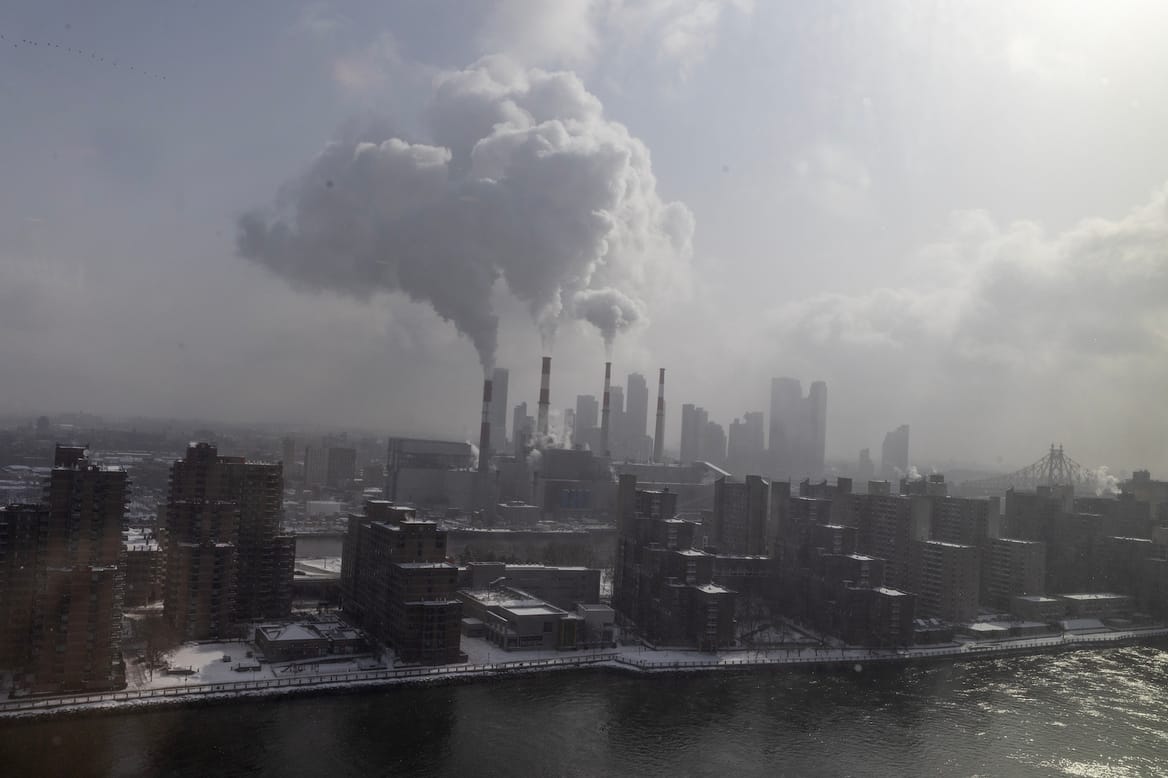
The natural gas power plants that much of southern New York state relies on are among the oldest in the country, and rising electricity demand has delayed retirement for many of them.
State law requires the retirement of aging natural gas power plants as long as it does not interfere with the NYISO’s ability to keep the lights on. Many of these plants are located in the city; they are less efficient and more polluting than newer plants equipped with modern technology. Environmental Protection Agency records show that three major city plants have been activated often over the past decade.
But until the state builds enough clean power and battery storage to meet demand, these “peaker” plants will continue to run, said Kate Boicourt, the New York state director at the Environmental Defense Fund.
“If we don’t use them, that can result in grid failure,” she said.
To address the problem, state and city leaders have advocated for a greater focus on small energy projects in the city.
In downstate New York, including New York City, around 90% of energy production comes from oil and gas, according to a 2026 NYISO report. But more clean power is reaching the city. The Champlain Hudson Power Express, a massive transmission line that runs hydropower from Canada to the city, recently came online — though it has already experienced several outages.
Boicourt argues that an aggressive expansion of renewable energy, along with battery storage, could lower the state’s dependence on natural gas, which can have unpredictable pricing.
The gas-fired Ravenswood Generating Station in New York City (Andrew Lichtenstein/Corbis via Getty Images)
State and city politicians have been trying to cut some of the red tape for homeowners and renters who want to install solar panels, or for developers who want to build distributed energy resources. These are small power generators or battery storage projects spread out across a region that help meet electricity demand.
They are only connected to the grid through the distribution system, which is the smaller power lines that connect homes and businesses to the grid, rather than the larger so-called transmission lines, which connect big power generators to entire regions. Sometimes they can even be what is known as “behind the meter,” meaning they are not connected to the grid and only supply energy to the home or business.
These smaller projects are about all the city has room for. Mark Levine, the city comptroller, recently released a report in which he argues that more city-owned land should be used to support the energy transition. Municipal building roofs, parking lots and fleet depots could be used for solar generation or battery storage, he said.
The SUNNY (Solar Up Now New York) Act, which passed both state chambers in May and is now on Gov. Kathy Hochul’s desk, would make it easier for New Yorkers to install plug-in solar panels on their balconies. A spokesperson for the Democratic governor told Inside Climate News that her office “will review the legislation.”