
If you own or manage real estate in New York, a major piece of environmental legislation creeping through Albany could soon force a costly overhaul of your property’s exterior lighting.
The Dark Skies Protection Act (Senate Bill S9637A / Assembly Bill A4615) aims to drastically curb light pollution across the state. While the headline-grabbing proposal is often described as a blanket “lights out at 11 pm,” the reality for commercial, residential, and industrial landlords is far more layered.
Here’s an update on where the bill currently stands in the state legislature, alongside what building owners need to know about compliance, penalties, and potential local conflicts if it becomes law.
Where the bill stands right now
As of mid-2026, the Dark Skies Protection Act remains active in committee within both state chambers—the Senate and Assembly—following key amendments.
Status: It has not yet been called for a full floor vote in either house
Target Effective Date: Under the amended text, if lawmakers pass the bill and the Governor signs it, the mandates would officially take effect on January 1, 2028
This extended timeline gives real estate operators and municipal authorities a grace period to audit existing exterior fixtures and plan hardware upgrades.
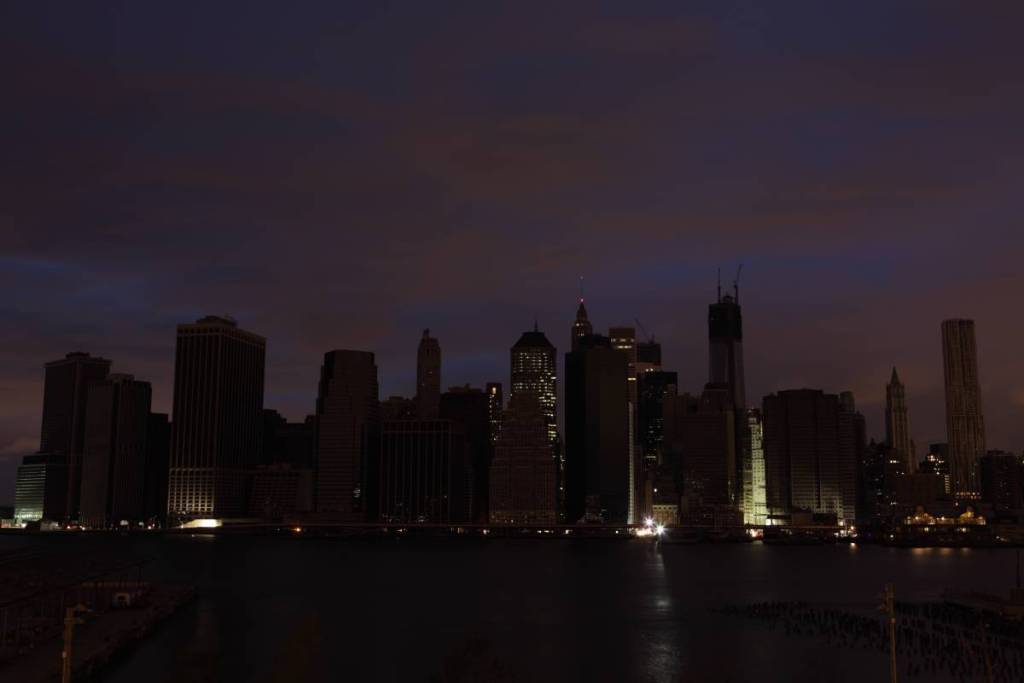 Getty Images / CribbVisuals
What the bill actually means for building owners
If enacted, the law applies broadly to residential, commercial, industrial, and municipal structures. Property owners would have two main paths to meet the requirements:
Fully Shielded Fixtures (The Permanent Fix): By January 1, 2028, all outdoor light fixtures—both permanent and portable—must be “shielded,” meaning the fixture must direct 100% of its light downward below a horizontal plane
Up-lighting, unshielded floodlights, decorative architectural spotlights, and exposed bulbs emitting light upward or outward into neighboring properties would no longer be permitted
The 11 pm Shutoff Rule (The Non-Compliant Fixture Alternative): If a building has existing unshielded outdoor lights, owners wouldn’t necessarily have to tear them out overnight. Instead, they must be connected to manual or automated shutoff controls that extinguish the lights between 11 pm and sunrise
Motion-Sensor Exception: Unshielded lights can stay operational past 11 pm only if they are motion-activated, stay illuminated for less than 15 minutes per trigger, and shut off automatically
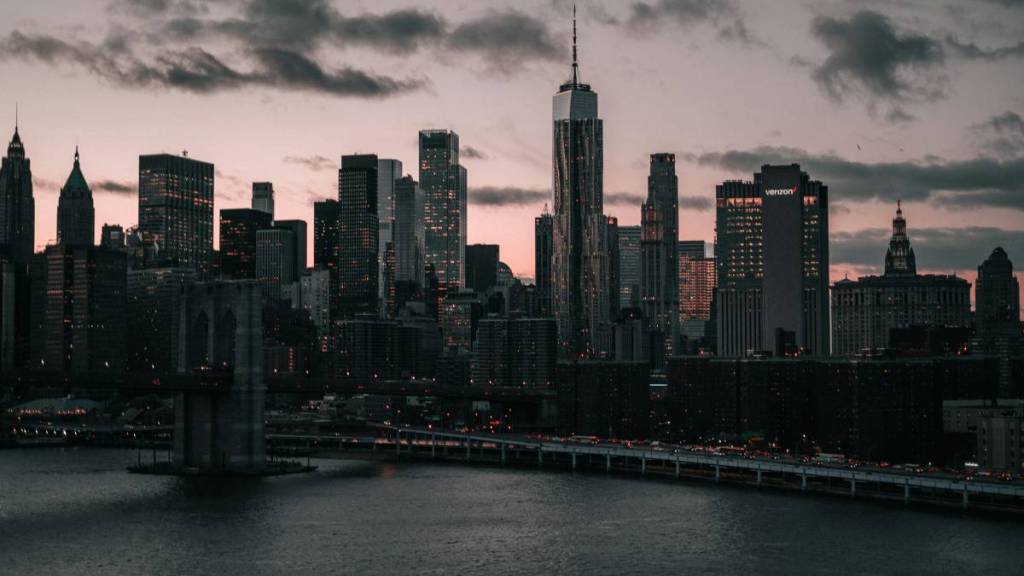 Unsplash / Raphael Lopes
Financial penalties and enforcement
Contrary to standard municipal building code violations, which are issued by local DOB inspectors, enforcement of the Dark Skies Protection Act falls under the New York State Department of Environmental Conservation (DEC), as well as local municipal enforcement officers.
The legislation establishes explicit guidelines regarding who’s affected and how compliance is handled:
Residential vs. Commercial Rules: Single-family homes and small residential dwellings (1-to-4 family units) are generally handled through local educational outreach or municipal zoning rather than direct state enforcement
Commercial & Multi-Family Compliance: Non-residential properties and commercial multi-family buildings face direct state oversight. First offenses generally receive a formal warning and a grace period to fix non-compliant fixtures
Fines for Ongoing Non-Compliance: Property owners who fail to fix non-conforming fixtures after warnings could face civil penalties upwards of $1,000 per violation for continuing offenses
Key exemptions NYC property owners should be aware of
The legislation includes exemptions to prevent public safety hazards, transit disruptions, and economic harm:
Times Square & Midtown: The designated Special Midtown District (Section 81-70 of NYC Zoning) is explicitly exempt to maintain the historic visual character of NYC’s theater district
Historic Landmarks: Owners of designated landmarks can apply directly to the DEC for exemptions for lighting deemed culturally or historically significant
Low-Wattage Decorative Lighting: Incandescent fixtures of 150 watts or less and other light sources under 70 watts (including small holiday or seasonal accent lighting) are exempt
Workplace & Emergency Safety: Lighting strictly required for worker safety, active construction, emergency services, and transportation infrastructure (bridges, tunnels, airports) is fully exempt
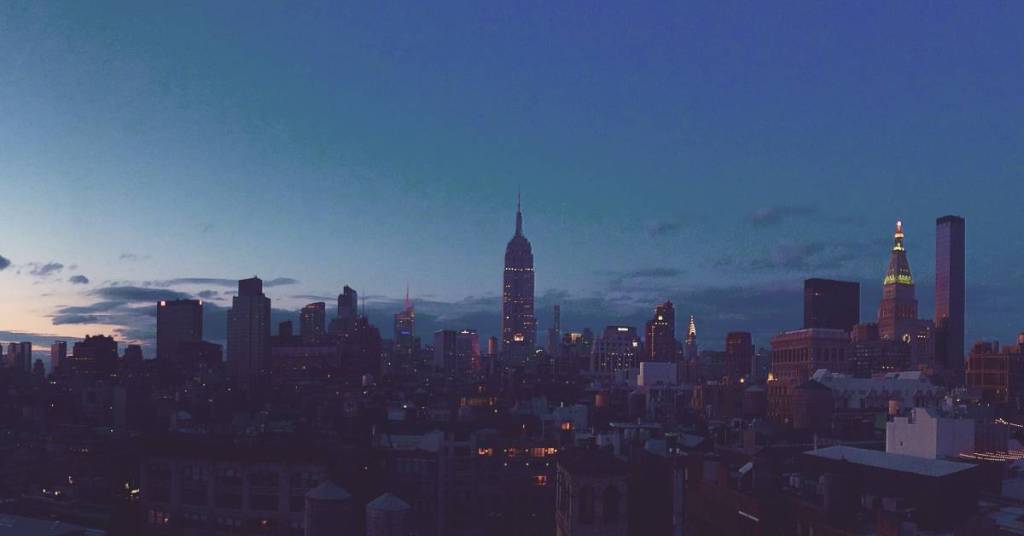 Pexels / Sibi Mathew
The catch: state law vs. NYC housing code
For New York City landlords, the proposed state bill creates a tricky legal conflict.
Under current NYC Multiple Dwelling Regulations, owners of residential buildings with three or more units are legally required to maintain illuminated exterior entrance lights from sunset to sunrise to ensure tenant safety.
Shutting off main entryway lights at 11 pm could lead to city housing violations or premises liability claims if a tenant trips or suffers a security incident.
How to navigate it
The state bill explicitly states that it does not override municipal laws that are equally strict or designed around specific safety rules, nor does it ban lighting altogether.
To comply with both laws, NYC landlords wouldn’t need to turn off entry lights—they would simply need to swap out unshielded wall fixtures or decorative sconces for downward-directed, fully shielded fixtures that illuminate the walkway without casting “sky glow” upward.
If the Dark Skies Protection Act reaches the Governor’s desk, property managers will need to conduct a full lighting audit before the 2028 deadline to distinguish between lights that need timers, lights that require full shielding replacements, and fixtures covered by safety exemptions.