
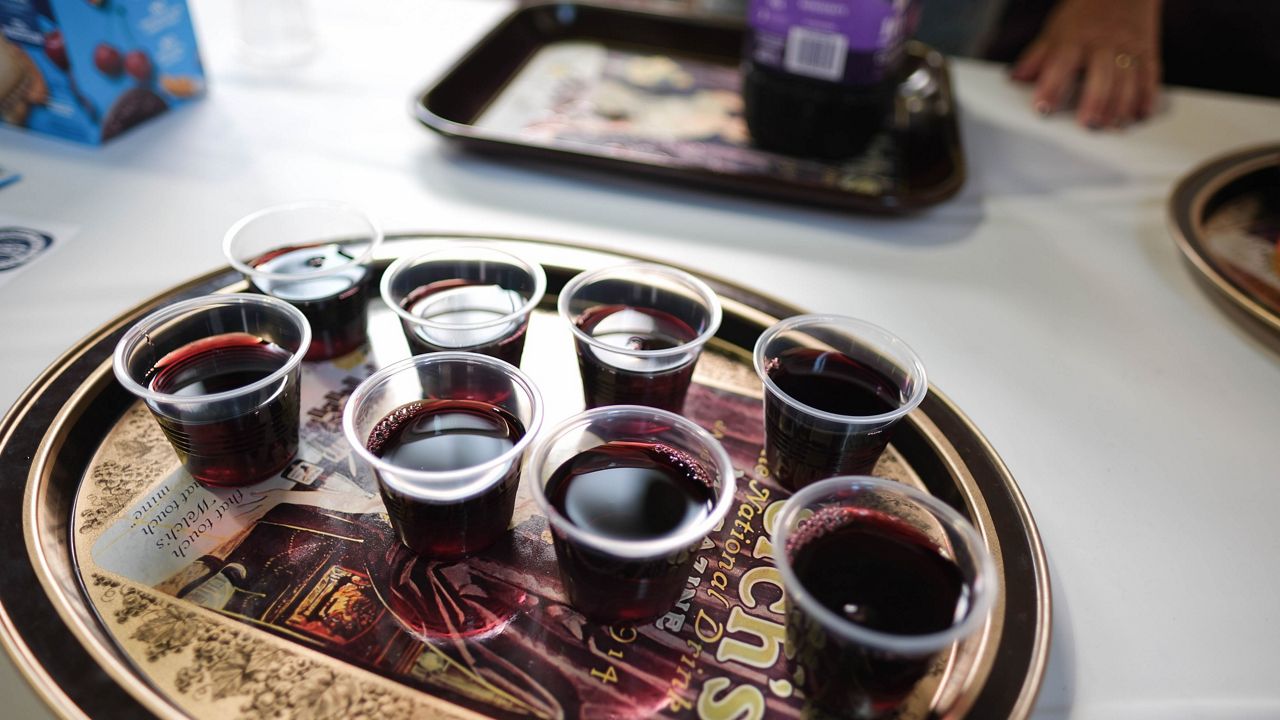
The New York State Fair brought back Grape Day to celebrate one of the state’s largest agricultural industries. Producers and industry stakeholders discussed challenges facing the grape sector right now.
Jim Joy, a concord and Niagara grape producer in Chautauqua County, said a large processor in Western New York, Refresco, cancelled contracts for some growers in March which left over 100 growers in a bind.
“Now grapes, as you know, are perennial crops. They’re established in the ground, trellised and everything and now all of the sudden there’s no home and unfortunately no other place for them to go so the impact is going to be quite hurting on a lot of people that are in the situation of not having an income for their business and their farm,” Joy said.
The region in Western New York is primarily known for the production of Welch’s grape juice.
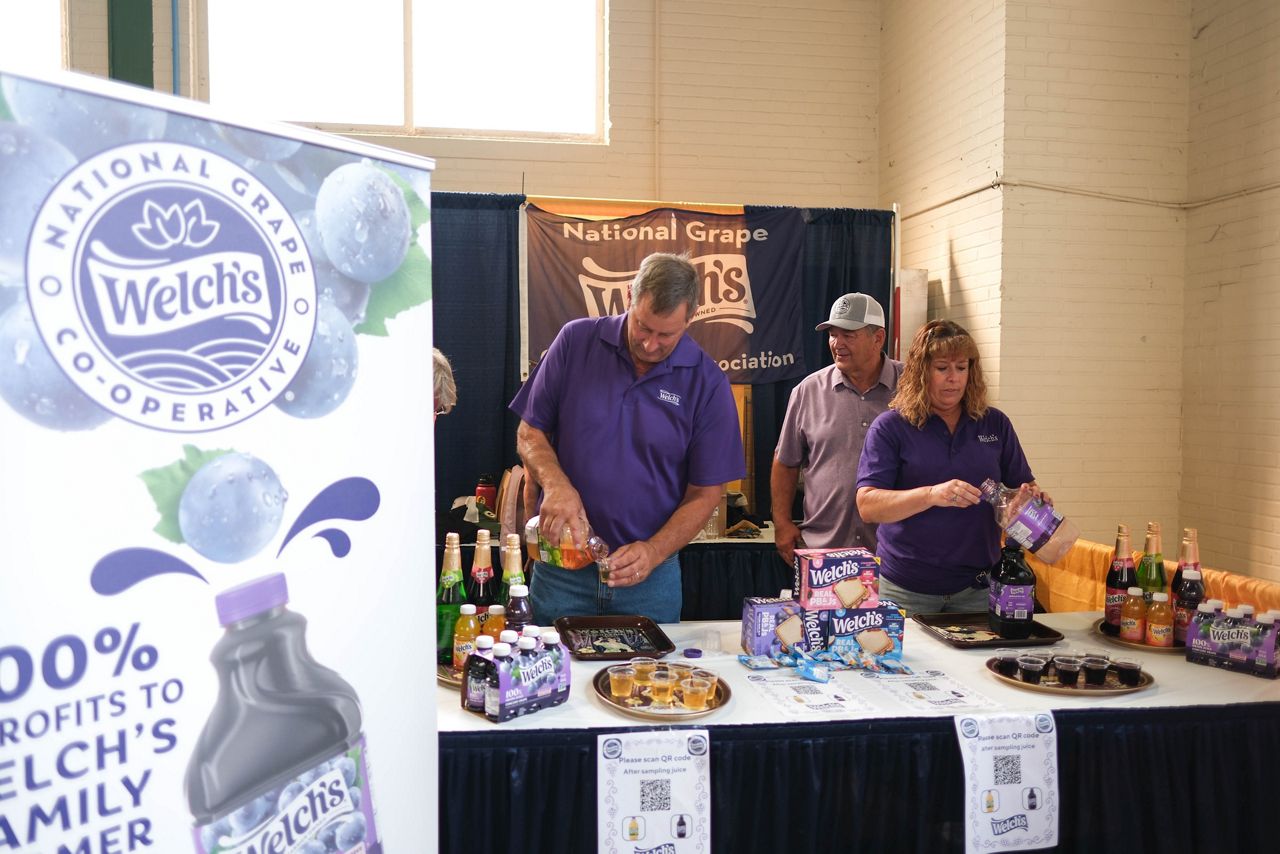
Members of the National Grape Cooperative Association hand out samples of Welch’s grape juice at the fair. (Emily Kenny/Spectrum News 1)
U.S. Sen. Chuck Schumer visited the county earlier this month to try to push the U.S. Department of Agriculture to purchase more concord grape juice than in a typical year. Earlier this week, he announced that the department agreed to the “Bonus Buy” – purchasing $20 million of surplus supply, but Joy said that may not be enough.
“Unfortunately, it’s not going to affect those farmers that don’t have a contract. It’s going to buy juice that’s already in the tanks. It will make more space and more room for a crop, but those farmers still don’t have a home, and harvest season is like 30 days away,” Joy said.
He said producers are looking to other markets to find a place to get rid of their product but Joy said there is more that can be done by state and federal government entities.
“One of the thins that is causing a problem is big imports of bulk wine coming into the country and it can be put and mixed into domestic wine up to a 25% blend. You can buy this stuff pretty cheap and blend it in and not put a label on it and that is hurting us because it’s not domestic grapes that they’re using anymore,” Joy said.
Another thing Joy said the state could do is approve grocery stores to sell wine.
“It would have a huge impact and a big plus for New York grape growers and wineries because we’d have access to the market that most states do have and we’re denied that in New York. If New York opened a door to that, it’s would probably drain the wineries up all the surplus that they have,” he said.
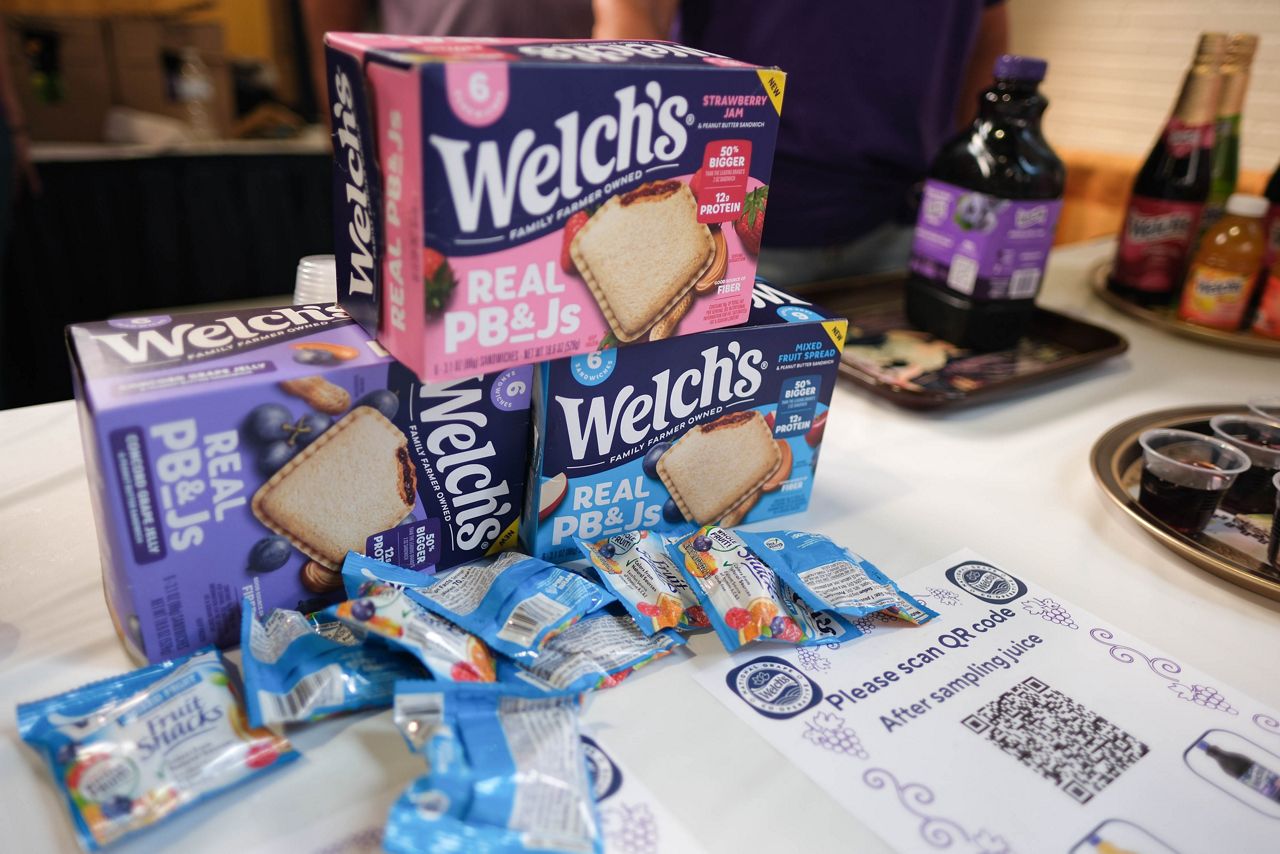
Welch’s products on display at the New York State Fair. (Emily Kenny/Spectrum News 1)
A bill that would allow this has been proposed in the state Senate and Assembly but hasn’t passed.
Sam Filler, executive director of the New York Wine and Grape Foundation, said that the number of grapes produced per acre has increased too, which has led to an oversupply.
“We may not need as much acreage as we have right now just because we’re matching or exceeding the production required so what really is needed is a reeducation for consumers to really consider concord juice as part of their diet and part of a healthy lifestyle,” Filler said.
The organization is working on a new plan to help market Concord grapes to create new markets for them.
While the industry does have challenges, Filler said Grape Day is a way to connect fairgoers with the New York wine industry.
“My vision for the grape day is to reflect the complexity of the grape industry here in New York because we’re not exclusively just a wine grape industry. We do table grapes. We do juice grapes. People are now even making non-alcoholic wines from the grapes that we grow,” Filler said. “The special thing about New York is the diversity of the varietals that we’re able to grow.”