
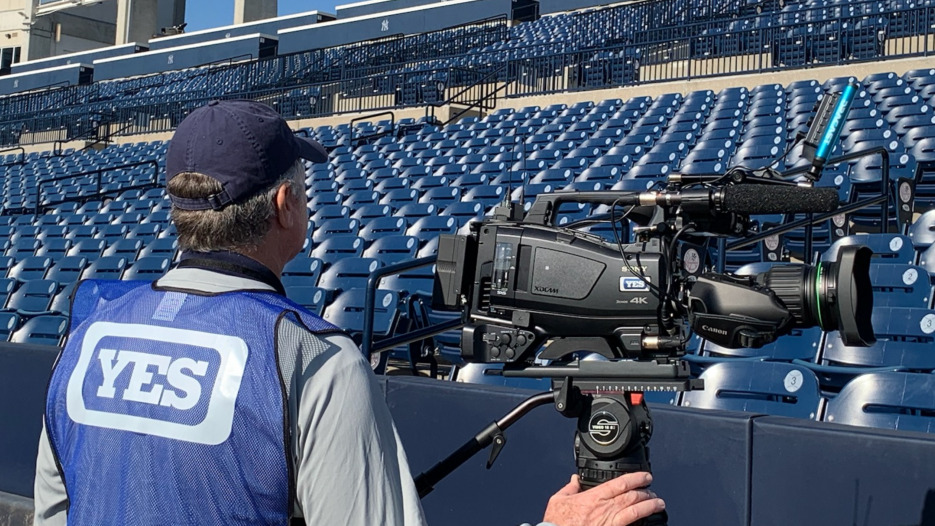
After more than 3,000 games, five members of YES Network’s original staff reflect on how the broadcasts — and their own careers — grew up together
To say we lived in a different world 25 years ago is the most spectacular of understatements. If you want to understand just how much has changed over a quarter of a century of New York Yankees baseball on YES Network, start with Jared Boshnack.
In March 2002, Boshnack was a promising graphics coordinator working under head of on-air graphics Rick Deutschman, building the visual identity of a television network that didn’t exist. Yet. Lower thirds, full screens, slabs, the scorebug all went into Photoshop and were rebuilt to work on a Chyron iNFiNiT! (we’re really dating ourselves here).
There was no established way to do any of this because there was no established YES. There was a well-established … MAYBE? or YOU’D BETTER!
“We spent more time in the office than with our families for months,” Boshnack recalls.
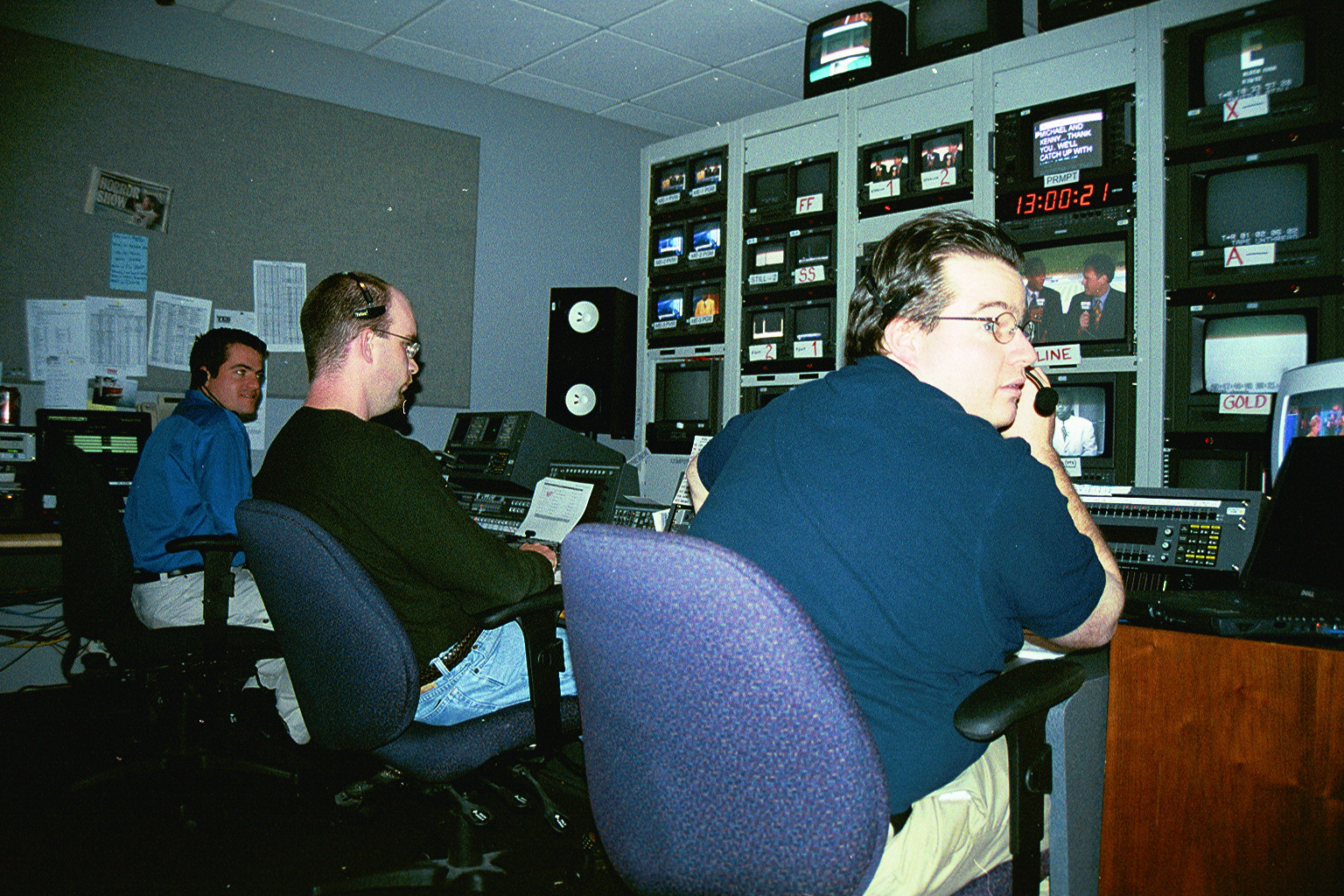 In the control room in the early days of YES Network with (from left) Technical Director Jerry Mugavero, Director Mike Cooney, and Producer Bill Boland
Boshnack remembers the graphics package — big klieg lights illuminating the Yankee Stadium facade, the voice of Bob Sheppard providing the network identification — and the feeling that, despite the startup nature of what was happening behind the scenes, the finished product needed to look and feel every bit as big as the franchise it was built around.
“Everything felt big then and now,” he says.
Then the clock struck noon on March 19, 2002, and all the work suddenly became television. YES went on the air with an introductory show and, later that day, carried its first baseball telecast, a New York Yankees–Cincinnati Reds Spring Training Game from Tampa, FL.
Twenty-five Yankees seasons later; 3,081 games of Yankees baseball later — a vast majority of them called by lead play-by-play caller Michael Kay (who has also been here since Day 1, thank you very much); and Boshnack is no longer the young graphics coordinator helping construct individual elements of the show. He is executive producer and VP of production at YES, overseeing a Yankees production operation that has evolved through HD, server-based replay, super-slo-mo, 3D and virtual replay, advanced data, RF cameras, streaming, and drones.
He has, in many ways, grown up alongside the network. And he is hardly alone.
Across YES, a remarkable group of people who helped launch the network in 2002 are still there. John Purcell started as a studio associate director and today directs Brooklyn Nets games. Robin Moore went from broadcast operations assistant to director of field operations. Daniel Guernsey joined as a writer/producer in the promotions department and is now senior creative director, on-air promotions. Mike Cooney, who worked those earliest YES shows as a tape producer, is now a director. Troy Benjamin, who is currently the lead producer on Yankees games has also been here since launch.
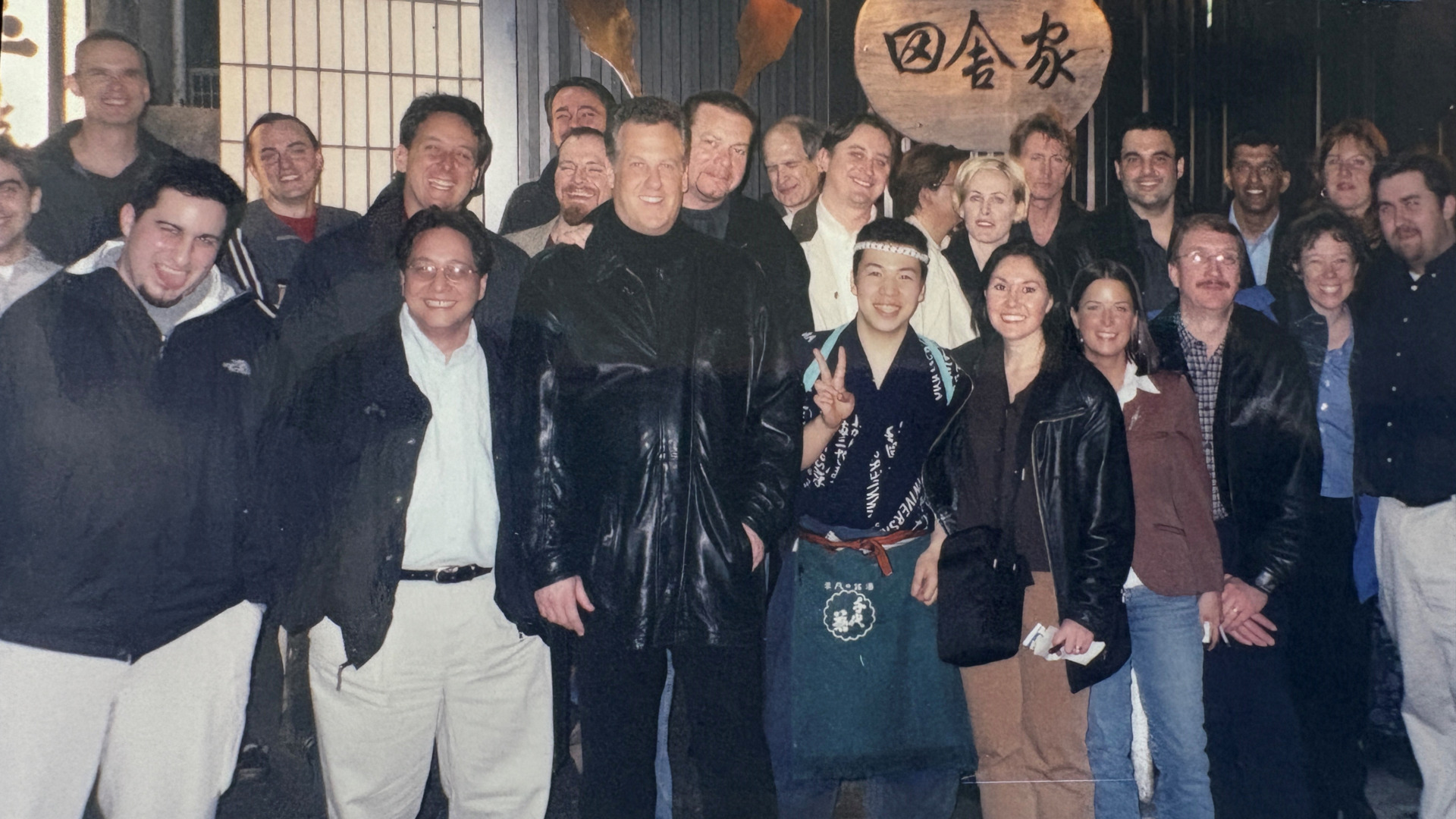 YES Network traveled to Japan to broadcast season-opening Yankees games in 2004.
Their jobs changed. Their lives changed. The technology surrounding them changed even more. But, for 25 seasons, they have shared the same assignment: figure out the best way to put the legendary Yankees on television — and be ready when an ordinary night in the Bronx suddenly becomes history.
Building YES While Putting It on TV
Sports Broadcasting Hall of Famer John J. Filippelli, recruited by George M. Steinbrenner in 2001 as YES’s first employee, was charged with developing the network’s on-air presentation from scratch. Within five months, YES was live.
Around him was a group building their own corners of the operation.
A few rooms away from where Boshnack was sketching away with Deutschman, Cooney was experiencing launch from another angle. A director today, he was a tape producer then. The studio had Fred Hickman as the lone on-camera talent and one EVS machine supporting four tape machines. Filling an hour-long Yankees pregame show meant using remote hits from the ballpark and material from Mike and the Mad Dog, whose WFAN program YES was simulcasting.
“As the tape producer,” Cooney recalls, “I had to lay out the ingestion of all EVS clips, go cut sound in the tape room, and return to EVS to conform the clips into all our opens, trades, bumps, and highlights.”
Purcell was alongside that operation as a studio associate director. “In 2002, I was control-room AD in the studio. For timing shows and rolling commercial breaks, nothing has really changed.”
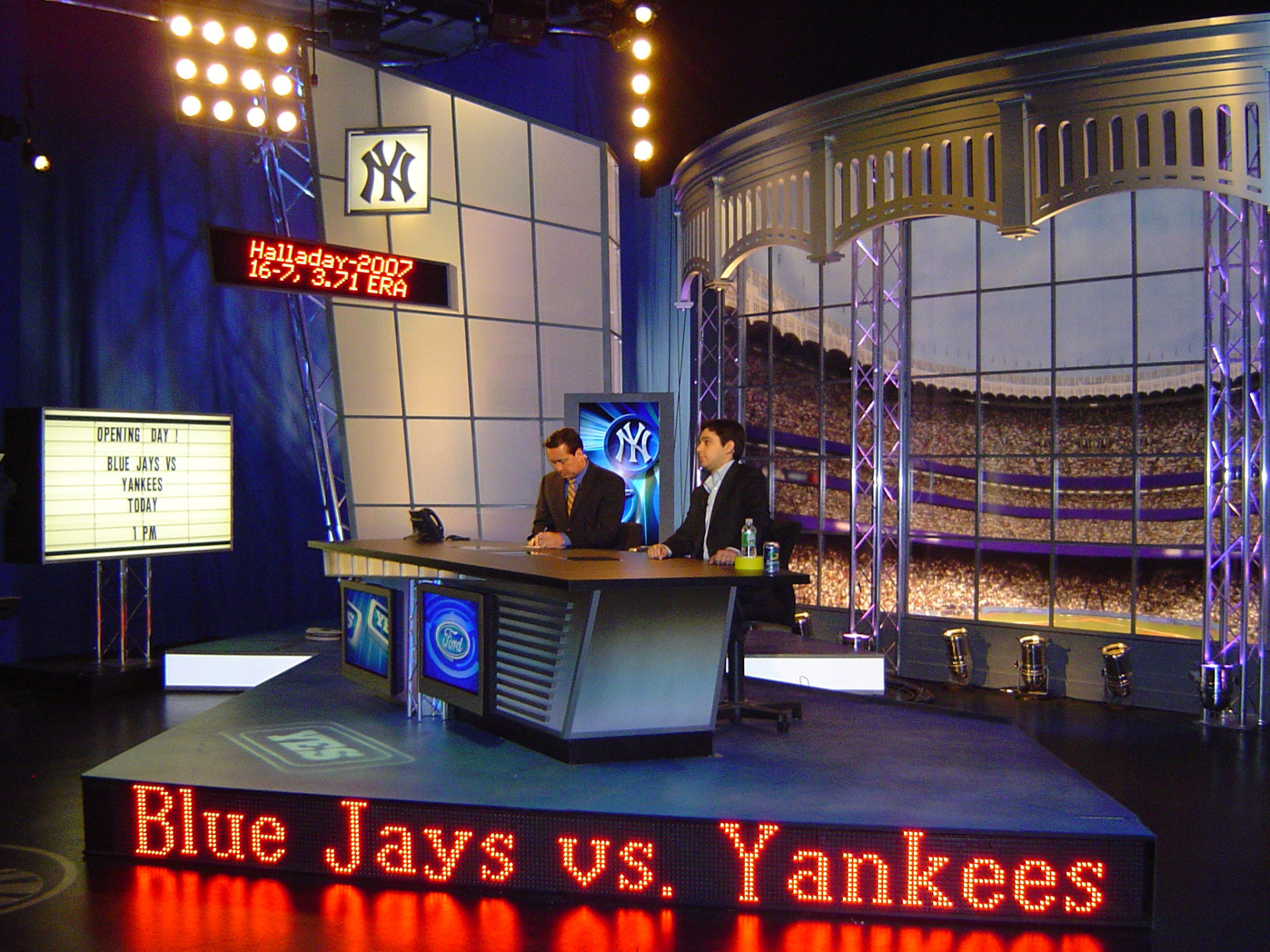 In YES Network’s studios prior to Yankees Opening Day in 2008: at the desk are Bob Lorenz (left) and Glen Giangrande.
Moore saw the launch from the field-operations side. “We were at the old Stadium, and the truck and production trailers were in the players’ parking lot.” Her world was camera positions, cabling, compound logistics, access — all the infrastructure that has to work before a producer or director can call a single shot.
Guernsey, meanwhile, wasn’t on the game telecast at all. His promotions group had roughly six weeks to create enough spots to help fill an entire network. “The beginning was special. I remember watching the first few live and scripted shows with our small group of creatives and all cheering at the screen. It was a very proud feeling.”
The first few days, his group didn’t even have computers. “We were writing scripts on notepads and screening footage from old Beta tapes, making handwritten notes and working with the editors to slam the spots together as quickly as possible,” he says. “No one in our department knew how successful YES was going to be. It almost felt too good to be true.”
As the Jobs Evolved, So Did the Tools
The 2002 workflow did not stay for long. The arrival of high definition was the first seismic shift. YES produced its first HD Yankees telecast on July 1, 2004 — coincidentally, the Yankees–Red Sox game featuring Derek Jeter’s famous headfirst dive into the third-base stands. By 2007, YES had launched a standalone 24/7 HD channel and rebuilt its Stamford, CT, production operation around HD, including a new control room, cameras, editing, and playback infrastructure.
“I remember vividly the switch from SD to HD, which was a game-changer,” Boshnack says. “There is an entire generation today that knows only HD, 4K, 8K, etc. The quality of the picture has been constantly improving.”
For Moore, the evolution showed up in the equipment. High-speed cameras became more plentiful. Super-slo-mo became increasingly central to the show. RF cameras gave operators freedom that would have been difficult to imagine with the trucks sitting in the old Stadium parking lot.
“The biggest change is, the technology is more advanced,” she says.
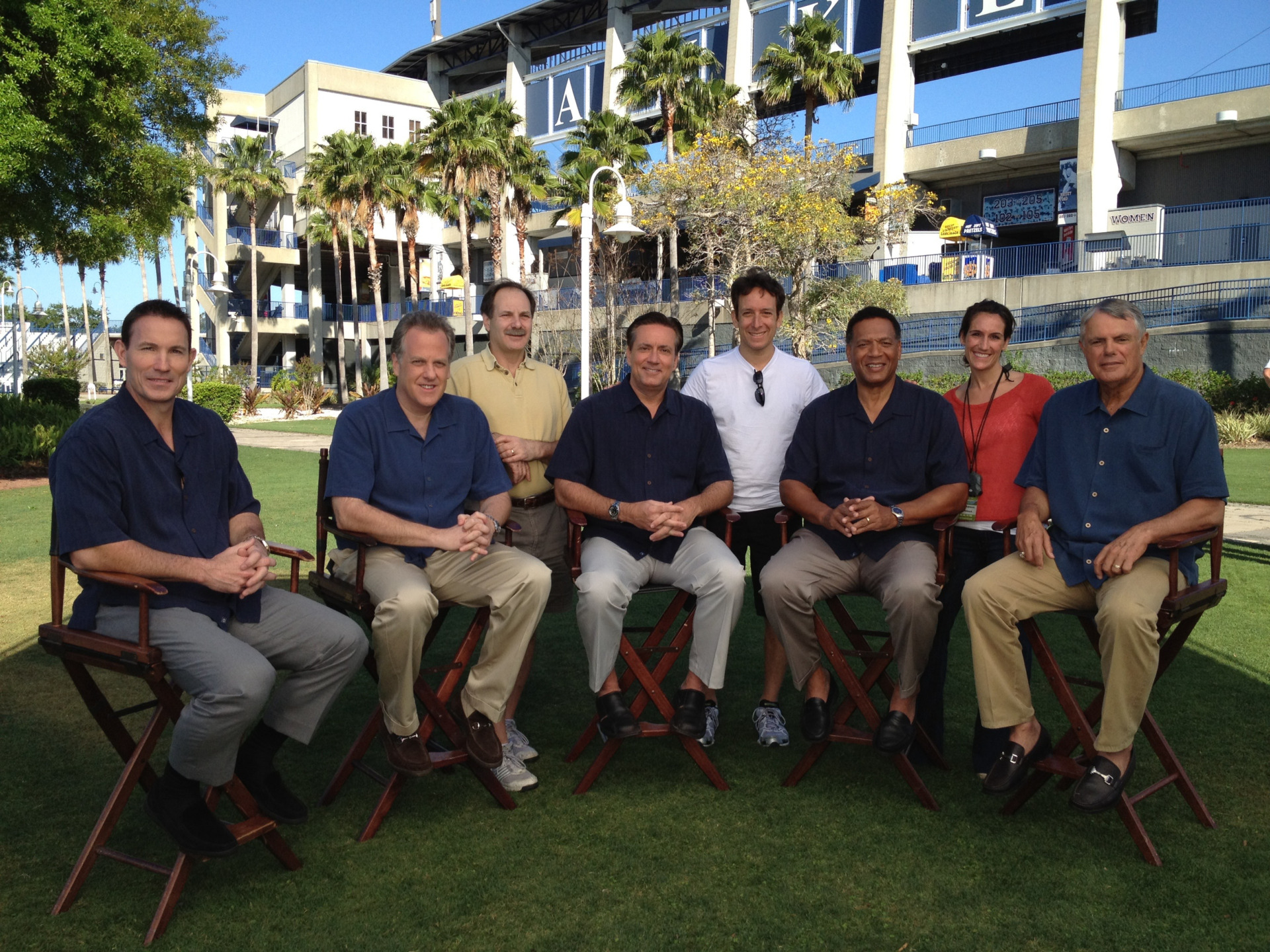 YES Network has produced games from New York Yankees Spring Training in Tampa, FL, every year since its launch.
By 2007, YES was using Sony’s HD 3X–slo-mo camera. In 2010, the network began regularly deploying Fletcher Sports’ YES-MO, capable of capturing up to 1,000 frames per second. By 2018, all the action cameras on YES home Yankees broadcasts had super-slo-mo capability, believed at the time to be an RSN first.
The result wasn’t simply a prettier telecast. It gave the crew more ways to explain the game.
The same was true of replay. For Cooney, whose career bridged videotape and server-based production, the move to EVS fundamentally changed the pace of the control room.
“In the truck, we no longer had to ‘break’ record to cue replays,” he explains. “Clips could be ‘pushed,’ not fed in real time. Sound could be played back while still being ingested. High-end teases and bumps, formerly done in edit rooms, could now be handled in the control-room environment.”
Purcell cites the expansion of EVS resources as the biggest technical game-changer he experienced in the studio.
Boshnack saw another advantage unique to covering the Yankees: history became much easier to retrieve. “In-game, we get to replays faster and are also able to call up flashbacks and historical footage faster. And the Yankees,” he points out, “have as much history as any team.”
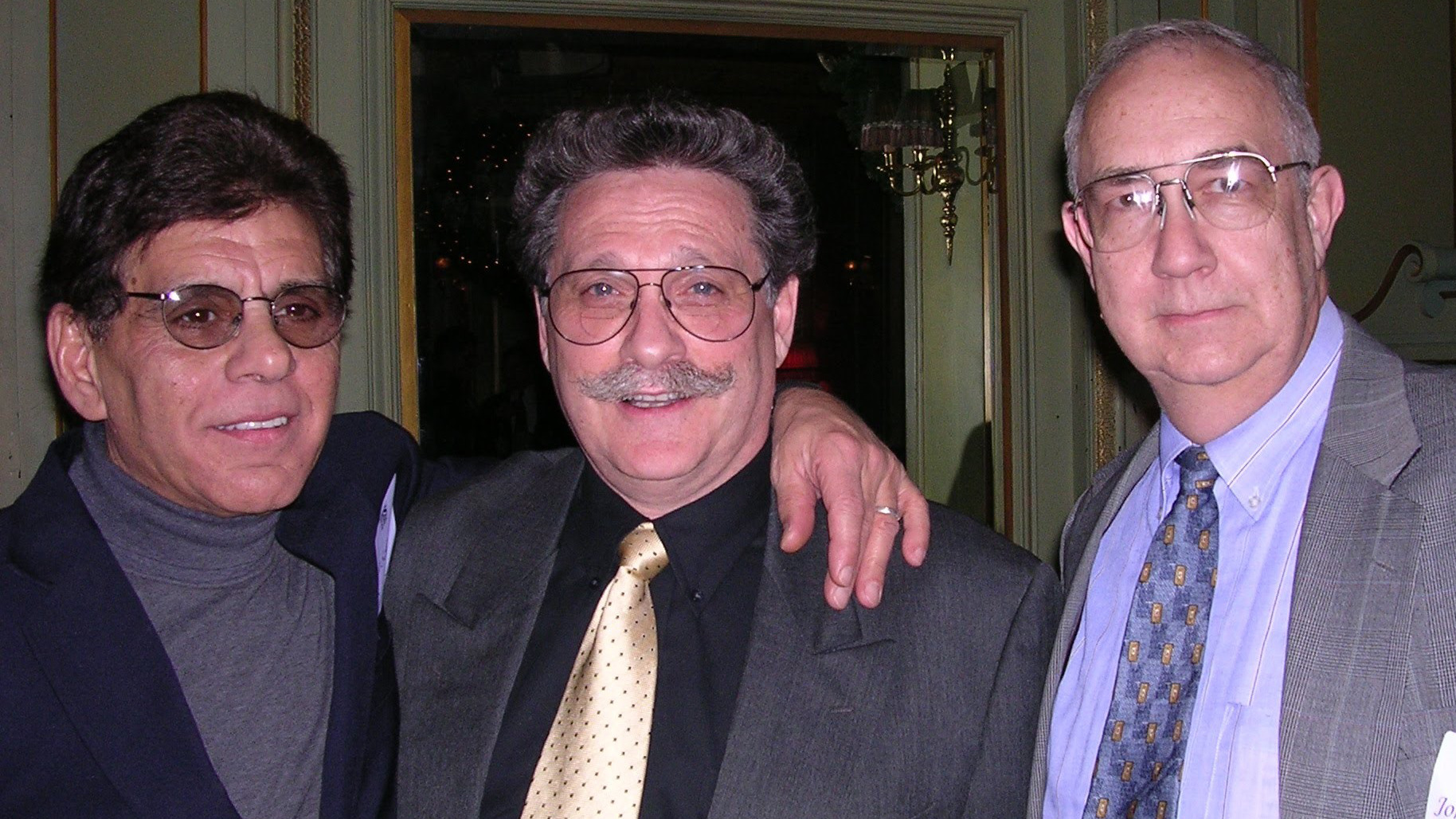 A Murderers’ Row of early YES Network legends: technical director Joe Schiavo, head of technical operations Jack Kestenbaum, and engineer John McKenna.
Guernsey’s promotions operation was undergoing the same analog-to-digital transformation. In the early years, finished spots were mastered onto tape and shipped via FedEx days before air. Once the workflow became file-based, a spot could be revised and aired in hours.
“We could finish, update, or revise spots and get them turned around and on-air in a matter of hours instead of days,” Guernsey says.
For a network covering the Yankees every day, that mattered. A big performance, injury, milestone, or breaking storyline could immediately change how the next game should be promoted. He adds, “Having this ultra-reactive workflow established YES as the home for die-hard Yankees fans looking for the most-local and locked-in coverage.”
New Stadium, Bigger Trucks, Different Approaches
Naturally, one of the network’s biggest operational changes had nothing to do with a format: home plate quite literally changed addresses.
When the new Yankee Stadium opened in 2009, years of accumulated knowledge about producing baseball in the old ballpark had to be reconsidered. “The new Yankee Stadium move in 2009 was quite a change,” says Moore. “We had to fine-tune camera placements, cable runs, studio space, etc.”
The equipment being deployed was increasingly ambitious, too. In July 2010, YES and DirecTV produced Major League Baseball’s first 3D telecasts, covering two Yankees–Mariners games at Seattle’s Safeco Field. Two months later, Game Creek Video’s new 3D-ready Dynasty production truck joined the operation.
The consumer future of 3D television never materialized, but YES’s willingness to experiment continued. In 2013, the network launched YES View, bringing 3D-style virtual replay to Yankee Stadium. 2017 brought Game Creek Yogi, designed for an increasingly sophisticated RSN production.
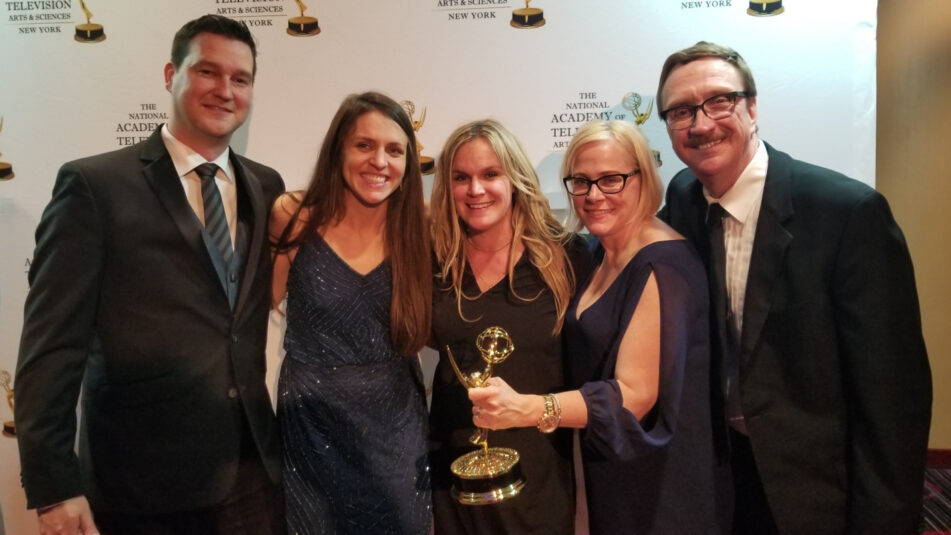 At the New York Sports Emmys in 2019, YES Network recorded a whopping 13 awards. At the ceremony are (from left) Rob Brinkmann, Dana McConnell, Heather Smith, Robin Moore, and Mike Webb.
Boshnack argues that improved pictures tell only part of the story. “Surround sound makes you feel immersed in the game. We can pick up audio from every part of the ballpark. Bat cracks, cheers, bases: everything brings you closer to the game.”
Closer is a useful word for the arc of the 25 years. Closer with high-speed cameras. Closer with RF. Closer with replay. Closer with microphones.
The production itself has continued to change. In 2025, Moore and the field-operations group added drones to Yankees broadcasts for the first time.
Yet ask Purcell what making television looks like after all of that change, and he returns to something much simpler. “A lot of things in TV stay the same: the way we cut cameras, timing of shows, how the promoter works, etc.”
Guernsey can offer proof. Twenty-five years after his department was handwriting scripts on notepads, YES still prepares the familiar “green sheets” used by the truck and booth to prioritize promotional reads during games.
“Nothing beats the live read,” he says.
Not every workflow requires disruption.
From Shipping Tapes to Streaming the Game
YES began experimenting with different ways to deliver and augment Yankees games well before today’s direct-to-consumer (DTC) era.
In 2009, YES, Major League Baseball, and Cablevision launched an offering allowing eligible viewers in the network’s territory to purchase live, in-market broadband access to Yankees games, an unusually early effort to stream games carrying local television rights.
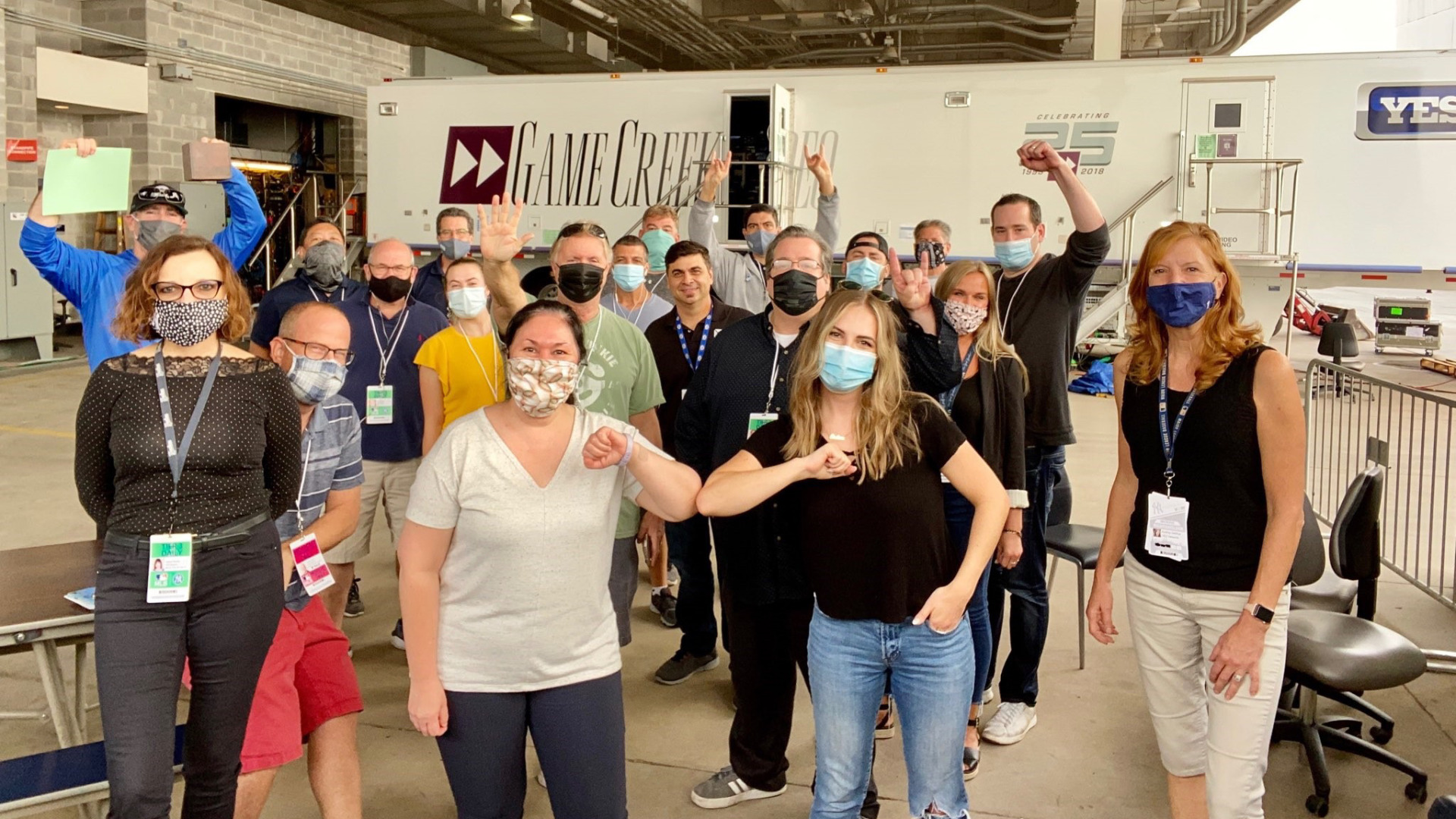 The YES Network crew produced 54 live games during the COVID-shortened season in 2020.
Over the following decade, digital increasingly became part of the coverage. Game Connect offered an in-game second screen. Statcast and Pitchcast data made their way into the telecast. In 2021, the YES App launched with a live network feed, VOD, personalized notifications, and statistics, followed by an advanced Live Stats experience for Yankees games.
By then, the concept had moved well beyond simply putting the television feed on another screen. There were watch parties, real-time prediction games, and Watchin’ Yanks altcasts through a partnership with growing digital brand Jomboy Media.
In March 2023 came a standalone YES direct-to-consumer subscription. That June, YES became the first sports network — regional or national — to provide single-screen interactive statistics on connected devices.
Then, in 2024, YES and MSG Networks formed Gotham Advanced Media and Entertainment, or GAME, combining technical and operational expertise from their respective streaming platforms. The Gotham Sports App followed that fall.
The Games They Still Talk About
Technology is, of course, an easy way to measure 25 seasons. The better way may be human memories, games these five people play over in their minds.
Boshnack finds it impossible to choose one. He remembers Aaron Judge’s pursuit of No. 62 in 2022. Jeter’s 3,000th hit in 2011, which came on a home run off David Price as part of a 5-for-5 afternoon. “Who does that? Jeter,” Boshnack says. “Everything about this day and our coverage felt perfect.”
And he remembers one of YES’s first unforgettable nights: Jason Giambi’s walk-off grand slam against Minnesota in May 2002.
Purcell also picks that game: The Yankees trailed by three runs in the 14th inning on a rainy night before Giambi ended it with one swing. YES was about two months old. “The game itself was insane, ending in the very early morning hours,” he says, “but what stuck out to me was people stayed up to watch that postgame.”
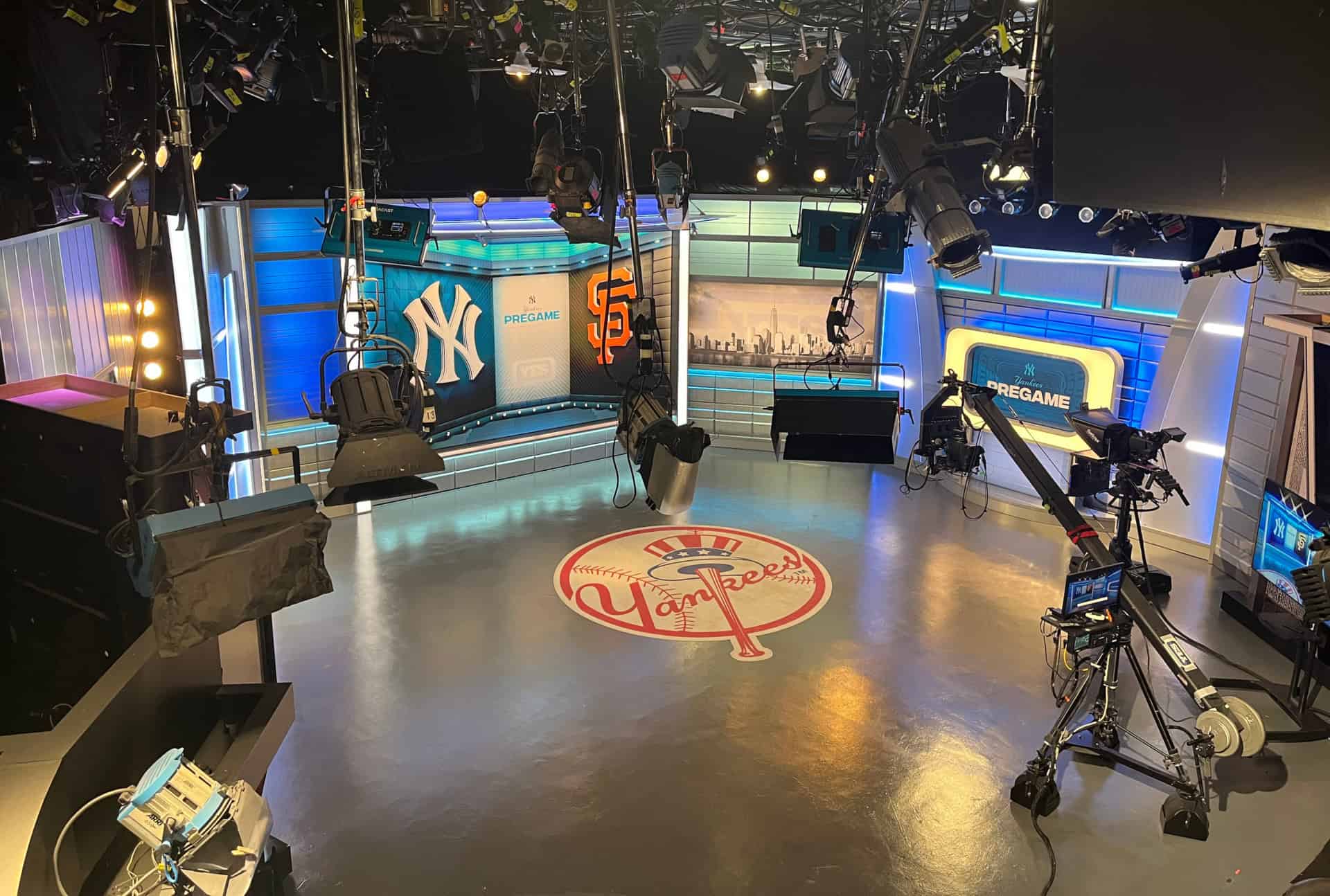 YES Network’s latest studio set debuted this year.
For Purcell, who had just joined the brand-new regional network, it was an “aha” moment. “It confirmed my belief that Yankees fans are the most passionate of any sports team in the world and that we needed to match that passion in how we covered the games.”
Guernsey goes to July 1, 2004. Jeter. The stands. The blood. Yankees–Red Sox at full boil. “This was at the height of The Rivalry, which had captured the imagination and interest of New Yorkers all over. We were truly front and center in the cultural conversation.”
For Guernsey, what stands out is not only that Jeter made the play but that YES documented every angle of a night that immediately became part of Yankees lore.
Moore’s memory is a bit more exotic. In 2004, YES traveled to Tokyo to produce Yankees games from the Tokyo Dome. Members of the home crew made the trip; Moore filled in as phone AD. “It was quite a challenge, especially with the language barrier, but it truly was an amazing experience. It was a huge success.”
Cooney goes somewhere more emotional: the final night at the original Yankee Stadium in 2008. He was directing. He still remembers Mickey Mantle’s son jogging to centerfield wearing No. 7; Kay Murcer honoring her late husband, Bobby.
Most of all, he remembers a handheld camera.
“I’ll always remember directing the final night of the old Stadium,” Cooney says, “and finally the handheld shot, by cameraman Charlie Bedi, of Yogi standing behind home plate, being both humble and iconic one more time.”
It is difficult to find a better explanation of why people spend careers making live sports television. The technology matters enormously and keeps us motivated. We’re always growing, trying to get better. Until a moment arrives, and it’s best to remain still. Soak it in. Capture it for the fan at home.
After 25 Years, the Audience Is Still the Point
And that’s the whole point of this work, isn’t it?
The kid in New Jersey whose parents let them stay up late on a summer night to catch extra innings during a pennant chase. School is back in session, but, ok, honey, this one is important. The Nana in Westchester whose health doesn’t allow her to make the trip to The Bronx anymore. The childhood friends reuniting in a midtown bar for a few beers after a busy day at work. The generations gathered around the TV escaping the heat of a Fourth of July barbeque on the Connecticut shore.
For Moore, the people on the other side of the screen have never been abstract. “My family and many friends are passionate Yankee fans. My Dad watched every game, and I know how important YES is to Yankee fans. It is very special to be a part of that, and I appreciate every moment I have had working at YES.”
Guernsey thinks about what those games can represent at the end of somebody else’s day. “Some may think it’s just a simple game and doesn’t matter all that much, but, in this city and this world, where people are working hard, sometimes struggling to get by, we offer an escape. There’s real value in that, and we shouldn’t diminish it.”
Cooney has watched that audience relationship come full circle. “We have had dozens of younger people come to work at YES because of the impact of watching their favorite team.”
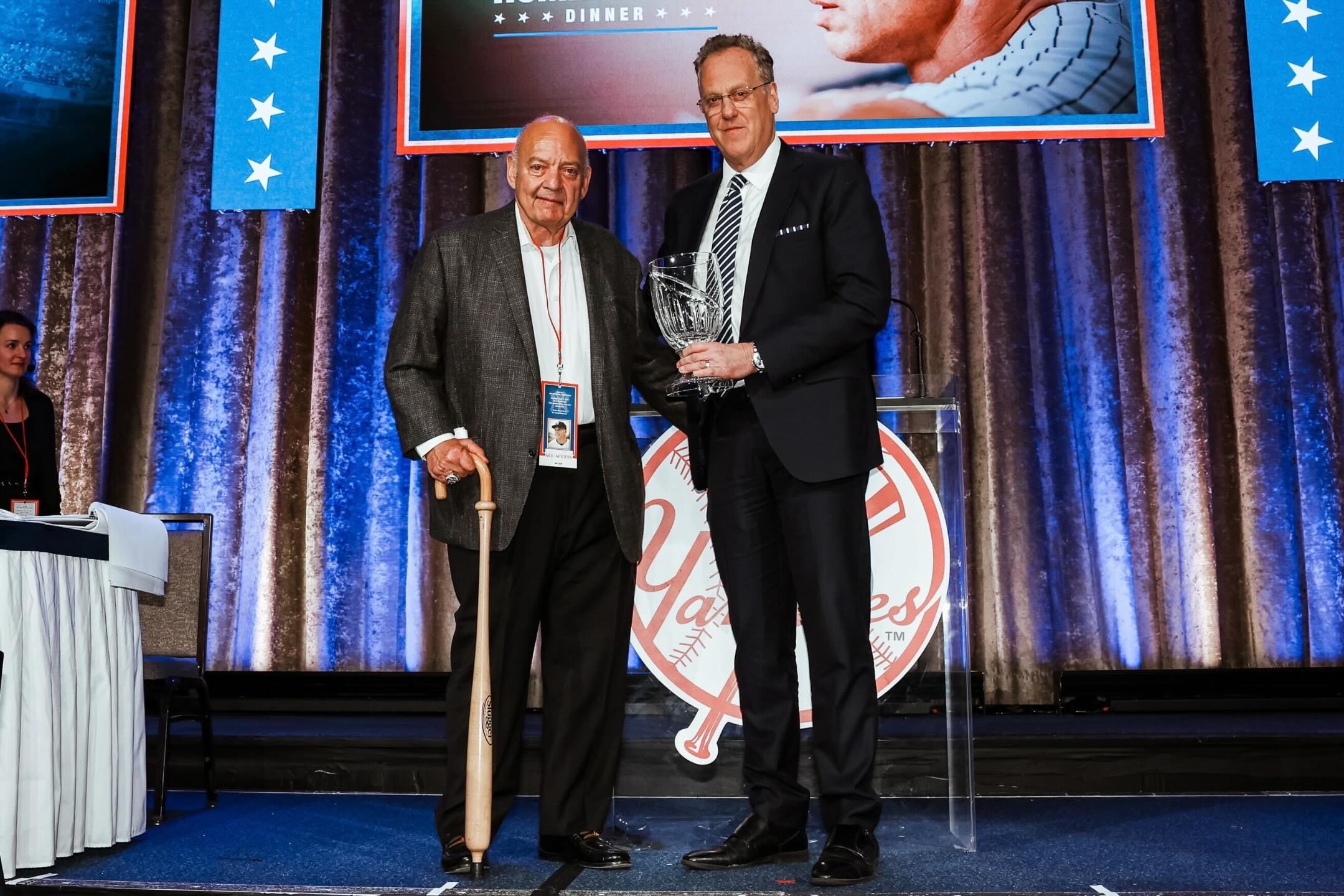 Recently retired YES Network President and Sports Broadcasting Hall of Famer John J. Filippelli (pictured with announcer Michael Kay) was honored with the Lifetime Achievement Award at the New York Yankees annual Homecoming Dinner this year.
Some of the people who once sat at home watching YES are now inside its control rooms. Says Cooney, “It is a powerful realization that your efforts are not an abstraction but a reality.”
For Boshnack, 25 seasons have become a career. “YES means excellence. We share Yankees fans’ passion, and it is evident in every game we broadcast. To be a part of YES for 25 years and see the growth internally and to have shared this experience with many accomplished media professionals who care deeply has been a career-defining journey that continues to get better.”
Purcell can still remember how his began. Original YES studio producer and future Yankees game producer Bill Boland called him about joining the startup network. The call came on his landline. “My life changed,” says Purcell. “A network run by the Yankees was going to change the landscape of regional sports TV.”
Twenty-five seasons later, he hears what the YES name has come to mean when crews travel around the league. “Going into other cities, crews talk about how YES is the gold standard in terms of all aspects of production. The ‘YES Network’ brand carries weight across the country, thanks to the tireless work of the men and women behind the scenes.”
To describe his own relationship with the place, Purcell borrows a line from actor Bradley Whitford about The West Wing. “This show is probably the first line in my obituary,” Whitford once famously said. “Everyone knows they got lucky with this one.”
Says Purcell, “That is how I feel about YES.”