
Young New Yorkers are coming off a dramatic surge in participation in the 2025 election that helped send Zohran Mamdani to Gracie Mansion. Turnout among voters ages 18 to 29 jumped to 41.9% in the general election, up from 11.1% in the 2021 city election, according to the CFB. Voters under 30 also accounted for nearly two-thirds of new registrations last year.
Mamdani drew particularly strong support from those voters: Exit polls cited in the CFB’s voter analysis found that 78% of voters under 30 backed him. The agency said the evidence suggests candidate-driven mobilization contributed to heightened registration activity, while cautioning that the data do not prove any single campaign caused the increase.
But CFB officials said Thursday that significant barriers remain, from younger voters’ lower registration rates and unfamiliarity with election procedures to New York’s unusually early deadline for voters who want to change their party enrollment before a primary.
The agency is calling on state lawmakers to move the party enrollment deadline from Feb. 14 to 10 days before an election, bringing it in line with the regular voter registration deadline. The CFB also wants the deadline for already-registered voters to change their name or address moved to the same date.
The proposal would particularly affect younger New Yorkers, who are disproportionately likely to be unaffiliated with a political party. Nearly a quarter of the city’s unaffiliated voters are under 30, while nearly half are under 40, according to the CFB.
New York has closed primaries, meaning voters must be registered with a political party to vote in that party’s primary. CFB officials said many voters do not understand that requirement.
What the CFB learned from young voters in the 2025 election
During last year’s mayoral election, an already-registered voter without a major-party affiliation had to enroll 129 days before the June primary, while a first-time registrant could register with a party as late as 10 days before the election.
The CFB documented voters learning at polling places that their party registration prevented them from voting in the primary they expected to participate in. The agency also received reports of voters trying to change their affiliation through affidavit ballots and others who did not realize they were registered without a party.
Voters under 30 were particularly heavy users of affidavit ballots in 2025, casting 39.7% of them in the primary and 35.2% in the general election. The CFB said those figures could reflect unfamiliarity with voting procedures, higher rates of moving within or into the city or less consistent voting patterns among younger New Yorkers.
At the same time, the agency is changing how it tries to get election information in front of young people in the first place.
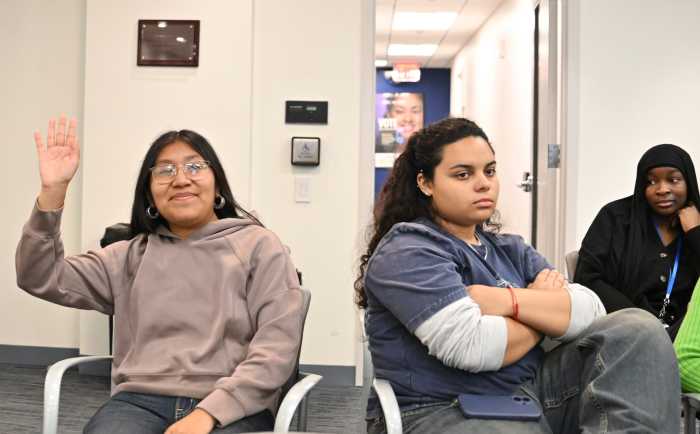 Young New Yorkers attend a New York City Campaign Finance Board youth civic engagement panel on Aug. 27, 2026Photo by Lloyd Mitchell
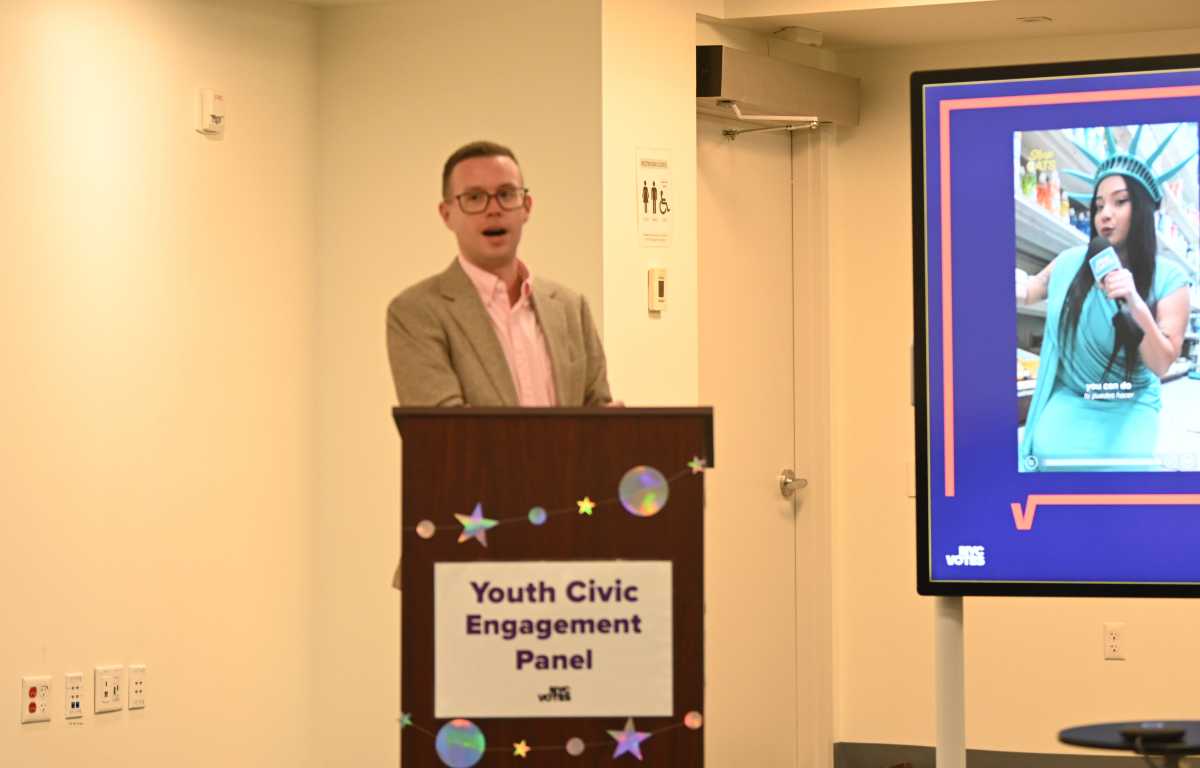
At a youth civic engagement panel Thursday, CFB officials described an outreach strategy that increasingly incorporates hyperlocal social media creators, including influencers whose usual content focuses on subjects such as bodega cats and pop-culture quizzes rather than politics.
Mike Schafer, the CFB’s associate director of digital communications, said the agency has found that younger audiences are not always turning to traditional spokespeople such as celebrities or politicians, or to traditional forms of media. Instead, it seeks out creators who already speak to particular communities and who are not primarily political
Schafer said the CFB typically runs two major marketing campaigns each year — one around the primary and another around the general election — with a heavy focus on reaching New Yorkers ages 18 to 35.
He said the agency has spent the past four years building a messenger program around hyperlocal influencers and other trusted voices who can reach younger voters in ways traditional political outreach often does not.
The CFB also gives those creators considerable freedom over how they deliver the agency’s message.
Schafer said the agency provides talking points and the information it wants communicated but lets creators write “scripts in their own language,” acknowledging that CFB staff may not communicate with younger audiences in the same way as the creators they follow.
The agency has even asked former youth ambassadors to help identify influencers who appeal to people in their communities, Schafer said, rather than simply choosing creators with the largest follower counts.
One partnership featured Shopcats, whose creator visits bodega cats around the city, in Spanish-language and bilingual videos aimed at voters. Another involved Bronx Native, a Bronx-based brand that hosts community events and has helped voters check their registration status.