
Source / Hudson River Park
When Gansevoort Peninsula opened in the fall of 2023, it made headlines with a seemingly impossible premise. It promised a public beach right in the heart of Manhattan.
Now, nearly three years into its life as Hudson River Park’s largest standalone recreational space, this 5.5-acre green oasis has proven to be much more than just a novelty.
The ‘no swimming’ reality
You absolutely cannot swim here. Due to the river’s strong currents and variable water quality, the water remains strictly off-limits to swimmers.
But as any regular visitor will tell you, that hasn’t stopped the crowds.
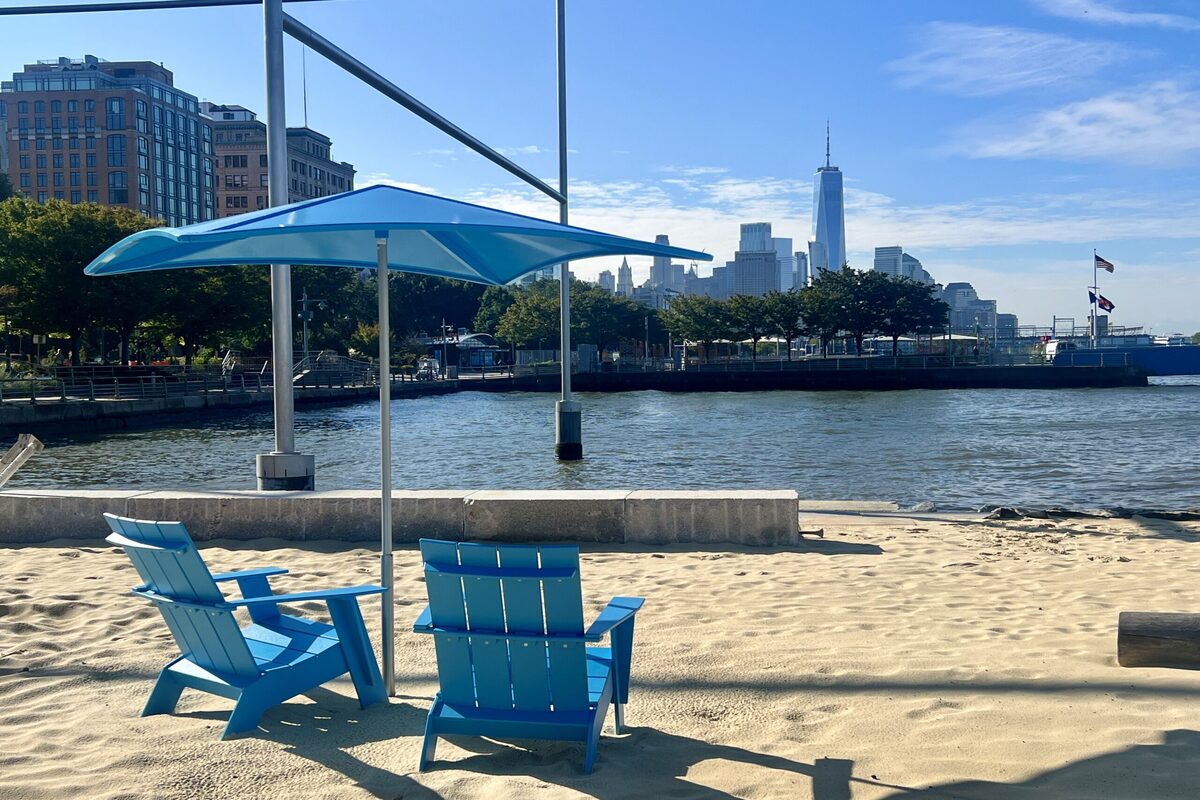
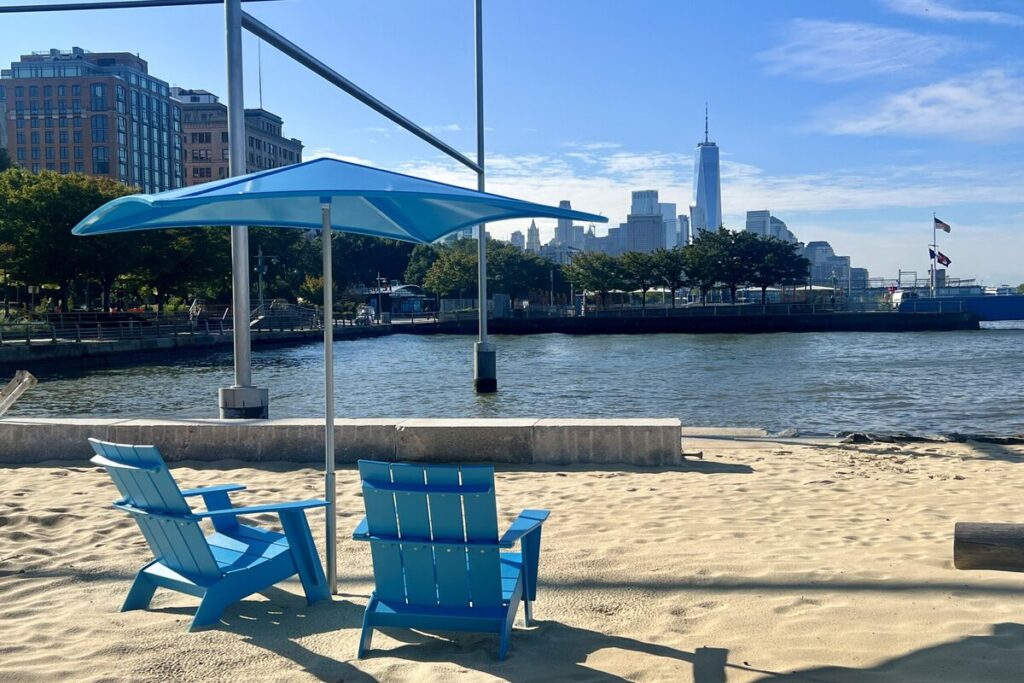
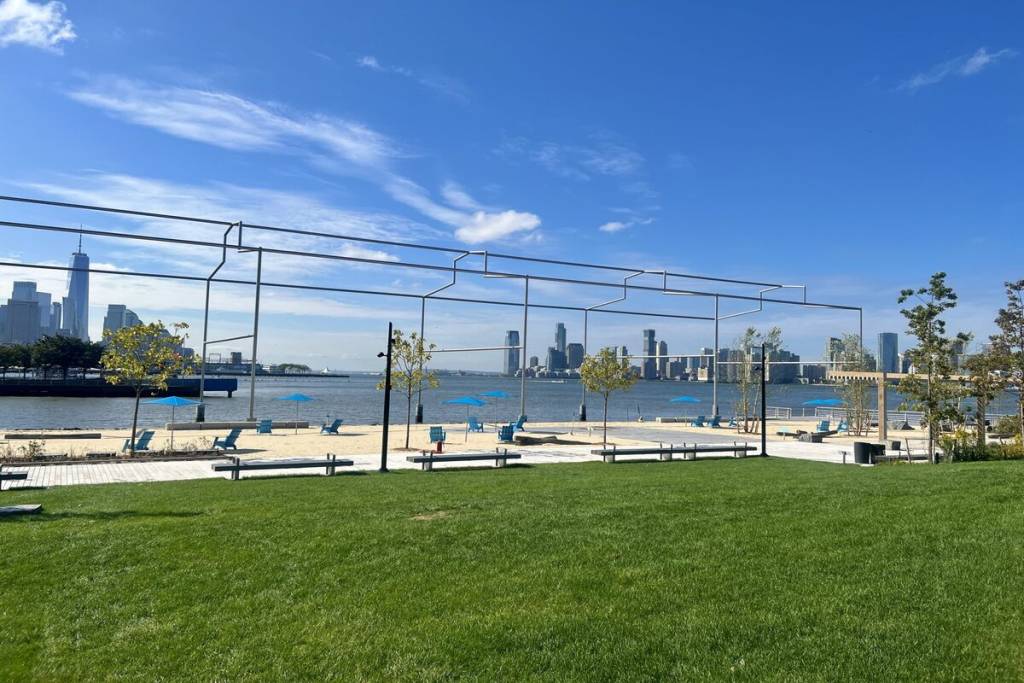
Instead of a traditional swimming spot, Gansevoort operates as an urban lounging beach. The 1,200 tons of powdery sand are dotted with blue beach umbrellas and Adirondack chairs.
You get spectacular views of Little Island, downtown Manhattan, and the New Jersey skyline.
Visitors rely on the park’s misting stations to cool down. You can also head to the southern edge. Here, a rocky, resilient shoreline allows direct river access for kayakers and paddleboarders.
An ecological and historical haven
 Source / Hudson River Park
Beyond the sand, the peninsula is quietly becoming a triumph of urban ecology. What was once a sanitation facility parking lot is now a thriving natural habitat.
Manhattan’s first salt marsh: The northern edge features native grasses and submerged reef balls. These are seeded with 20 million juvenile oysters that actively work to filter the river water.
A birder’s secret: Surprisingly, nearly 100 different bird species have been recorded here on Cornell’s eBird database. Keep an eye out for cedar waxwings and sandpipers.
Tide pools: At low tide, the southern rocky edge reveals tide pools harboring small shrimp and crabs.
The park also nods to the city’s past. Gansevoort Peninsula is actually the last remaining block of Thirteenth Avenue. This historic street was largely excavated in the early 20th century to allow longer ocean liners to dock.
Rising from the water just off the beach is Day’s End. It is a monumental, ghostly steel sculpture by David Hammons that traces the outline of the old Pier 52 warehouse that once stood there.
Planning your visit
 Source / Hudson River Park
Located across from the Whitney Museum in the Meatpacking District, the beach is completely free to access.
Here is what you’ll find:
A turf athletic field and a dog park (with separate areas for large and small dogs).
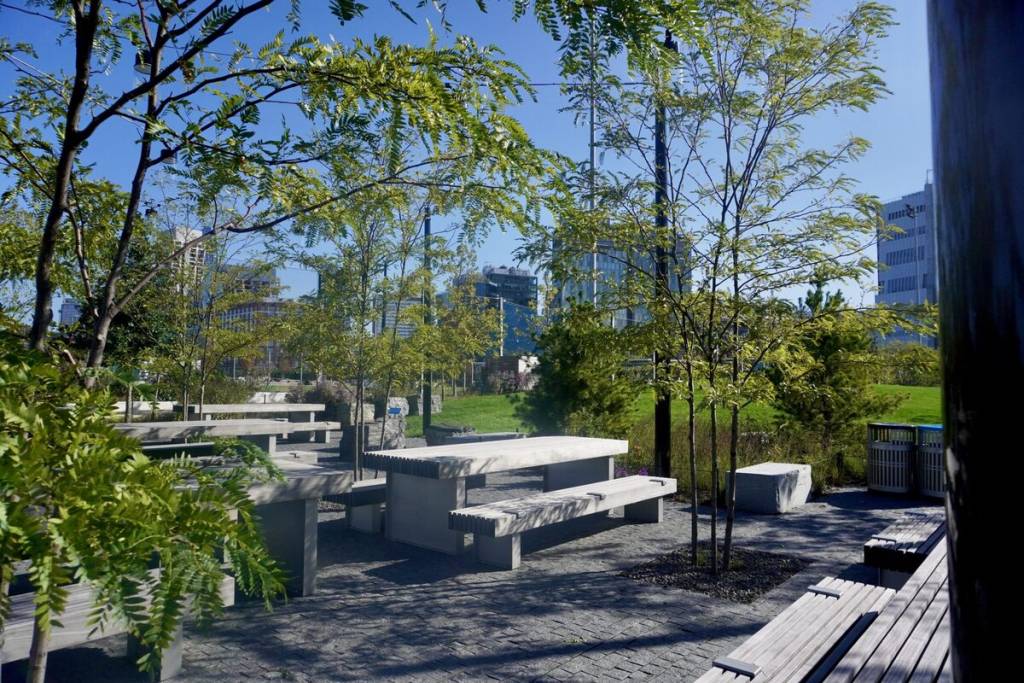
A pine grove and boardwalks for shaded strolling.
Picnic tables and sweeping sunset views.
Pro-tip: There is no food sold directly on the sand. However, Pier 57‘s massive food market is just a five-minute walk north. It makes it incredibly easy to grab lunch before claiming an Adirondack chair for the afternoon.