
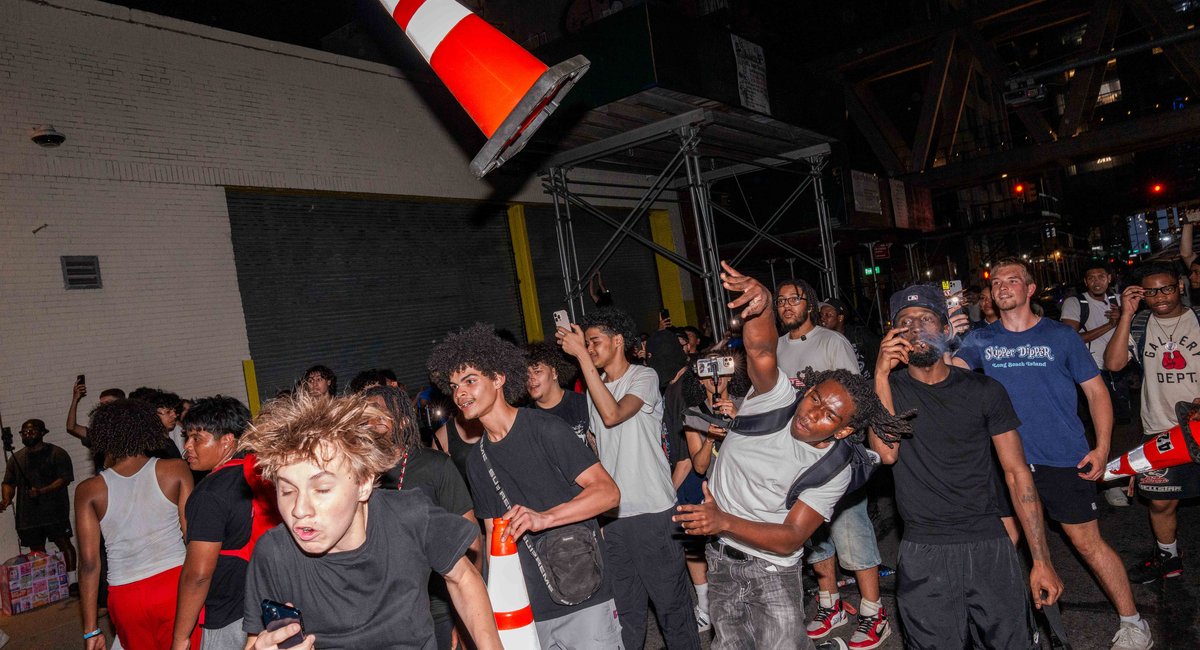
When the Knicks played, New Yorkers watched. After the games, they started swinging.
Felony assault complaints across New York City were 31.4% higher on the five nights the Knicks played during June’s NBA Finals than on comparable nights, a spike that a new midyear report says may offer a window into the city’s persistent rise in felony assaults.
The civic policy journal Vital City’s midyear report, published Tuesday, found felony assault complaints have risen for six consecutive years, even as major crime overall fell 5.6% in the first half of the year. Murders and shootings also declined.
Felony assault complaints were 48% higher in the first half of 2026 than during the same period in 2019. Two decades ago, they accounted for one in 10 of the NYPD’s felony complaints. Now, they account for about one in six, according to the report.
The timing of the complaints on Finals nights closely tracked the games themselves.
The city averaged about 51 felony assault complaints between 7 p.m. and 4 a.m. on NBA Finals nights, versus about 39 on comparable nights. The analysis found overall complaints fell while the games were underway, then climbed after the buzzer, running nearly 39% above normal at 1 a.m.
The pattern held on wins and losses. The largest jump, nearly 50%, came on the Monday the Knicks lost Game 3.
Manhattan, home to Madison Square Garden, outdoor watch parties and many of the bars where fans watched the games, tallied the largest increase, with felony assault complaints more than doubling.
“It really seems to be about a lot of people being out late together rather than about celebration,” said Paul Reeping, the report’s author. He attributed the broader six-year rise to an erosion of social cohesion since the pandemic.
An NYPD spokesperson pointed to more recent data showing felony assault complaints were down 0.4% through July compared with the same period last year, after falling 6.4% in July. Vital City’s analysis, by contrast, covered the first six months of the year.
The report also found that about 40% of the growth in total crime complaints since 2019 came from offenses heavily influenced by police enforcement rather than from reports by victims or witnesses. Vehicle and traffic offenses alone are up 342% since 2019, according to the report.
Total complaints in the subway have nearly tripled since 2019, but strip out several enforcement-heavy categories and the count is down about 11%.
Liz Glazer, founder of Vital City, said the enforcement approach falls into an old pattern for low-level offenses: “the process is the punishment.” Arrests spike, she said, but “huge percentages of those cases” are dismissed at arraignment.
“You’ve accomplished putting the person in jail and in lockup for a night before they get arraigned, and then the case is over,” Glazer said.
But the underlying drivers of fare evasion, shoplifting and trespassing go unaddressed, and the cycle repeats, she said.