
This winter, New Yorkers will once again be able to enjoy a steaming hot sit-down meal in the freezing cold.
The council approved its latest legislation after the seasonal program, which had been passed under then-City Council Speaker Adrienne Adams and signed by former Mayor Eric Adams in 2023, saw a seismic reduction in the number of participating restaurant owners — due to the high cost of taking down and storing the roadway structures each year. The 2023 program replaced the city’s first iteration of roadway dining, which was established by Adams’ predecessor, Bill de Blasio, during the COVID-19 pandemic.
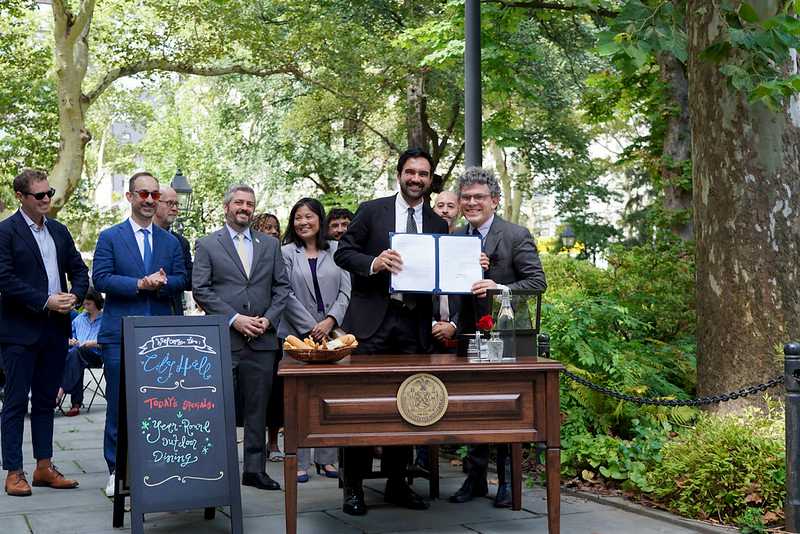
During Mamdani’s Monday bill-signing ceremony outside of City Hall, the first of his tenure, he said that the seasonal program forces business owners to lay out tens of thousands of dollars annually to take down and put up the structures each year.
“Most restaurants or cafes do not have tens of thousands of dollars just lying around,” he continued. “This legislation will make it possible for small businesses to keep those structures up year-round.”
What the new outdoor dining bill aims to accomplish
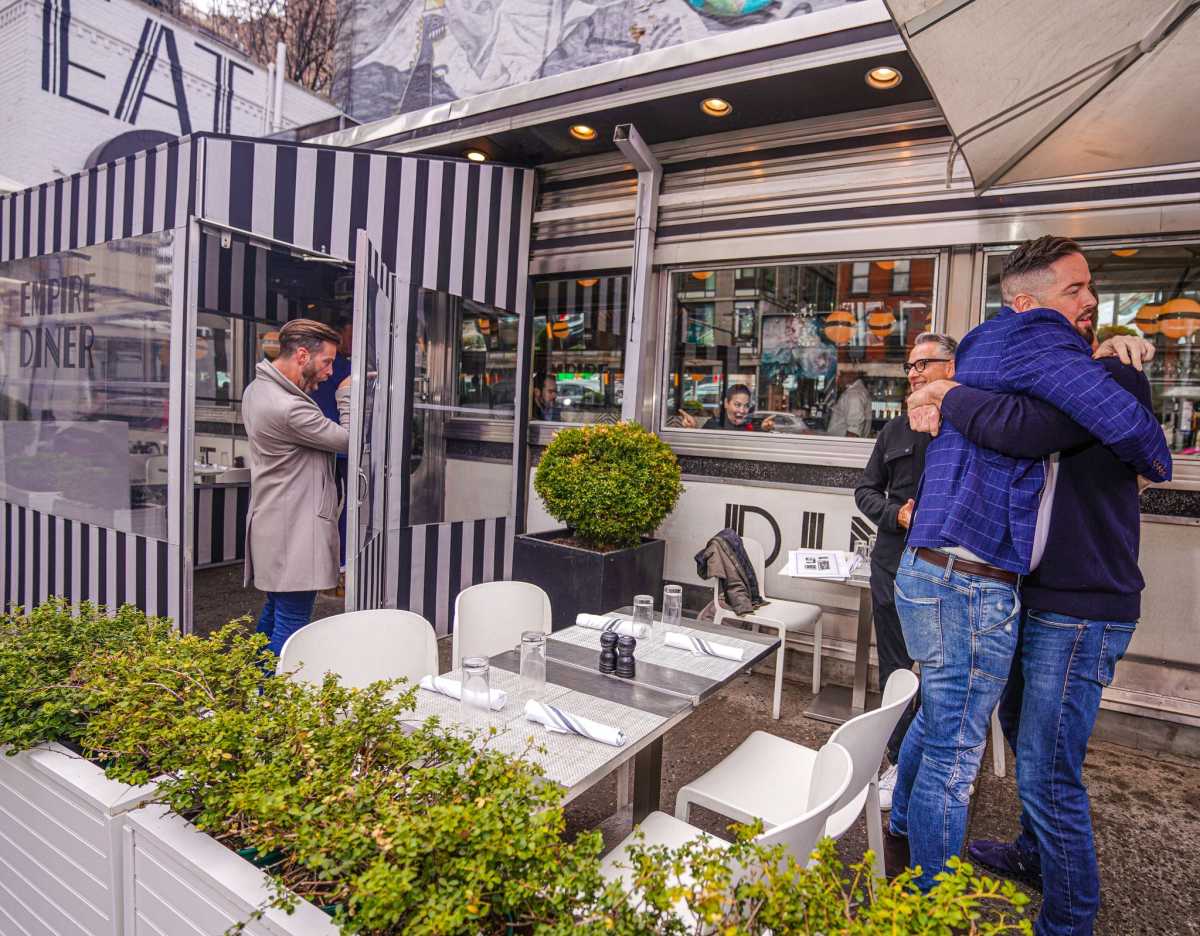 Outdoor diningPhoto by Dean Moses
The change could lead to thousands more restaurants signing up for the program, city officials have said, which dwindled from nearly 12,000 participants at the height of the coronavirus pandemic to just under 1,600 getting licensed this past spring. It will take effect this fall.
In addition to restoring year-round outdoor dining, the legislation allows restaurant owners to retrofit their structures for the winter months by adding coverings meant to guard against low temperatures, snow, and other cold weather conditions. It will also require establishments with roadway cafes to shutter them by 11 p.m., rather than midnight under the current program, so as not to disturb their neighbors late at night.
Restaurant owners interested in participating in the program must pay the city both a $1,050 licensing and operation fee as well as an additional surcharge to rent the road space.
During his remarks, Mamdani also urged New Yorkers to vote in favor of a November ballot proposition advanced by his Commission on Government Efficiency that promises to shorten the outdoor dining application process from eight to two months and save restaurant owners up to $1,800 on it.
City Council Member Lincoln Restler (D-Brooklyn), who sponsored the legislation, said that changes made under the Adams-era program to combat persistent rodent and trash issues with outdoor dining structures have worked and will remain in place. Those include a requirement that restaurant owners check under the floorboards of the setups each week and that they use “fully removable” furniture.
“We have successfully addressed the cleanliness issues, garbage issues, rodent issues that had plagued the earlier version of the program,” Restler said. “All of those great regulations remain in effect as we bring the program back to year-round.”
During a Monday public hearing preceding Mamdani’s bill signing, a chorus of supporters ranging from local business group leaders to public space advocates lauded the return of year-round outdoor dining.
Dirk McCall de Palomá, executive director of the Sunnyside Shines Business Improvement District in Sunnyside, Queens, said making outdoor dining a 12-month program again will be “transformative.” He said that when the city made the initiative seasonal, it reduced the number of participating restaurants in the BID’s area by two-thirds.
“They ended up having a lot of economic problems as a result of it; they had to lose staff,” he said. “This bill is wonderful. We are so excited that you’re going to be signing it.”
James Kwon, owner of the pizza shop chain Village Square Pizza, said year-round outdoor dining will be a “big help” to his business because it will make space for more customers by expanding the square footage and allows him to offer more jobs.
“If you only knew how big something like this is for restaurants, these mom and pop operations,” Kwon said. “We rarely see anything being done to help small businesses, and we really feel like this is one of the biggest things that’s happened in years.”