
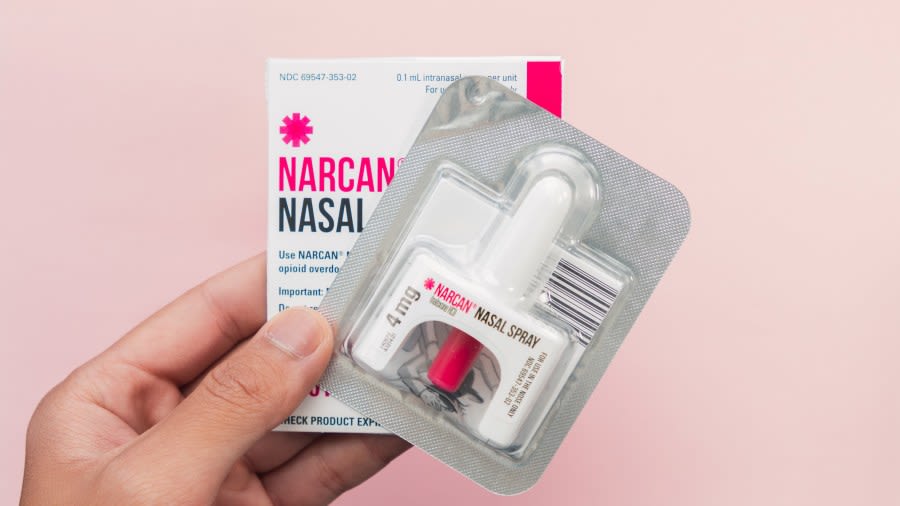
NEW YORK (WWTI) – As public health officials and communities marked International Overdose Awareness Day, a dual wave of encouraging news highlighted significant progress in the ongoing fight against the national drug crisis.
Across the United States, federal health officials reported a sharp drop in fatalities, mirroring an even steeper downward trend at the state level in places like New York. Concurrently, the Centers for Disease Control and Prevention (CDC) announced the launch of a centralized digital resource designed to keep this momentum going through transparent, accessible data.
The latest provisional data from the CDC’s National Vital Statistics System predicts 67,798 drug overdose deaths nationwide during the 12 months ending in March 2026. This figure represents a notable 12.3% decrease in overdose deaths compared to the same period in the previous year. While this national decline signals meaningful progress, public health authorities emphasize that the crisis remains a critical public health challenge.
To help communities capitalize on these changing trends, the CDC launched the new Overdose Prevention Data Channel on International Overdose Awareness Day. This centralized resource brings fatal and nonfatal overdose data, evidence-based prevention strategies, and information about federal programs together into a single platform featuring user-friendly visualizations.
“CDC wants to ensure maximum transparency to empower patients, providers, and other stakeholders as we continue our battle against the opioid epidemic,” said CDC Director Dr. Erica Schwartz, emphasizing that data modernization remains critical to the effort.
The channel draws data from three major federal surveillance systems: the State Unintentional Drug Overdose Reporting System, the Drug Overdose Surveillance and Epidemiology system, and the National Vital Statistics System. Visitors to the platform can explore both national- and state-level trends to guide local responses.
“The most useful data does more than show us what has happened; it helps us decide what to do next,” said Dr. Grant Baldwin, Director of the CDC’s Division of Overdose Prevention. “The continued decline in predicted overdose deaths is encouraging, but progress is not a finish line. The Overdose Prevention Data Channel gives communities and public health professionals a clearer view of fatal and nonfatal overdose trends, along with evidence-based strategies they can use to tailor resources, strengthen prevention efforts, and save lives.”
Nowhere has the localized impact of targeted strategies and funding been more pronounced than in New York State. Governor Kathy Hochul announced a major decline in overdose deaths statewide, driven by historic investments in addiction programs and harm reduction services.
According to CDC data compiled for the state, predicted overdose deaths in New York plummeted from more than 6,630 individuals—averaging about 18 people each day—in 2022 down to 3,775 individuals, or about 10 people each day, by 2025. This accounts for an approximate 45% decrease in statewide drug overdose deaths over that timeframe.
To honor the lives lost to the epidemic and recognize the grief of affected families, landmarks across New York were illuminated in purple on the evening of August 31. State leaders stressed that while the progress is historic, the work is far from finished.
“International Overdose Awareness Day serves as a reminder that every life lost to drug overdose is one too many,” Governor Hochul said. “The progress made in recent years shows that our historic investments in the fight against drug addiction are making a difference. As this deadly epidemic continues to impact every community, I’ll never stop fighting to protect New Yorkers and ensure we’re bringing lifesaving resources to communities in need.”
New York State Department of Health Commissioner Dr. James McDonald echoed these sentiments, noting that behind every statistic is a member of the community. State Senator Nathalia Fernandez, Chair of the Senate Committee on Alcoholism and Substance Use Disorders, added that the data proves sustained investments in harm reduction and treatment successfully save lives.
The state’s success rests heavily on the deployment of nearly $500 million in Opioid Settlement Funds made available since Fiscal Year 2023. This capital represents the largest investment of its kind in the nation, touching every region of the state to expand medication for addiction treatment, recovery support centers, workforce training and public awareness campaigns.
Complementing these financial investments are operational harm reduction initiatives led by the Department of Health and the Office of Addiction Services and Supports (OASAS). The Department of Health oversees more than 1,400 registered opioid overdose programs across 6,000 sites, distributing over 1.4 million free naloxone kits since August 2022. OASAS has similarly distributed more than 574,000 naloxone kits and over 28 million fentanyl and xylazine test strips through an online ordering portal.
Furthermore, the state’s Drug Checking Service—operating across 11 programs and 18 unique sites—has tested more than 5,000 samples since May 2023 to provide users with vital information about dangerous adulterants in the illicit drug supply.
Access to treatment has also widened. Since 2021, 27 counties have expanded methadone access, including 14 counties that previously had no access points. Five mobile medication units are currently operational to bring care directly to high-need areas, and every state prison and local jail now offers all FDA-approved forms of medication for addiction treatment, reaching over 16,000 incarcerated individuals.
Federal and state leaders alike hope that combining modern data infrastructures, such as the CDC’s new platform, with robust local interventions will continue to drive down fatalities.
The New York State problem gambling and chemical dependency HOPEline is available 24/7 to callers throughout New York State experiencing substance abuse and problem gambling. HOPEline services are free and confidential. For help, call 1-877-8-HOPENY (467369) or text HOPENY(467369).
Copyright 2026 Nexstar Media, Inc. All rights reserved. This material may not be published, broadcast, rewritten, or redistributed.For the latest news, weather, sports, and streaming video, head to WWTI – InformNNY.com.