
None of the homeowners suing over the rollout of the city’s pied-à-terre tax on New Yorkers’ pricey second homes are actually subject to the tax, a fact that the city told the Staten Island Supreme Court judge hearing the case on Monday should lead to the suit’s dismissal.
Homeowners bringing the case argue that the city mailing out notices to 17,000 people who may owe the new tax unfairly placed the burden of determining who owes it on homeowners, as those letters asked property owners to send the city paperwork asking for an exemption if they believed they shouldn’t have to pay. The property owners want the city to annul those letters, unpublish a database of nearly 1 million properties the city put online as part of the rollout and “redo” the process after making a more specific determination about who exactly should owe the tax.
However, all of the plaintiffs in the case who received one of those 17,000 letters have since received an additional mailing from the city saying that, upon the city government’s acquisition of 2025 tax return information from the state, the city no longer believes those homeowners are on the hook for the tax.
From the city’s point of view, that means no one bringing the case has actually suffered any harm — and therefore their request that the court rule in their favor has no legal standing.
“This is about a case where nobody has a live claim,” said Steven Banks, the head of the city’s Law Department who argued the case Monday in court. “These petitioners have been found not subject to the surcharge, so they have no standing.”
Prevailing legal precedent says people are not able to sue over something they aren’t directly harmed by.
Staten Island Supreme Court Judge Wayne Ozzi, who himself appears on the disputed list of 900,000 properties, had ruled to temporarily pause the tax’s rollout on Aug. 10, agreeing with those bringing the suit that the city had placed an undue burden on homeowners and violated people’s privacy, but that decision was effectively nullified by the city appealing that pause hours later.
Ozzi said he would be making a final decision in the coming days on whether or not the city violated the law in its tax rollout process and needs to “redo” it, adding that he was aware of the time-sensitive nature of the case.
However, it’s unclear how the request to “redo” the tax rollout would look different from what the city’s doing now as it sends out revised mailings narrowing the universe of people possibly on the hook for the surcharge, part of what the city called its “iterative process” of determining who has to pay as it irons out the kinks of a new tax.
Whittling down the pied-à-terre list
Over the past few weeks, the city’s determined that over 6,000 people – including those bringing the case – who received those initial notices won’t have to pay the tax, a conclusion it came to after receiving 2025 tax return data from the state in August, months earlier than it typically receives it in February.
The city has also since sent out additional notices to about 10,800 of the initial 17,000 people asking them to send the city information to determine whether they’ll be on the hook for the tax. Those people either didn’t pay New York City taxes in 2025 according to the state’s tax return data, or the property in question is owned by an LLC or a trust, making it essentially impossible for the city to tell who exactly owns or lives in the property without additional information from the property owner.
“None of those people are actually before this court,” Banks said. “That’s why the relief that’s being asked for should not be granted.”
Those people now have until Oct. 6 to provide information to the city requesting an exemption to the tax. Banks added that, if Ozzi issues a ruling in favor of those bringing the suit, it could actually tie up the exemption application process for those who are actually still on the hook for the tax.
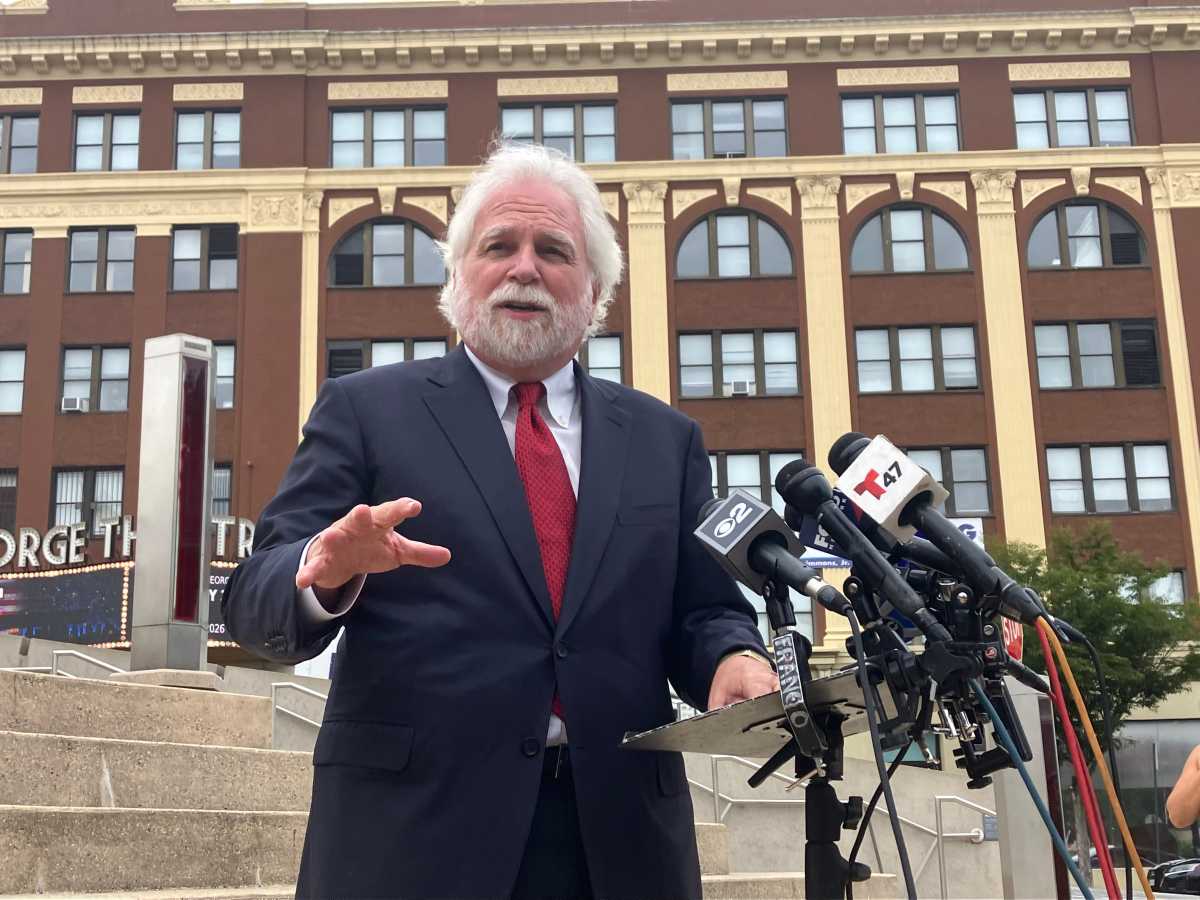
Randy Mastro, the attorney representing the homeowners who previously served as a first deputy mayor in the Adams administration, said Monday in court that the city should have gone to greater lengths to determine who truly owes the tax before sending out those initial 17,000 mailings, arguing it put those New Yorkers “through hell” as they had to consult attorneys and accountants about what to do.
“Litigation like this seeks to hold the government accountable when it violates the law,” said Mastro, who added that the Mamdani administration should have done its “homework” before sending out notices. “The city may not terrify first and clarify later, but that is exactly what is happening here.”
Mastro, who himself received one of those 17,000 letters, added that because homeowners received an initial “threatening” notice — which he repeatedly referred to as “nastygrams” in court — and found themselves on the online tax roll database, the city’s process created “mass panic” and therefore harmed them. He argued it also placed their privacy at risk via the online database of roughly 900,000 properties, a document the city says has essentially always been publicly available and they were required by state law to post.
Banks countered that the city made the best initial determination it could by sending out letters to those 17,000 property owners as early as it could in July based on the information it had available at the time. The city did that to provide people as much time as possible to apply for an exemption if they thought they should get one and sent out updated mailings as it got more information.
The city’s attorney added that it was ridiculous to argue that anyone was suffering actual legal harm from being on the database of 900,000 property owners, citing Ozzi’s place in the database. He added that the information has essentially always been public and if it wasn’t published in connection to the rollout people might sue over that as well, adding unnecessary legal drama to the process.
“There is no cognizable legal harm. If there was cognizable legal harm we wouldn’t even be able to have this case in this courtroom,” Banks said, referring to the potential conflict of interest that could arise if Ozzi essentially ruled he was harmed by his own place on the list. “Nobody has cognizable legal harm. The case should be dismissed.”
Critically, those suing aren’t challenging the tax itself, simply the rollout, meaning the most the suit could do would be to delay its implementation – and the city’s ability to collect the roughly $500 million it expects the tax to bring in – by forcing the city to put its rollout on hold, nix the progress its made and “redo” the process.
The tax applies to second homes when they’re condos valued at at least $1 million or single-family homes valued at at least $5 million. The tax progressively increases as the value of the home increases, topping out at 1.3% of a single-family home’s value when it’s worth over $25 million and 6.5% of a condo or co-op’s value when it’s worth over $5 million.