
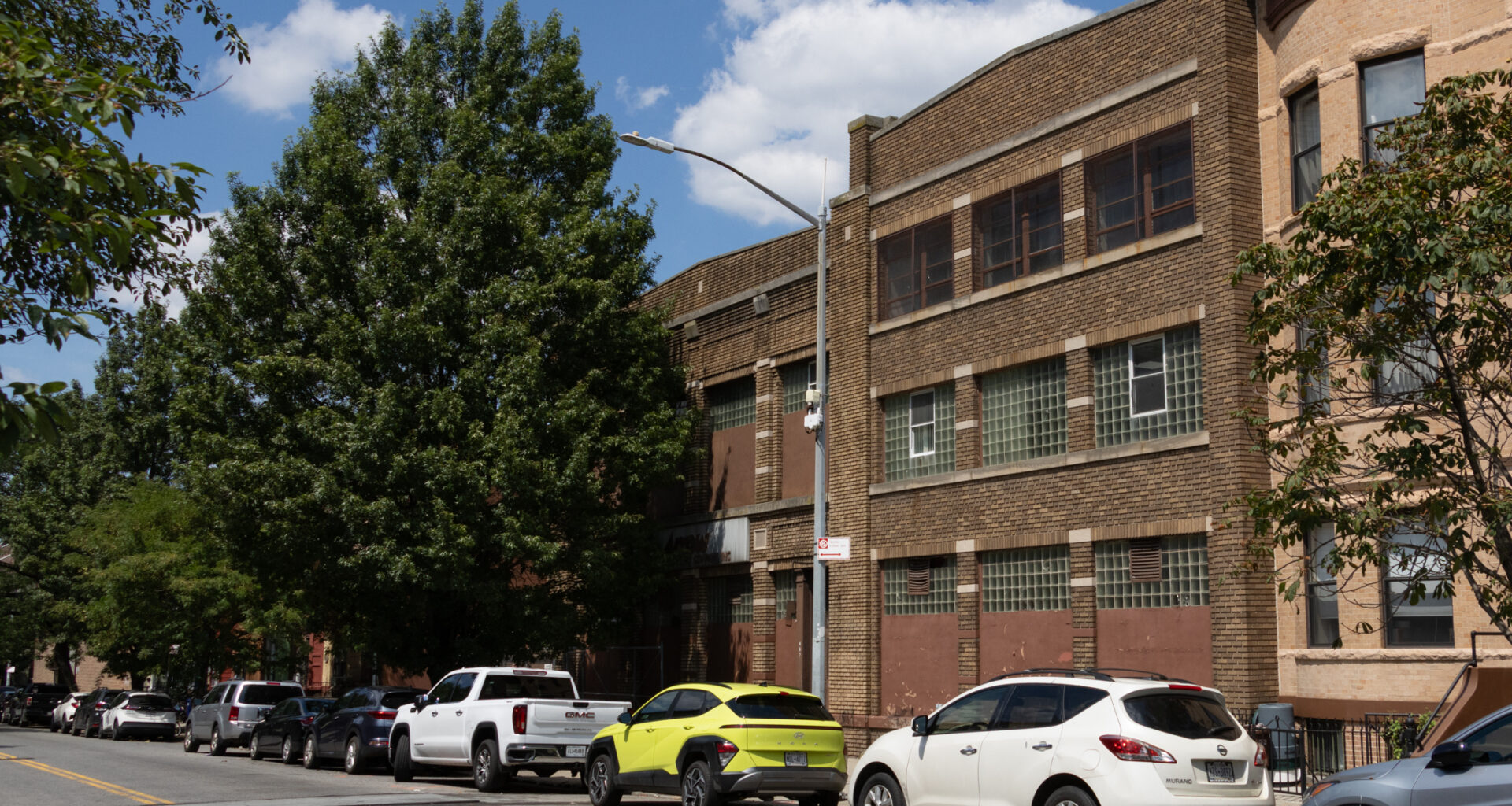


The Arrow Linen building pictured this month. Photo by Susan De Vries
Park Slope and Windsor Terrace residents who fought for a deeply affordable redevelopment of the former Arrow Linen site in scale with their low-lying row house neighborhood are now seeing their hard-won victory made moot by a new developer.
Brooklyn developer Goose Property Management, which recently replaced Apex Development, plans a much bigger apartment complex than what was pitched during the rezoning and with only standard affordability.
Goose intends to build four 10-story, 99-unit buildings, totaling 396 apartments, compared to the two 10-story buildings with 250 units that were proposed as part of the approved rezoning. New renderings show a much larger, bulkier development that rises directly against and dwarfs the neighboring townhouses, a departure from the prior design.
The earlier design emphasized four stories of red brick at a similar height as the surrounding houses, with smaller set-back towers that were less noticeable and deferred to the row houses. The new project looks twice the scale of the development initially pitched, and seems to abandon the goals of fitting in with local context.
A rep for the developer told locals at a July meeting that affordable apartments will make up around 25 percent of its planned development (the minimum required), rather than the 40 percent promised to the community as part of the bitter yearlong rezoning. However, the number of affordable units will stay at 100.
 The new design. Rendering via FRW Architects
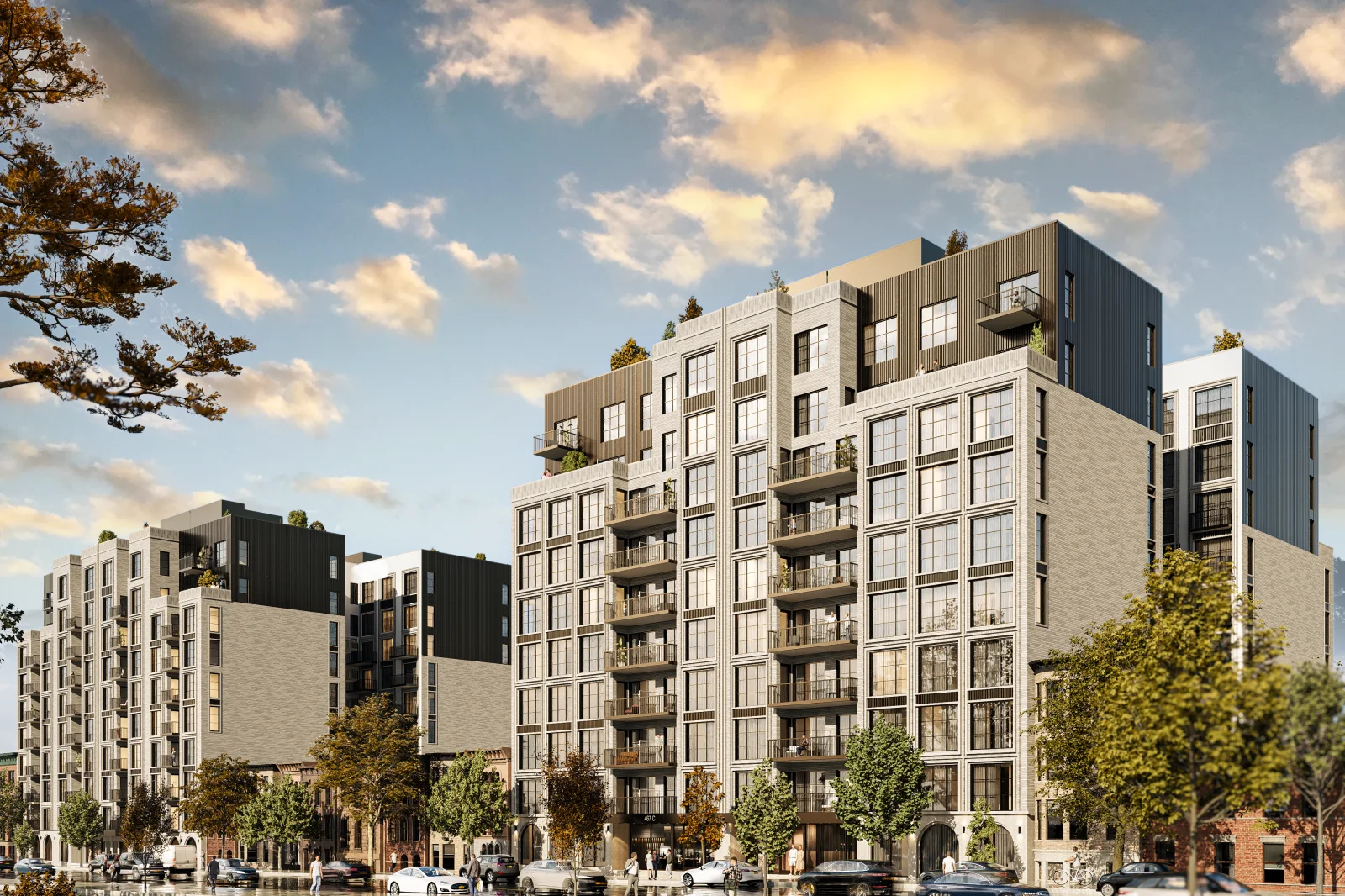 The new design. Rendering via FRW Architects
As part of the highly contentious 2025 rezoning, the longtime owners of Arrow Linen, the Magliocco family, made concessions to the community to get the higher density residential zoning change over the line. The family agreed to cap the project at 10 stories, designate 40 percent of units (100 apartments) as affordable for families earning an average of 60 percent of Area Median Income, and have more than half of the affordable units be two- and three-bedroom apartments, among other agreements.
To seal the deal, local Council Member Shahana Hanif and the Fifth Avenue Committee created a legally binding community benefits agreement with the Magliocco family. However, while the agreement says buildings can’t exceed 10 stories, the agreement doesn’t state how many 10-story buildings or apartments can be built on the site, specifies only that 100 units must be affordable rather than 40 percent, and makes no mention of unit size. The agreement says units must be developed under Mandatory Inclusionary Housing option 1, meaning they will have to be affordable to households earning an average of 60 percent AMI.
“What they codified was that you don’t have to do anything special,” local resident Jay Goldberg told Brownstoner. Goldberg co-founded Housing Not Highrises to advocate for a contextual, affordable project during the rezoning process.
The project planned by Goose, an affiliate of Developing NY State, abides by the wording of the community benefits agreement and meets the city requirement to include at least 25 percent affordable units in any project that benefits from a rezoning.
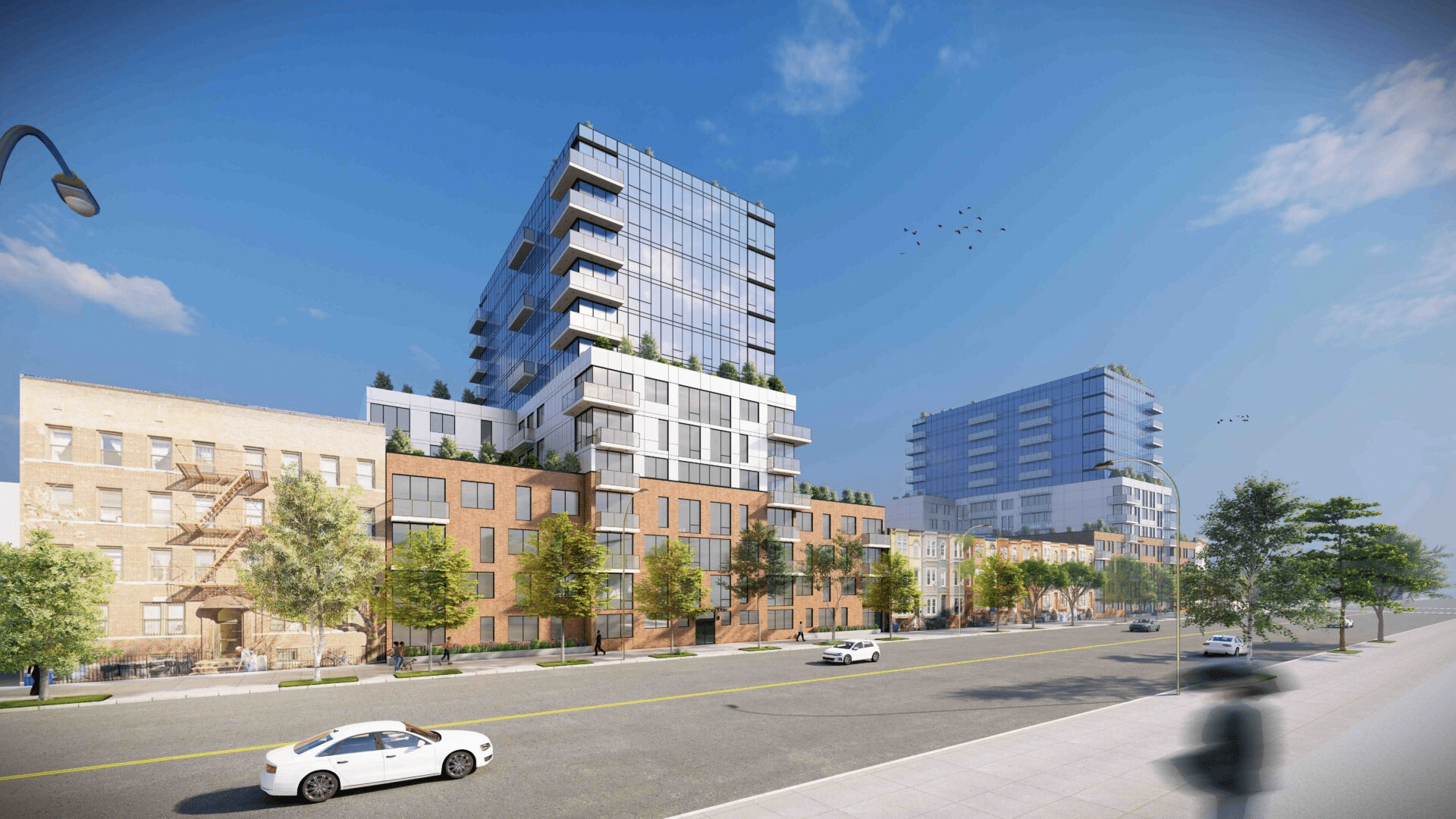 The previous design for the Apex proposed development. Rendering via Gerald J. Caliendo Architects
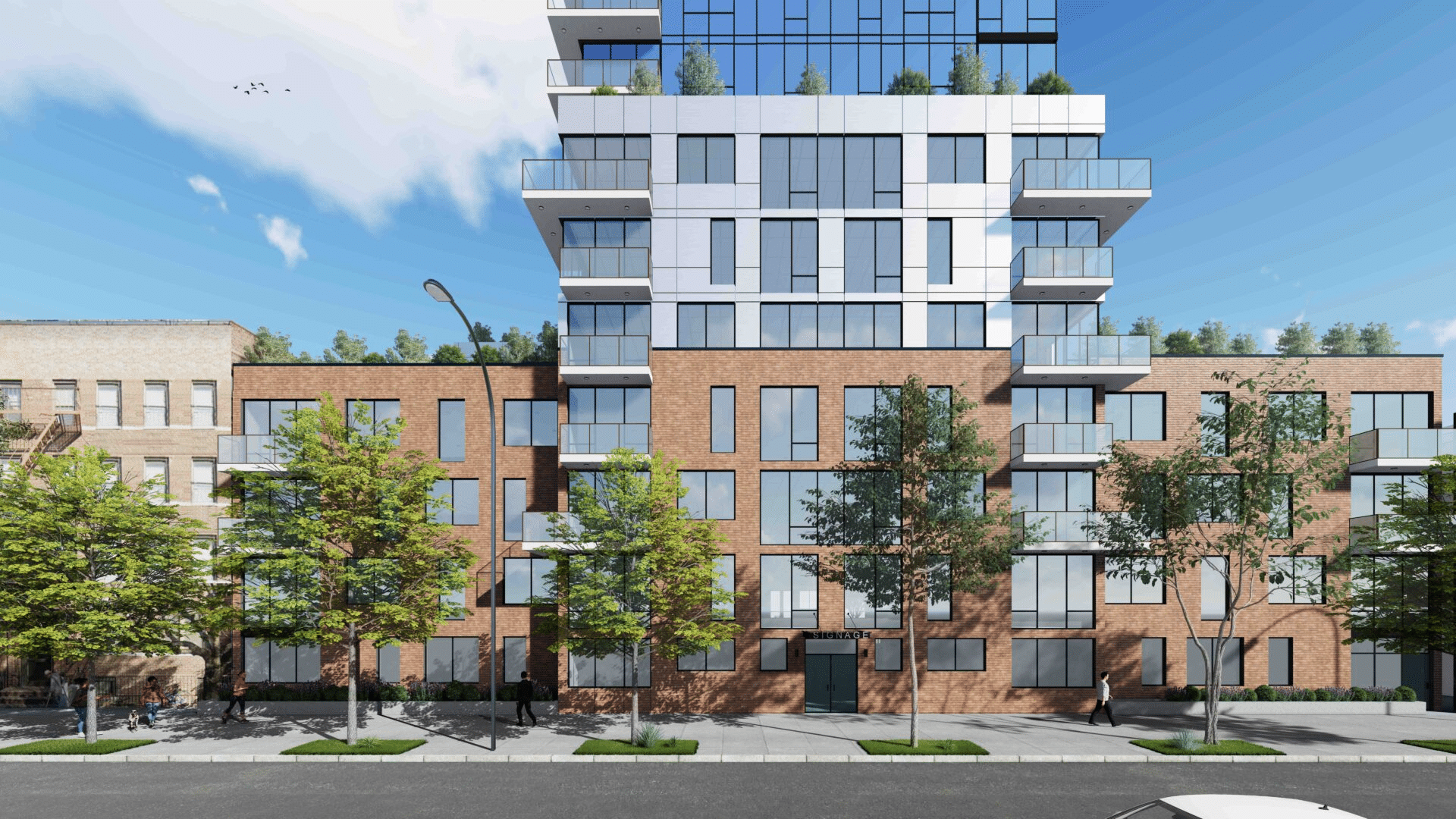 The previous design for the Apex proposed development. Rendering via Gerald J. Caliendo Architects
Moshe Weisberg of Developing NY State is the one who told locals at the July meeting the team plans to keep the number of affordable units at around 100, around 25 percent of the total units pitched in the new project. He also told The Real Deal units will span studios to two-bedrooms. Weisberg did not get back to Brownstoner with comment by publication time.
Windsor Terrace resident Jack Walsh said the more than yearlong rezoning process and subsequent result shows that with spot rezonings, “the city’s process is flawed and developers take advantage of city officials.”
“We have a housing crisis and an affordability crisis, no one would argue that, and the Arrow Linen space is a great development site to create more housing, but the way the city does that is deeply flawed, they can do better.”
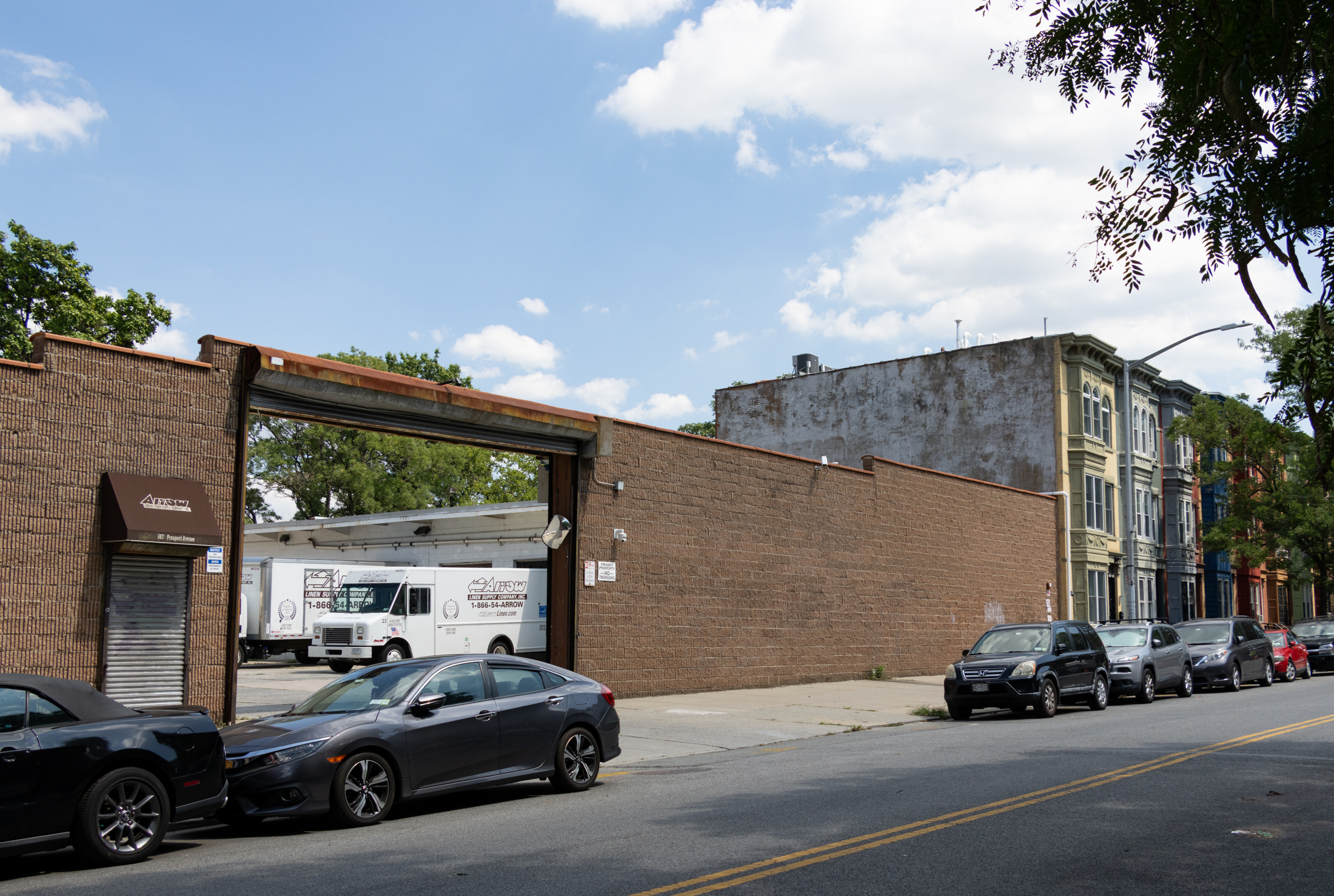 The Arrow Linen site this month. Photo by Susan De Vries
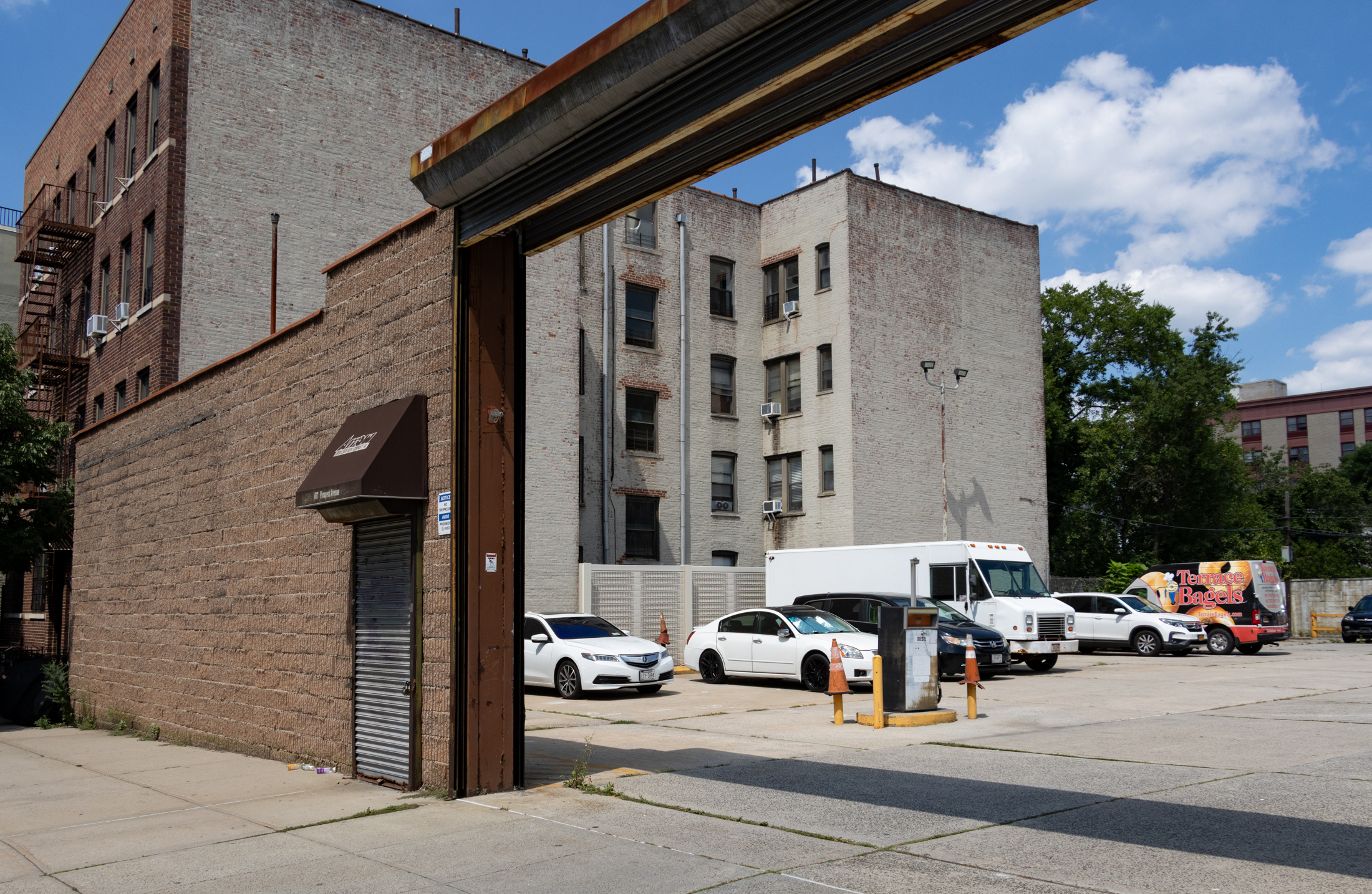 The Arrow Linen site this month. Photo by Susan De Vries
He said when the city allows for a rezoning, it equates to a huge financial handout for a developer or landowner and should come with a citywide template for what that developer or landowner must give back to the community. He said it could be based on the change in property valuation. “The fact that the city doesn’t have that is incredibly disappointing, it’s ridiculous.”
Currently, a rezoning triggers the Mandatory Inclusionary Housing program that requires any development built on rezoned land to have a percentage of affordable units.
Walsh said while he had been disappointed by the council member’s engagement with residents throughout the process, he was encouraged to hear Hanif is seeking an increase in affordable units with the new developer.
Local resident Chris Huntington said it is “fantastic” that Hanif is fighting to get an increase in the affordable units, adding he wants to see deep affordability and not just an increase in the number of affordable units.
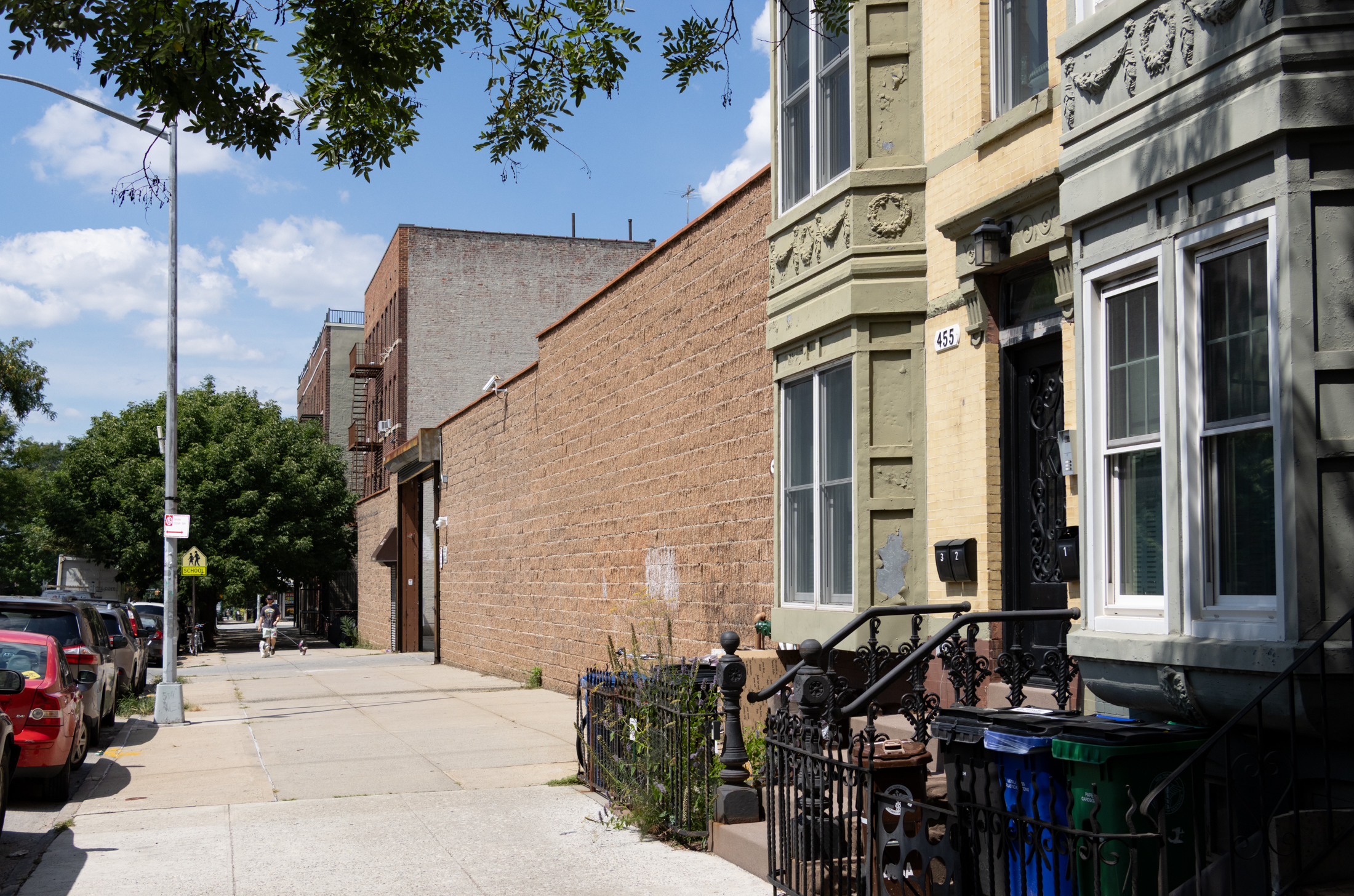 The Arrow Linen site this month. Photo by Susan De Vries
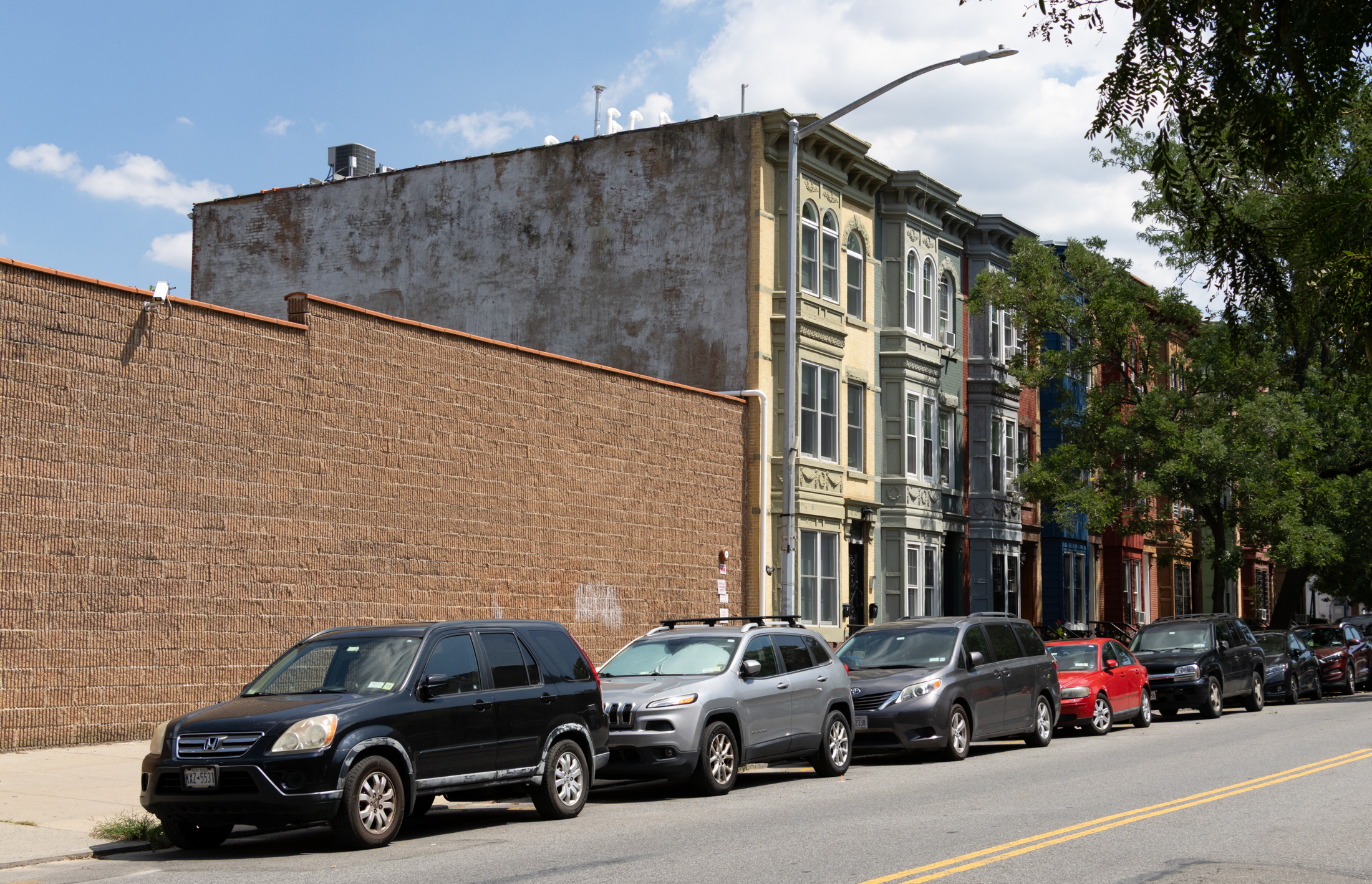 Houses within the u-shape of the Arrow Linen site this month. Photo by Susan De Vries
Neil Plotkin, who owns a house in the middle of Arrow Linen site that was also rezoned as part of the process, said he is “just disgusted, depressed, angry” at the pivot in the plans.
“The impact that this is going to have on the neighborhood is horrible. It’s not in line with what the neighborhood can handle, in line with what the infrastructure can handle. It’s so pigheaded.”
Infrastructure issues include parking and flooding caused by sewer overflows during rainstorms. Plotkin also predicted the development will push up rents in the area.
He said the community was denied the chance to make a binding deal with the developer that secured meaningful concessions for the area for a project he said locals knew would get greenlit. Plotkin and other neighbors, including those belonging to Housing Not Highrises, said they were left out of the drafting of the community benefits agreement, and Plotkin said if the wording was oversight, “it was a pretty f***ing big one.”
“Building apartments needs to be a thoughtful process and this wasn’t.”
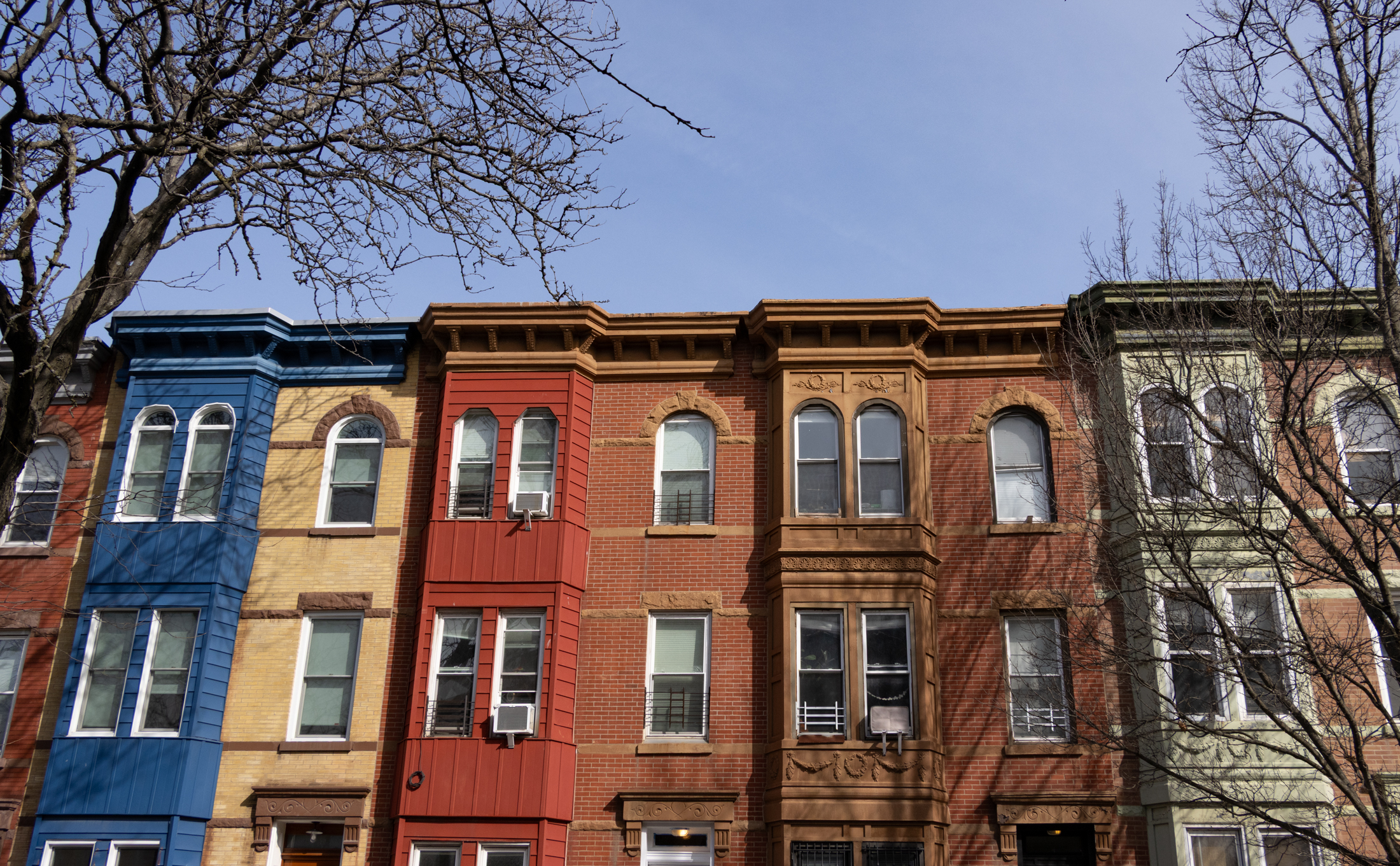 Houses within the u-shape of the Arrow Linen site in 2025. Photo by Susan De Vries
Plotkin said like many in the neighborhood he is in favor of housing development on the site, but at a scale that fits with the area and that its infrastructure can accommodate. Locals had originally advocated for an eight-story development.
“Very few of us are truly opposed to it. We understand that there needs to be development, we’re behind that, but it needs to be hand in hand, not just bulldozing it over the people. And that’s what’s happening.”
Plotkin said he felt let down by Hanif in the process, saying constituents failed to get a good deal out of the rezoning and now are left with a project he predicts will cause harm in numerous ways. “There’s just so little concern for the community.”
Meanwhile, Goldberg, also a member of the construction task force (set up through the benefits agreement), said he feels if Housing Not Highrises had been included as a cosignatory on the document, it could have had a more thorough review. “I found a lot of problems with it.”
“We’re disappointed in the change in level of affordability, but there’s nothing surprising about that given the community benefits agreement.” To push for more affordable units, he said the “only real leverage that we have at this point is the council member.” The community will work with Hanif to try and achieve that, he said.
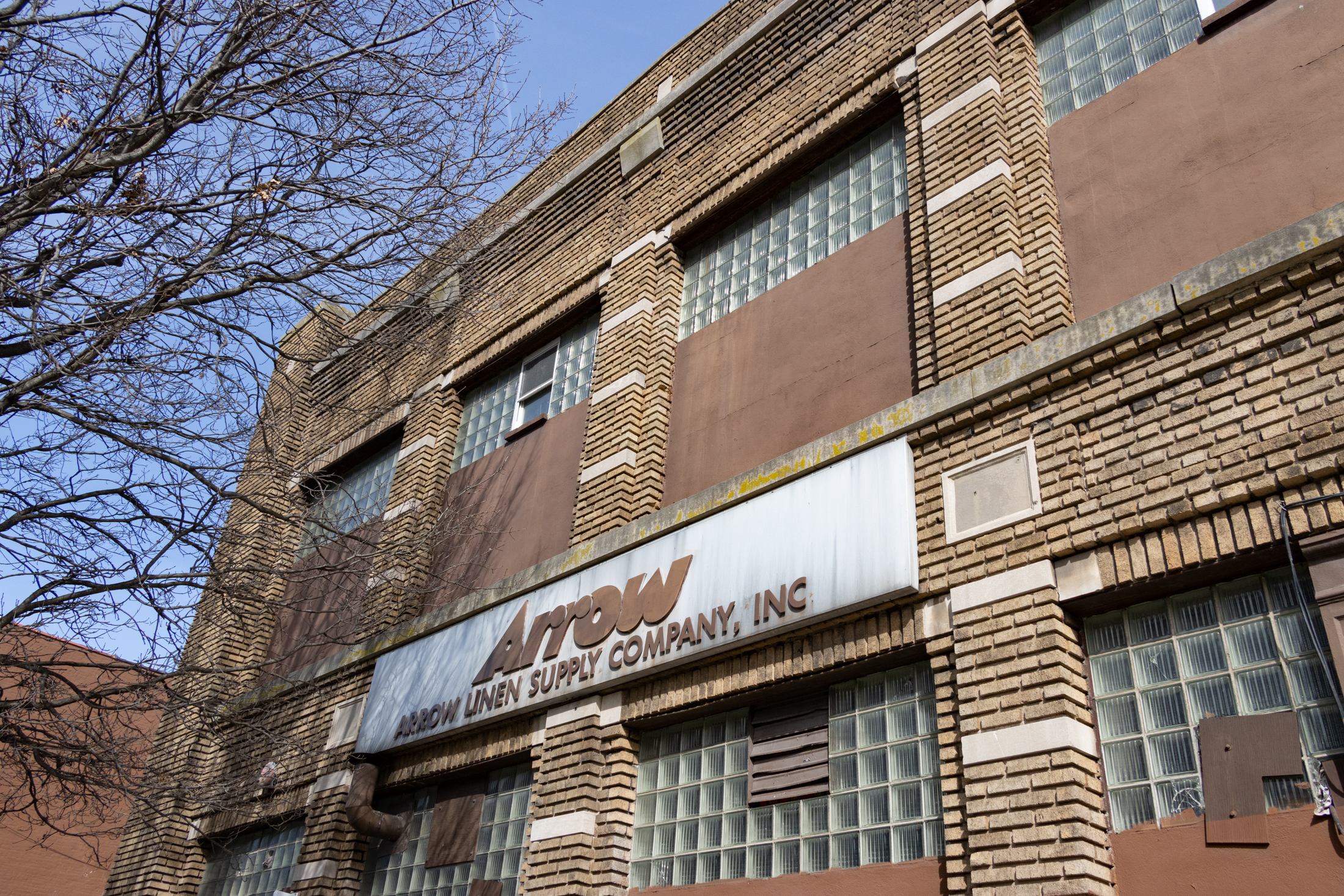 The Arrow Linen site in 2025. Photo by Susan De Vries
Goldberg said the addition of more buildings to the plan, and cutting each down to 99 units, is also unsurprising given the wage laws that kick in with the city’s 485x tax abatement program for buildings of 100 apartments or more. “It’s exactly what you’d expect from a developer.”
At a July community meeting, Goldberg said Weisberg from Developing NY State presented updated renderings and was “very pleasant.” He said Weisberg has been visiting neighbors to put plans in place to protect trees and property during demolition and construction, which is slated to start this year.
Hanif, who was also at the meeting, told Brownstoner via email: “Our office and Fifth Avenue Committee are committed to enforcing the legally binding community benefits agreement and preserving the affordability secured through the negotiated deal.
“A change in ownership does not change the commitments made to this community. We are actively engaging with the new ownership group and have been clear that we expect those commitments to be honored. We will continue working to ensure this project delivers the affordable housing and other community benefits that neighbors fought hard to secure.”
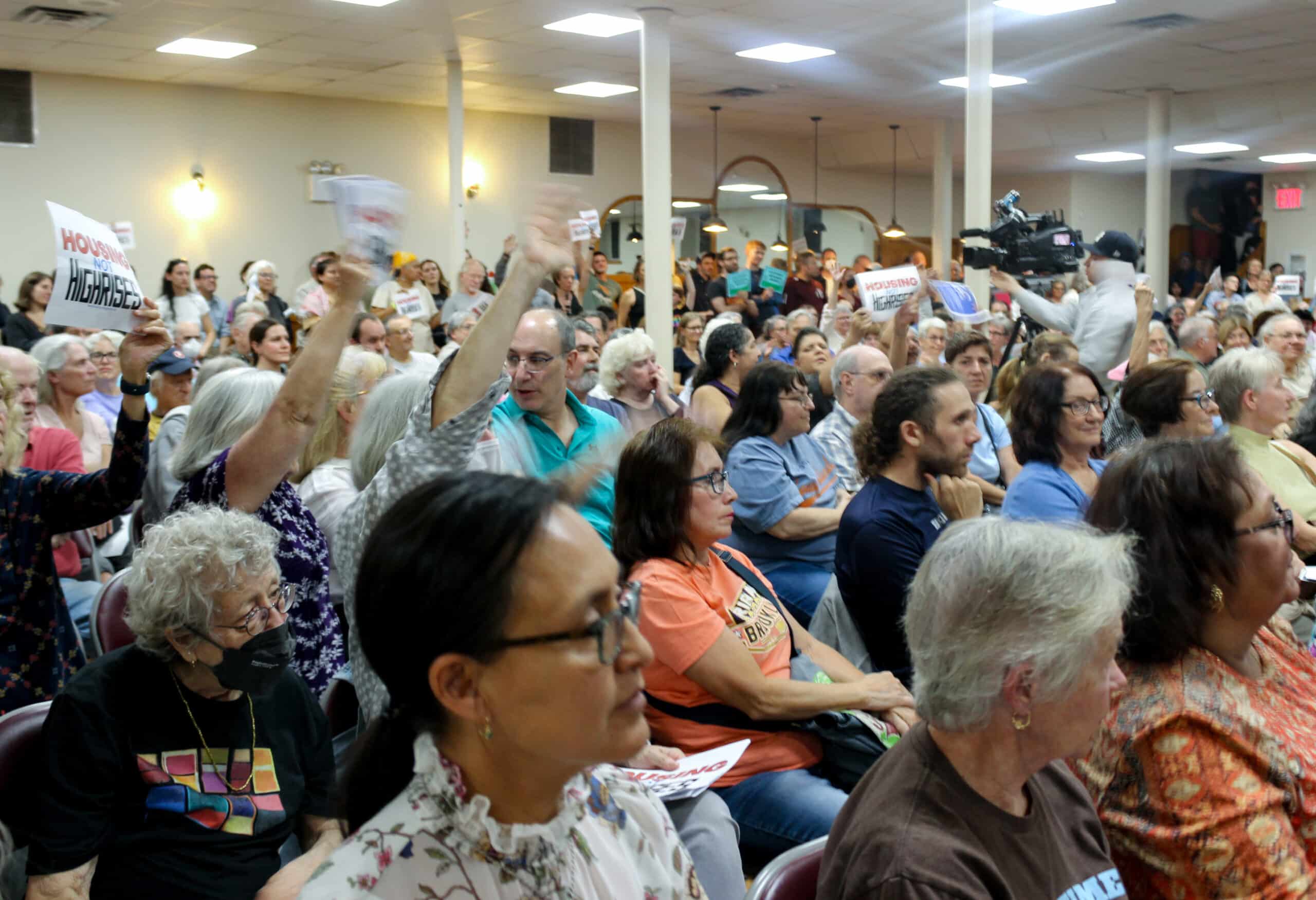 Hundreds of people turned out for public hearings in 2024. Photo by Anna Bradley-Smith
Apex Development rep Alex Esposito, who was the former development partner with the Magliocco family, told Brownstoner “effectively, the economics didn’t work for us.”
“It’s a problem all over the city. You know, regardless of where your stance is on rents and things like that, it’s just the buildings can’t get financed with bank loans because the economics don’t work.”
He said the family had the final say in the rezoning deal with the community, and while Apex had the intention to develop the project “we just couldn’t make that happen, so effectively, we just bowed out, and they replaced us.”
Locals have questioned whether Apex ever intended to build the project, and Goldberg called them a placeholder developer for the rezoning process. “I was never under the impression that Apex would develop the project because Apex has never developed anything,” he said.
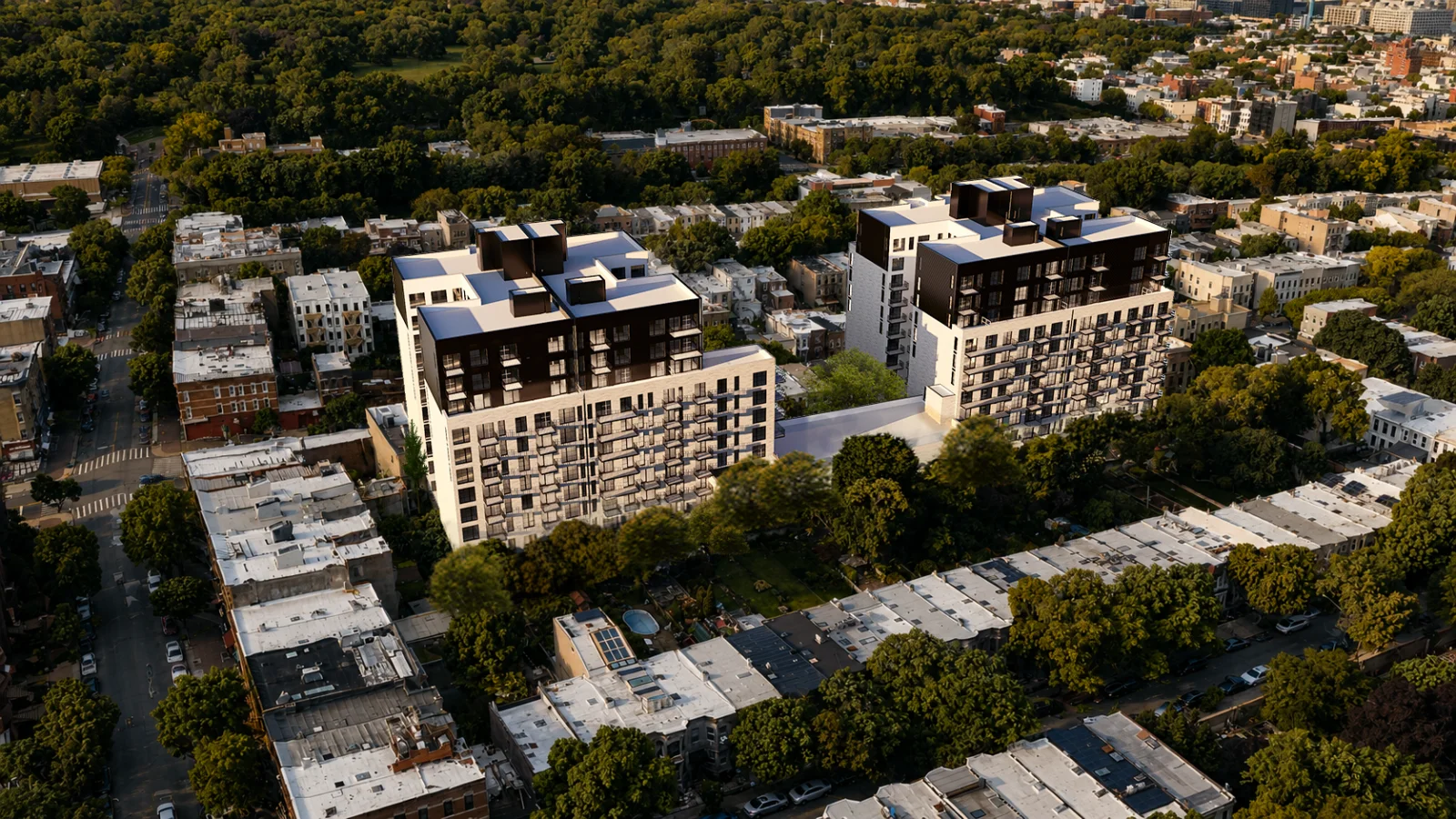 The new design. Rendering via FRW Architects
 The new design. Rendering via FRW Architects
Applications for new-building permits, none of which have been issued yet, show the four new buildings will each have 99 units, be 10 stories tall plus a cellar, and have a combined 198 bike parking spaces. There will be an outdoor recreation area on the roof.
The addresses of the permits are 447, 449, 467 Rear, and 469 Prospect Avenue. The permit for 467 Rear is a partial conversion permit combined with a new building that says the existing one-story building on site will be vertically and horizontally enlarged and converted to residential. Demolition permits have been approved, but not issued, for a two-story and three-story building on the site.
The owner listed on the permits is Yitchok Katz, and Hamish Whitefield Architects P.C. is listed as the architect of record.
Renderings show that two buildings will rise in each of the sections of the site that front Prospect Avenue, while it’s unclear what will fill the connecting strip along the back of the site.
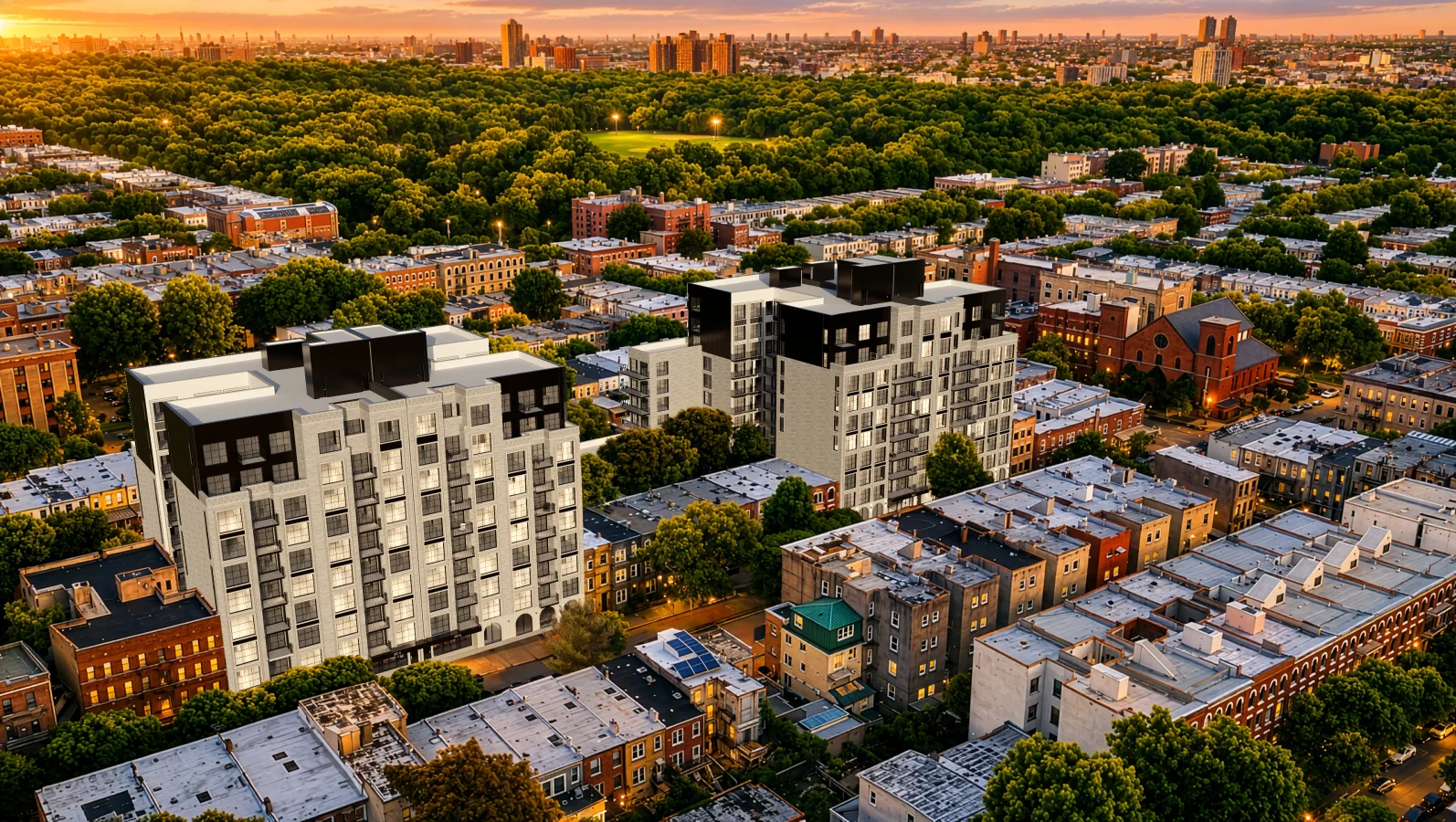 The new design. Rendering via FRW Architects
The two buildings in each section appear to be joined in the middle in a flattened capital H shape. They have stepped massing and setbacks along Prospect Avenue, and are clad in light-colored brick, with darker metal panels on the upper sections. There are large multi-pane floor-to-ceiling windows, and balconies project from recessed vertical strips running down the facades.
At street level, the buildings have large arched openings, retail space, and landscaping. The rooftops have setbacks and planted areas.
The community benefits agreement states that any new development must set aside 2,500 square feet of community facility space for a daycare and 1,200 square feet for nonprofit Sakhi for South Asian Survivors. The nonprofit’s rent must be 15 percent below market rate, the agreement says. It also requires a green/solar roof and bioswales, plus water retention equipment in the building.
The council member clarified to Brownstoner over the weekend the developer will be held to the full agreement made with the community, not merely what was written down in the contract signed by Arrow Linen and the Fifth Avenue Committee.
“Yes, our office has made it clear to the developer that we’re holding them to the 40 percent affordability commitment,” said Hanif.
The agreement states that it runs with the land not the owner. The Magliocco family is still listed in public records as the owner of the site.
Related Stories
Email tips@brownstoner.com with further comments, questions or tips. Follow Brownstoner on Twitter and Instagram, and like us on Facebook.