
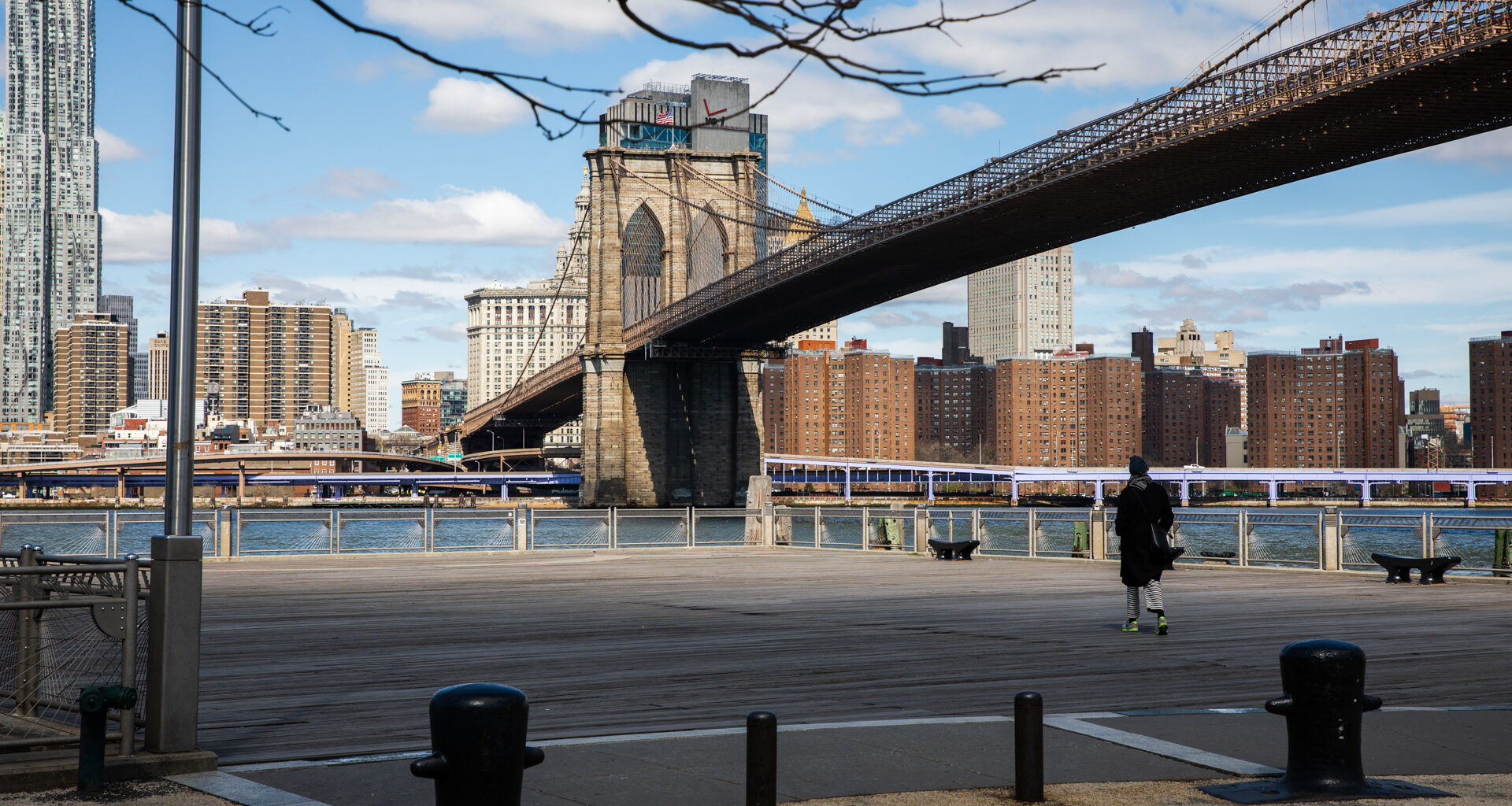
George Washington has one, so does Benjamin Franklin, Rachel Carson and you can add Theodore Roosevelt, and even Edmund Pettus and Leonard P. Zakim.
What they all have – a United States bridge named in their honor.
The George Washington Bridge was named after the first U.S. President, and this iconic suspension bridge spans the Hudson River connecting New York City and New Jersey.
The Benjamin Franklin Bridge — named after the Founding Father and polymath — is the suspension bridge that crosses the Delaware River between Philadelphia and Camden, New Jersey.
The Rachel Carson Bridge is named after the famous marine biologist and conservationist born in Pennsylvania. It is one of Pittsburgh’s famous yellow “Three Sisters” bridges crossing the Allegheny River.
The Edmund Pettus Bridge — a steel-arch bridge — in Selma, Alabama, became a historic landmark of the civil rights movement.
And the Leonard P. Zakim Bunker Hill Memorial, named after the civil rights leader, is a cable-stayed bridge that crosses the Charles River in Boston.
But there’s one bridge — right here in Brooklyn — that needs a name. John A. Roebling needs his name on our Brooklyn Bridge.
From the pages of the Brooklyn Daily Eagle, July 22, 1926:
International fame came to Roebling’s son, Colonel Washington Roebling and his wife Emily Warren Roebling through the construction and completion, in 1883, of the Brooklyn Bridge, which, at that time, was the longest suspension bridge in the world.
It was, at that time, regarded as a unique example of bridge building and a remarkable feat in engineering skill. The untimely death of his father when the work was half strayed, left the difficult task in the hands of the son. The father was injured while making a survey at the Brooklyn side of the river and died from lockjaw 16 days later. Washington Roebling would become ill with decompression sickness, and Emily Warren Roebling stepped in to oversee the project.
At the time of the death of the elder Roebling, no actual construction work had been started and the plans were general and not detailed.
John A. Roebling’s thoughts about a bridge on the East River emerged in 1847 after he had taken a tour of the waterway, but his first actual proposal for the building of the Brooklyn Bridge did not take place until 1856, according to an account in “The Roebling Suspension Bridge: A Guide to Historic Sites, People, and Places” by Don Heinrich Tolzmann.
In 1856, Tolzmann wrote, John A. Roebling corresponded with businessmen in New York, proposing a bridge and followed-up in early 1857 with a letter to Abram Hewitt, partner in the Trenton Iron Company and a future mayor of New York, regarding feasibility of such a bridge.
On receipt of John A. Roebling’s proposal, Hewitt sent it to the Journal of Commerce, writes Tolzmann, which published it (Jan. 22, 1857). His letter stated: “The importance of a permanent connection between Brooklyn and New York appears to be strongly felt just now.”
Two months after the previous publication, John A. Roebling followed up with an article (March 27, 1857) in the New York Herald Tribune titled “Bridge Over the East River Between New York and Brooklyn.”
He wrote: “The plan in its general features proposes a wire suspension bridge crossing the East River by one single span at such an elevation as will not impede navigation…As a work of engineering the bridge will be without a rival. It will form one of the grandest and most attractive features of the two sister cities. The tops of the towers, elevated over 300 feet, would afford the best opportunity for putting up Government lights, observations, lookouts, etc.,” the book said.
The John A. Roebling Bridge connecting Covington, Kentucky, to Cincinnati, Ohio, is described by Tolzmann, as “a prototype for the famed Brooklyn Bridge” on a historical marker on the Covington side of the Ohio River near the foot of the bridge.
However, it’s more accurately described as its “precursor,” as it directly preceded their construction of the Brooklyn Bridge, and was its forerunner.
This description helps place it in context with other bridges and aqueducts that John A. Roebling (1806-69) designed and built; altogether, there were nine, including the Covington-Cincinnati Bridge, which was later renamed the John A. Roebling Bridge.
When will his name be added in Brooklyn? There is plenty of room for signage on Tillary, Adams, Sands, Washington or Prospect streets for a Roebling welcome.
Andy Furman is a Fox Sports radio national talk show host. Previously, he was a scholastic sports columnist for the Brooklyn Eagle. He may be reached at: [email protected]; X: @AndyFurmanFSR