
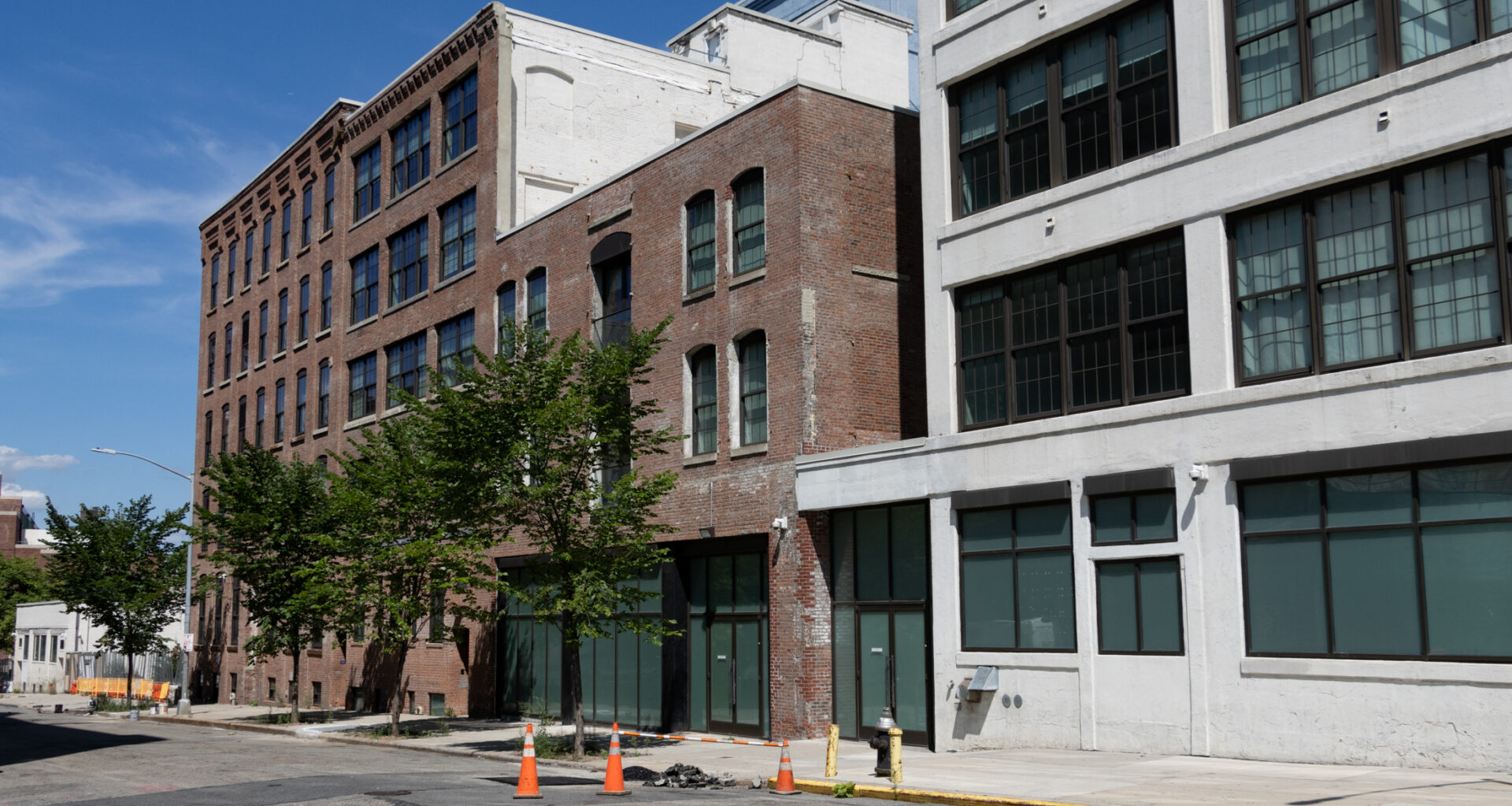
Thanks to a rezoning for a project that would have reused the existing buildings, a new owner plans to raze them.

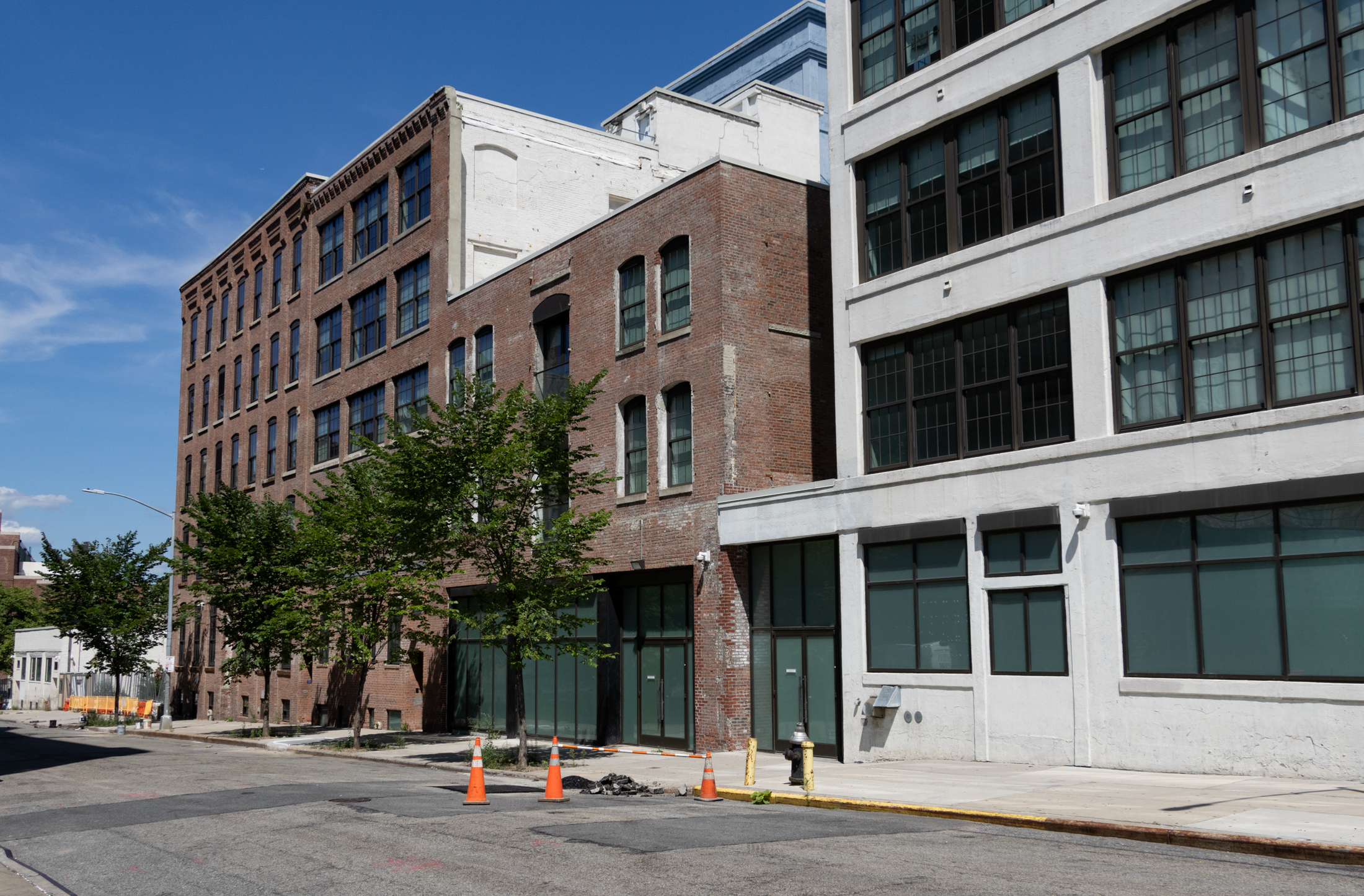
Historic buildings on Hall Street slated for demolition last week. Photo by Susan De Vries
A 2.6-acre Clinton Hill block recently slated for a mega-adaptive reuse project has been taken over by a new developer who plans to demolish more than half of its historic industrial buildings for a new mixed-use project.
The huge former factory and warehouse complex at 47 Hall Street, bordered by Flushing and Park avenues and Hall and Ryerson streets, was rezoned last year by previous owner RXR. The developer planned to create a mixed residential, commercial, and retail community in the late 19th and early 20th century structures mostly built for the Mergenthaler Linotype Company.
However in April, RXR sold the site for $121.35 million to Yitzchok Schwartz’s YS Developers — almost $40 million less than they paid for it a decade ago, city records show. Schwartz has since applied to demolish six of the buildings in the 10-building assemblage, and construct three new mixed-use structures, permits show. None of the demolition or new-building permits have been issued. Schwartz is behind a number of Brooklyn buildings, including the condos on the old Spice Factory site.
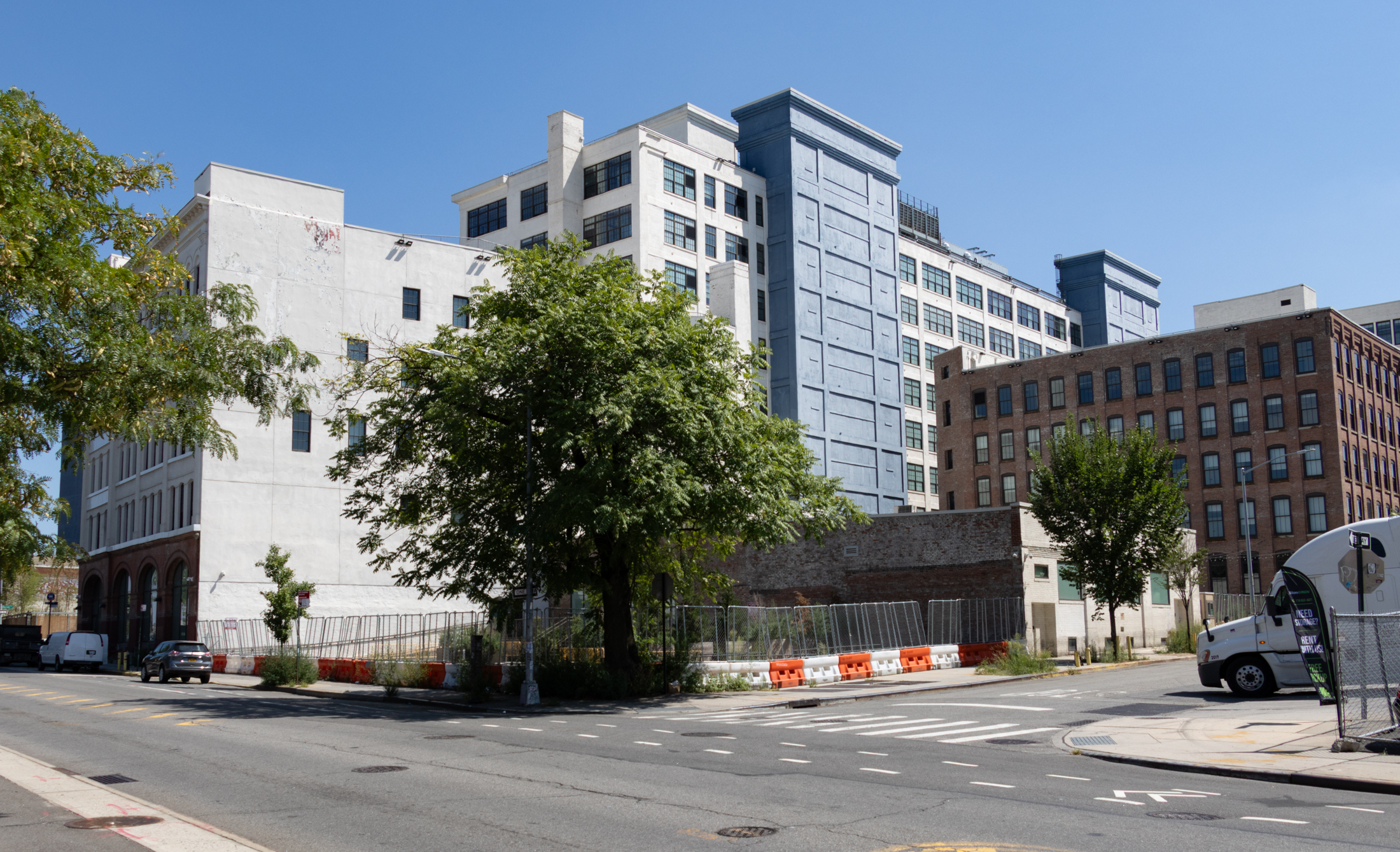 A view of the site from the corner Flushing Avenue and Hall Street
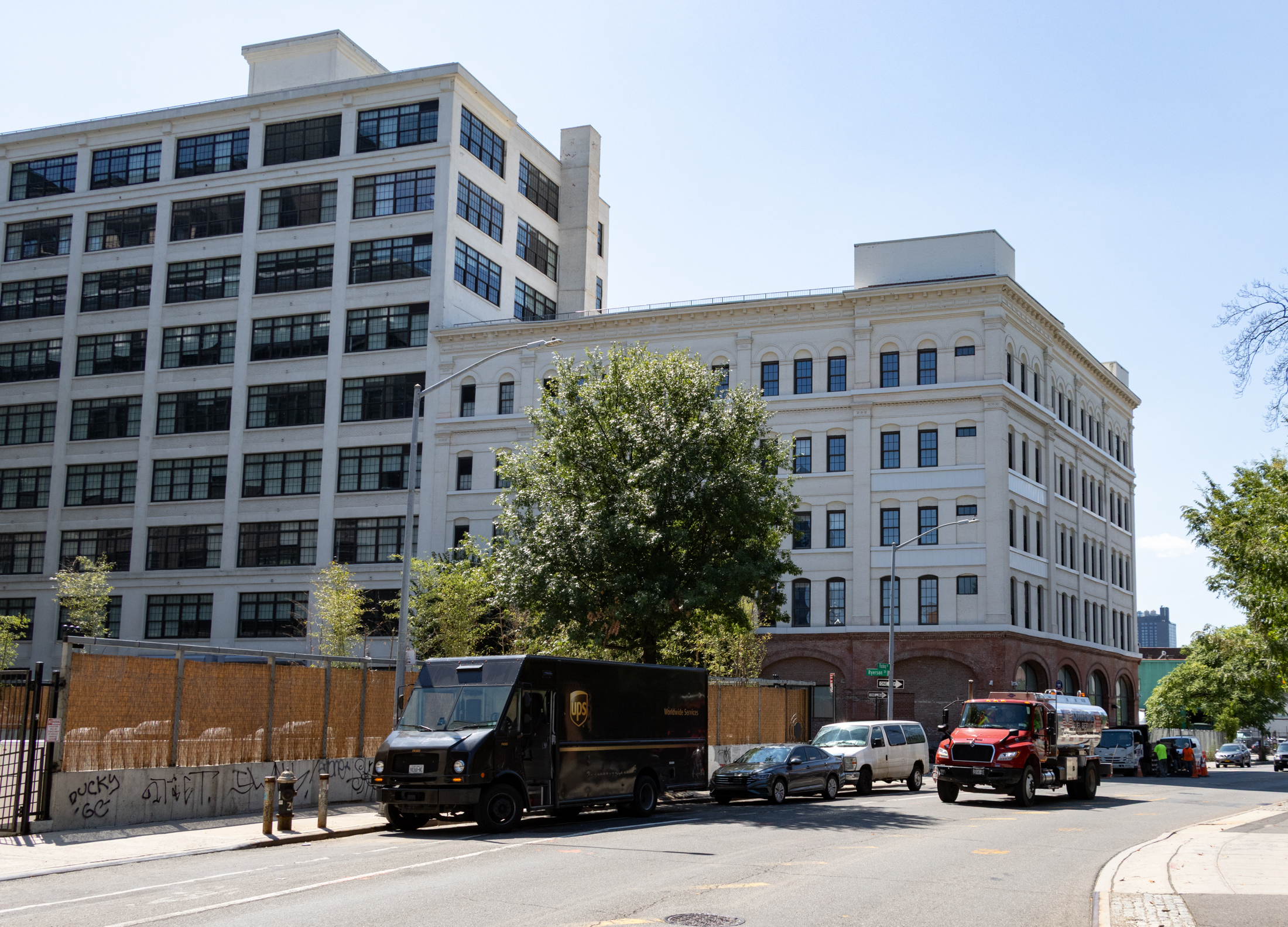 Buildings at 248 Flushing Avenue and 14 Ryerson Street last week
While none of the buildings at 47 Hall Street are protected by New York City landmarking, nine of the 10 are listed on the National Register of Historic Places for the Wallabout Industrial Historic District.
Slated for demolition are 248 Flushing Avenue, 9 Hall Street, 27 Hall Street, 31 Hall Street, 33 Hall Street, and 57 Hall Street. The single-story buildings at 9 and 57 Hall Street cap each end of Hall Street. On the corner of Ryerson Street, the five-story Romanesque Revival brick building at 248-252 Flushing Avenue was designed by Theobald Engelhardt for the B.A. Jurgens grocery warehouse and built in the 1890s.
The remaining three buildings up for demolition, 27-33 Hall Street, were all built for the Mergenthaler Linotype Company. Included is the three-story building at 33 Hall Street built between 1900 and 1910 as a factory, garage, and stable; the five-story brick building at 31 Hall Street dating from 1895; and the five-story brick factory at 27 Hall Street created using mill construction in the early 20th century.
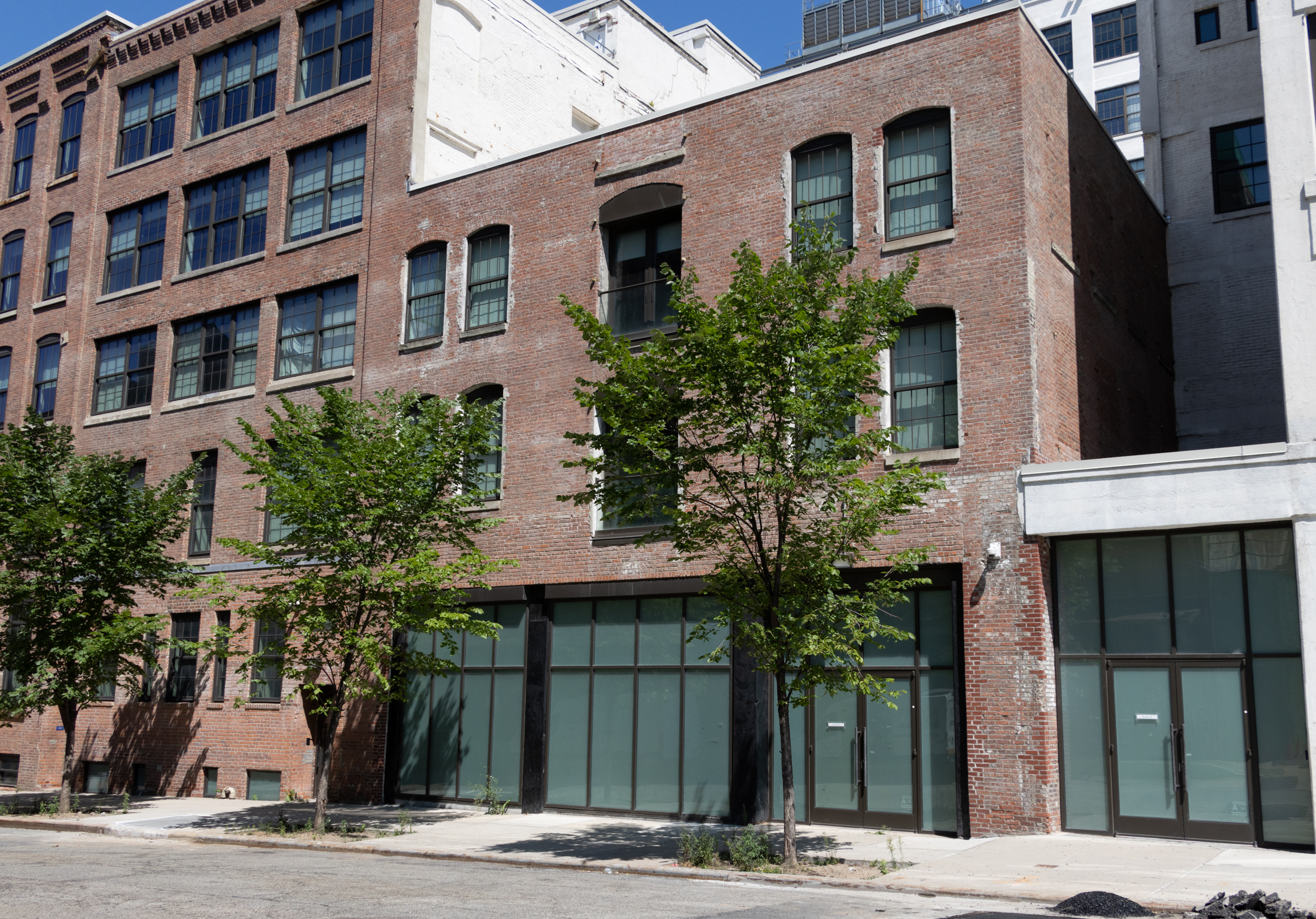 31 and 33 Hall Street, slated for demolition, pictured last week
Permits say the large eight-story building at 14 Ryerson Street will be converted to residential and have 89 apartments. The reinforced-concrete factory building was built in 1927 and designed by Herman Foughner for the Mergenthaler Linotype Company, according to the National Register of Historic Places.
The nine-story reinforced concrete factory building at 313 Park Avenue, on the corner of Ryerson Street and Park Avenue, will see its first floor converted to six residential units, while the remainder will stay as commercial, a renovation permit issued last week says. The building was designed by Albert Kahn and built in 1907 for the Mergenthaler Linotype Company.
Meanwhile, no demolition or conversion permits have been filed for its early 20th century extension at 303 Park Avenue (designed by Albert Kahn, Herman Foughner, and P. R. Moses and built for the Trussed Concrete Building Company), or for the 1917 eight-story reinforced concrete factory building around the corner at 39 Hall Street designed by Herman Foughner.
Schwartz has applied to build three new buildings on the site, including two 15-story mixed-used buildings with 84 apartments each at 248 Flushing Avenue and 1 Hall Street, and one 13-story mixed-used building with 425 units at 33 Hall Street.
While the permits say the buildings at 248 Flushing Avenue and 1 Hall Street will be mixed residential and commercial, the permit for 33 Hall Street says it will be a mixed commercial and community facility. The permit says the cellar and first floor will be a place of religious worship (according to Bisnow it will be a synagogue) while the remaining 12 floors will be “business and service.” Hamish Whitefield Architects P.C. is listed as the architect of record on all the permits.
The same architect is also behind a design for a new owner’s controversial change of plans for apartments at the rezoned Arrow Linen site in Park Slope.
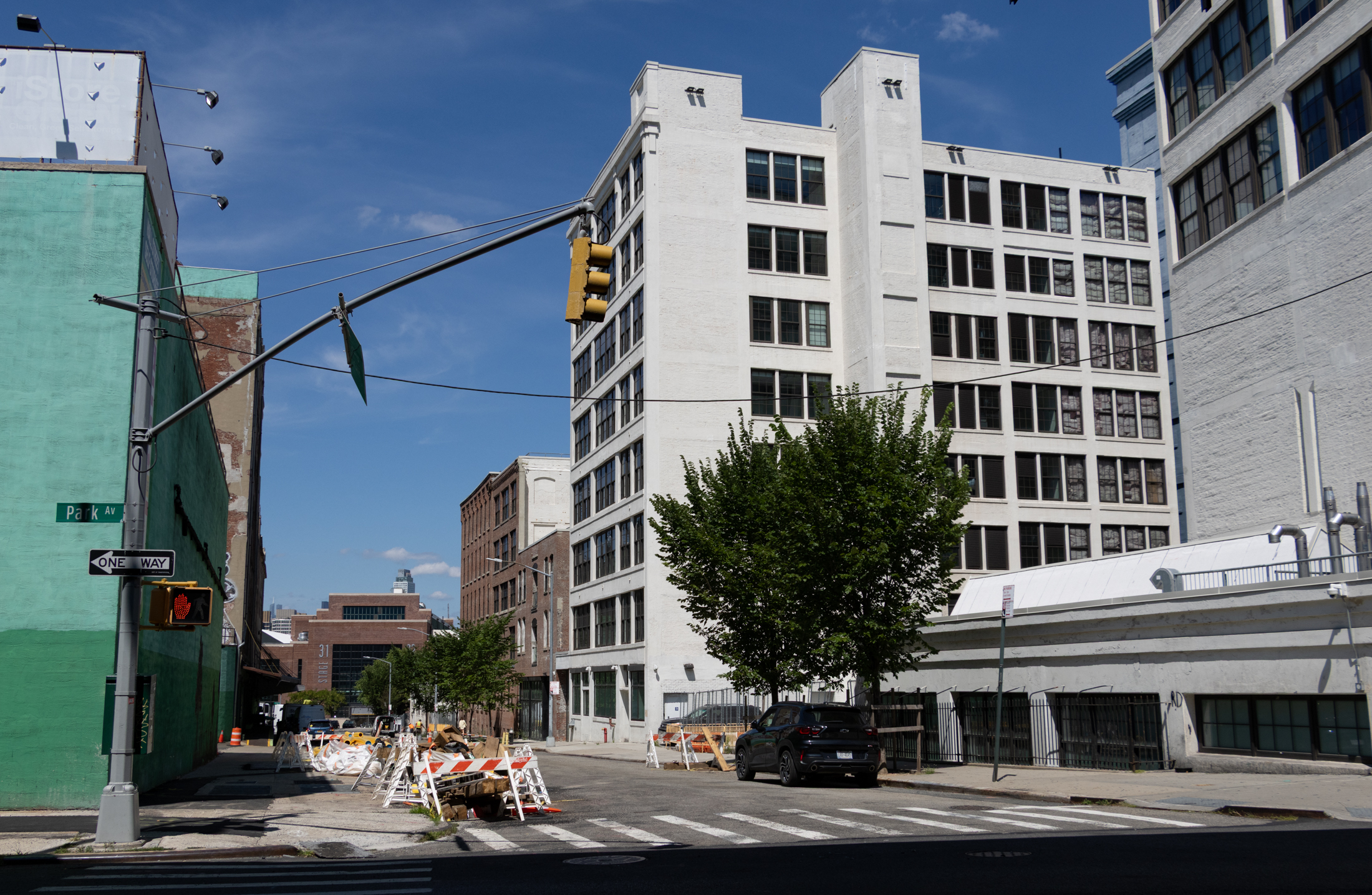 The building at 39 Hall Street (center) last week
It’s unclear how many apartments the project will include as a whole. The alteration permit issued for 39 Hall Street says there will be a total of 974 units on the lot, many more than slated in new-building and conversion permit applications so far. Brownstoner reached out to Schwartz and the architect for more details on the plans, including the number of units, but didn’t hear back by publication. RXR previously pitched 611 apartments for the site.
RXR, which purchased the site in 2016 for $161 million, restored the 10 commercial buildings in a major renovation project that finished in 2019, but struggled to find commercial tenants in a market altered by Covid.
In 2023, the city signed a contract to use the site as a Humanitarian Emergency Response and Relief Center shelter for migrants, along with a second building on Ryerson Street not owned by RXR. The two shelters were controversial in the neighborhood due to their size and crimes that happened nearby.
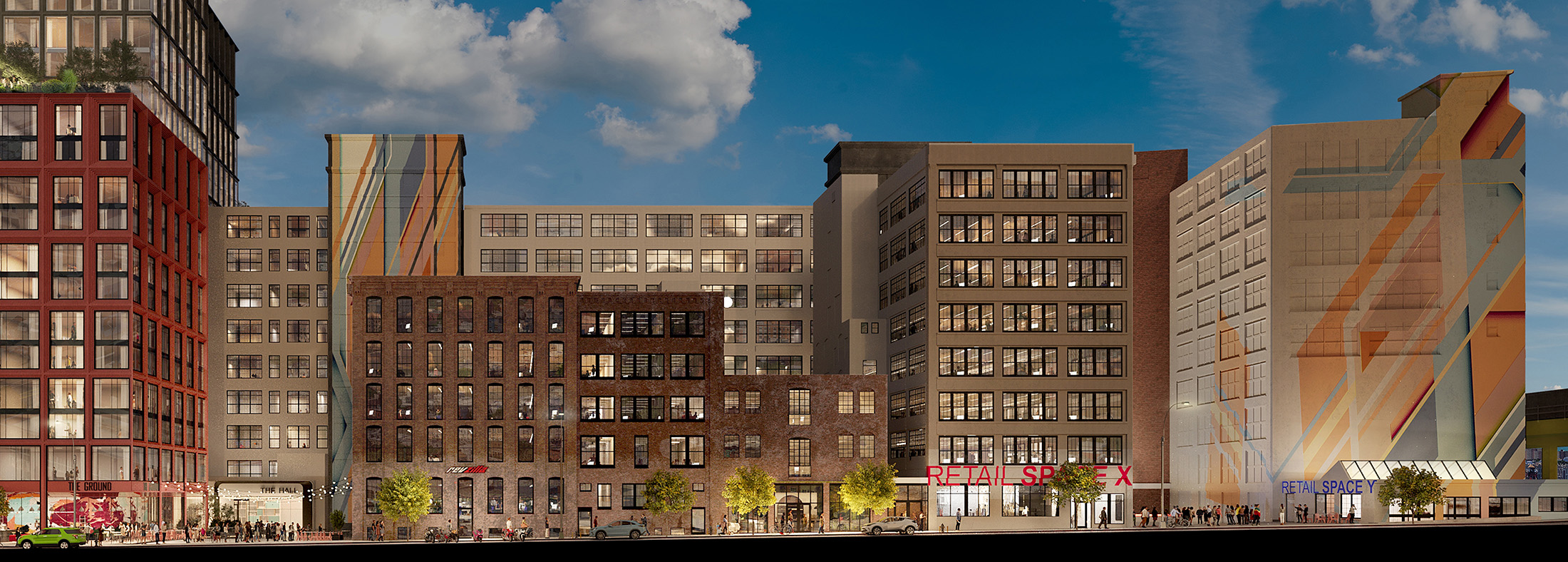 A rendering of RXR’s earlier proposal. Rendering via RXR
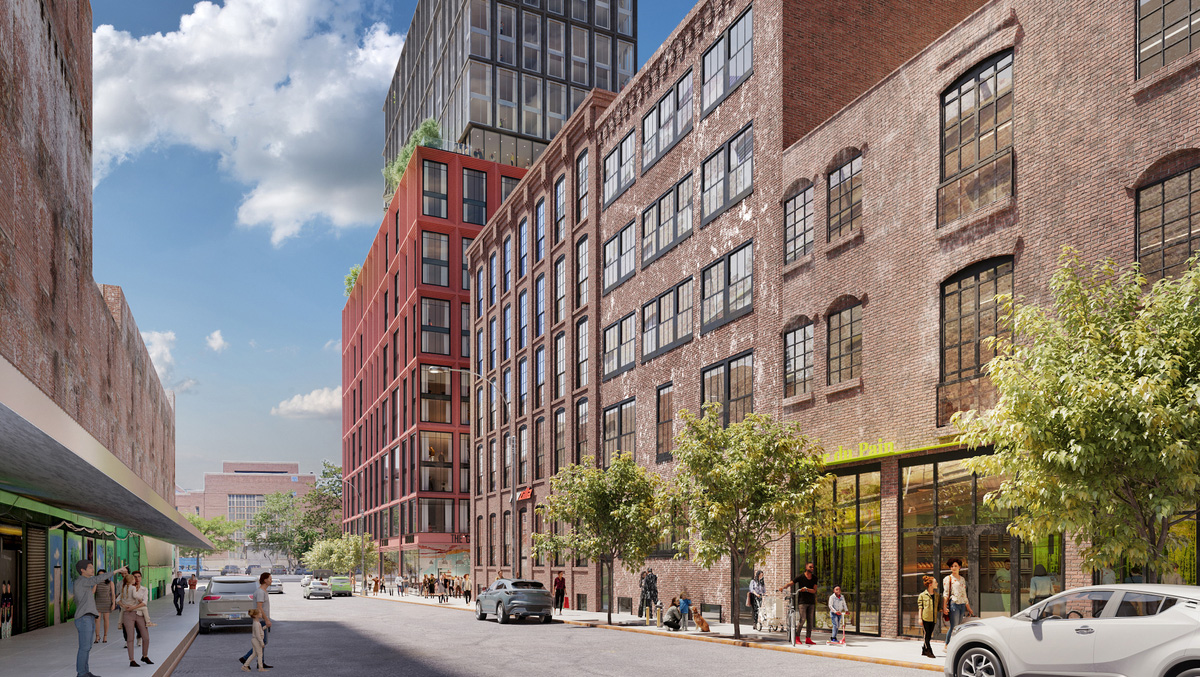 A rendering of RXR’s earlier proposal. Rendering via RXR
Locals, pols, and preservationists were on board for RXR’s 2025 rezoning with the hope it would bring the historic buildings back to life.
That project would have demolished two of the 10 buildings rather than six and included 153 units of affordable housing aimed at households earning an average of 60 percent of Area Median Income.
Thanks to the rezoning, the new project will also require 25 percent affordable housing at the same income level under the city’s Mandatory Inclusionary Housing program option 1, potentially about 243 units.
On news of the new plans, Frampton Tolbert, executive director of preservation nonprofit Historic Districts Council, said the industrial buildings between Flushing and Park Avenue, like others across the city, are still extremely useful both as industrial spaces for manufacturing or makers, or for residential conversion. He said he was happy to see that at least some of the buildings in the complex will be adaptively reused.
“These buildings are built for that, and that huge swath of buildings along Flushing and between Flushing and Park that were built as an industrial area, we want to make sure that some can be kept,” Tolbert said, citing the residential conversion of the Rockwood & Co. Chocolate Factory nearby on Park Avenue as a successful example.
“You lose essentially the whole sense of place of the neighborhood by demolishing some of the key buildings there,” he added.
Tolbert said increased incentives for adaptive reuse at the city level, as well as those that exist at the state level, would encourage developers to bring older buildings back to life. An increase in reuse would also help with the city’s housing goals, given the faster timeline of a conversion project compared to demo and new construction, and it would also help with environmental goals by reducing pollution in the city’s waste stream caused by demolition debris.
Brooklyn was an industrial powerhouse in the 19th and 20th centuries. While some of that history has been preserved, such as in parts of Dumbo and Gowanus, the borough has also been losing 19th century factory buildings to development at a rapid clip in recent years, particularly in Williamsburg.
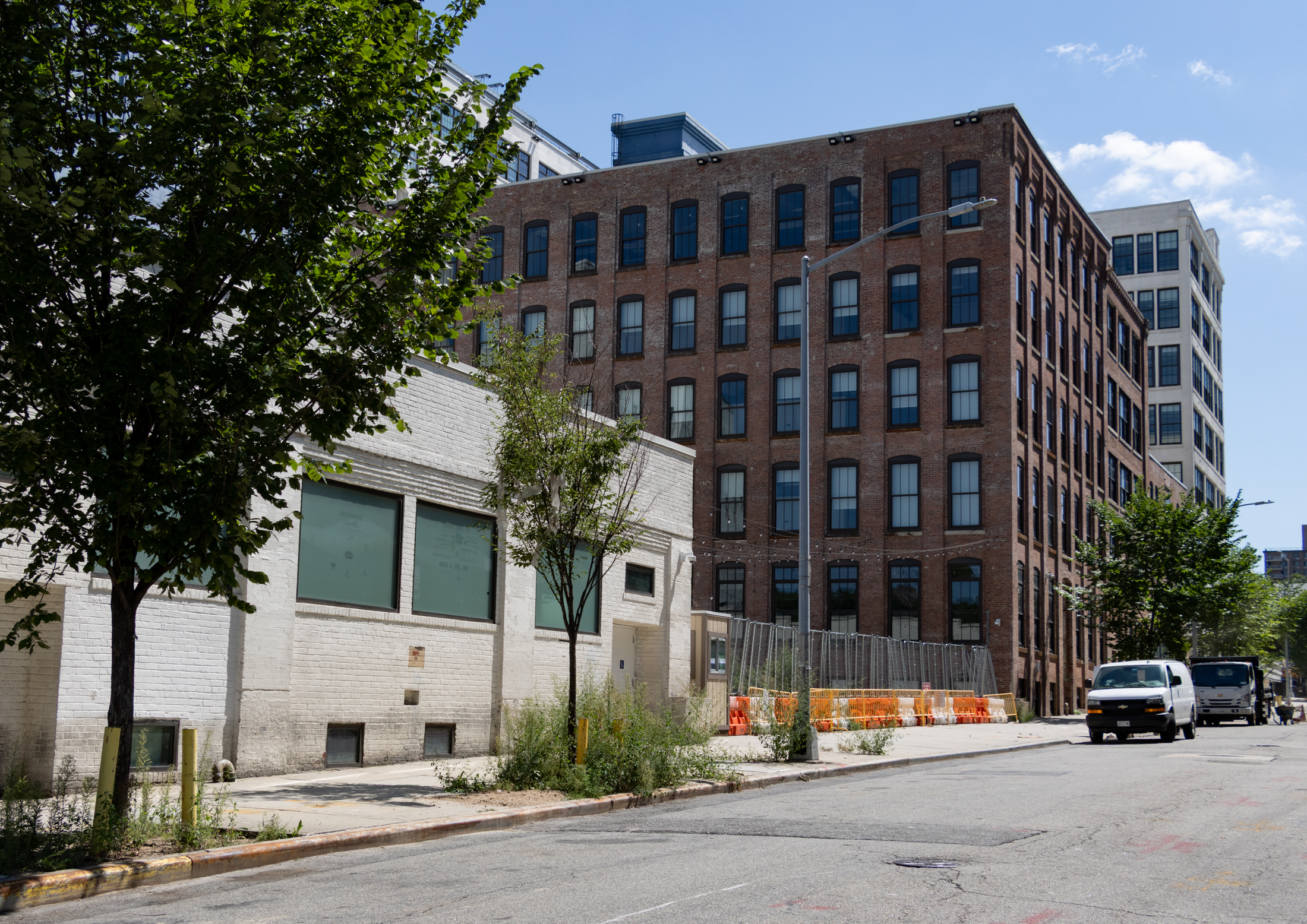 A view on Hall Street last week
[Photos by Susan De Vries unless noted otherwise]
Related Stories
Email tips@brownstoner.com with further comments, questions or tips. Follow Brownstoner on Twitter and Instagram, and like us on Facebook.