
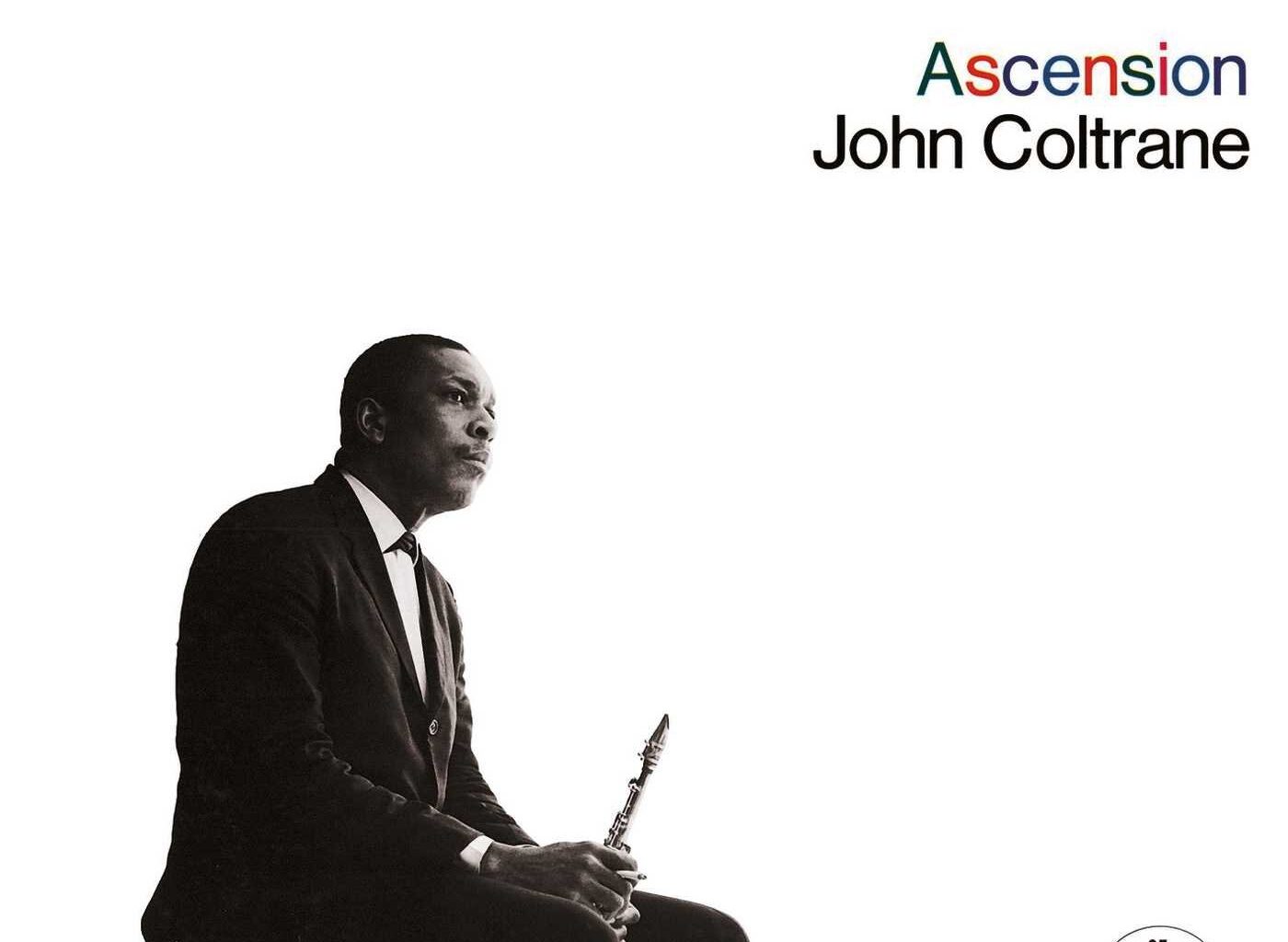
In the last three years of John Coltrane’s life, he did a tremendous amount of work that testified to the importance of the avant-garde/“New Thing” movement in jazz. Almost none of it was as a musician, though. Instead, by using his fame and influence with his longtime label, Impulse! Records, he was able to secure a platform for other musicians who would go on to take jazz in fascinating directions for years to come, and none of whom would follow directly in Coltrane’s footsteps.
Because Coltrane had such a strong relationship with Impulse! producer Bob Thiele, his endorsement counted for a lot. Fellow tenor saxophonist Archie Shepp (whose avant-garde credentials were impeccable; he’d worked with Bill Dixon and Cecil Taylor, and co-founded the New York Contemporary Five) had been struggling to get Thiele on the phone when he asked Coltrane to intercede on his behalf. Days later, the producer offered Shepp the opportunity to record for Impulse!—on the condition that he make an album of Coltrane compositions.
Four For Trane, adorned with a sleeve photo showing Coltrane looking beneficently at a seated Shepp, offered exactly what its title implied: re-arranged versions of “Naima,” “Mr. Syms,” “Syeeda’s Song Flute,” and “Cousin Mary,” plus one Shepp original, the vividly titled “Rufus (Swung, His Face At Last To The Wind, Then His Neck Snapped).” It was artistically and commercially successful enough that the younger man was able to ultimately make thirteen albums for the label over the next decade. His second Impulse! album, 1965’s Fire Music, gave the whole New Thing movement one of its other notable sobriquets, even though the album itself contained versions of “Prelude to a Kiss” and “The Girl From Ipanema” alongside the form-stretching, politically charged compositions “Hambone,” “Los Olvidados” and “Malcolm, Malcolm, Semper Malcolm.” Other Shepp albums like Mama Too Tight and The Way Ahead turned his gravelly saxophone cries into just one element of a broad compositional palette that drew on blues and gospel with, at times, an almost Ellingtonian gravitas.
Pharoah Sanders, meanwhile, was actually a member of Coltrane’s band when Thiele signed him and produced his 1966 album Tauhid. The saxophonist had earned a reputation as one of the most blistering flamethrowers on the scene; onstage with Coltrane, the two men would throw shrieking, squalling lines back and forth for as much as an hour at a time. But Tauhid represented an entirely different vision of avant-garde jazz, one that imported melodic and rhythmic concepts from Africa and the Far East and laid down surprisingly mellow, trancelike grooves with contributions from multiple percussionists and guitarist Sonny Sharrock. Sanders even laid his tenor down in favor of the tiniest instrument possible, the piccolo. After 1969’s Karma crossed over to hippie-rock audiences, he made nine more albums in five years, creating a unique and thrilling catalog that’s foundational to what’s now known as “spiritual jazz.”
Alto saxophonist Marion Brown was another beneficiary of Coltrane’s professional encouragement. His Impulse! debut, Three For Shepp, followed a similar model to Four For Trane; its A side featured three Brown tunes, while the B side featured three by Shepp, who was pictured alongside Brown on the cover. Later, after recording for Polydor, Calig, and ECM, Brown returned to Impulse! to make some of his best-known albums, including Geechee Recollections and Sweet Earth Flying.
Coltrane was also a strong champion of Albert Ayler, sharing bills with the younger man at the Village Vanguard, bringing him onstage to sit in with his quartet, and helping Thiele sign him to Impulse! after multiple albums for the ESP-Disk’ label. Ayler’s first Impulse! appearance was on The New Wave In Jazz, a 1965 compilation of live recordings from a Village Gate concert that also featured Coltrane’s and Shepp’s groups. That was followed by In Greenwich Village, a collection of recordings with two different bands. During the three years that separated Coltrane’s death and Ayler’s passing in 1970, he made four studio albums for Impulse!, on which he gradually (and sometimes awkwardly) transitioned from the raucous, old-time-religion free jazz with which he’d made his name to a more modern gospel- and R&B-infused style. Live recordings (not released by Impulse!) from the last few months of his life reveal that even at the end, he was breaking through into thrilling new realms; who knows where he might have ended up had he lived longer.