
Entirely Preventable: The Toxic Legacy of Silica Dust from Hawks Nest to Black Lung
Solidarity Gallery at the West Virginia Mine Wars Museum
March 10–November 21, 2026
Matewan, WV
“A camera is like a gun,” filmmaker Colin Low said in the 2000 documentary Stranger with a Camera, a comparison evidenced by the language we use to describe its mechanisms—shoot, capture, trigger—but also in the control it exerts over its subject. “It’s threatening,” he adds, “it’s invasive, it’s exploitive in terms of mass media, and it is not always true.” Directed by Appalachian filmmaker Elizabeth Barret, Stranger explores the 1967 murder of a Canadian filmmaker in eastern Kentucky by a local man frustrated with stereotypical scenes of Appalachian despair consistently broadcast by outsiders. Barret, also from eastern Kentucky, avoids sensationalism to explore the case’s complexities, reflecting on journalistic ethics, the responsibilities of documentarians, and power dynamics behind the lens. Throughout the film, a key question emerges: how can one accurately represent a region harmed by extractive industries without replicating that extraction through photography?
Entirely Preventable: The Toxic Legacy of Silica Dust from Hawks Nest to Black Lung, an exhibition organized by Pulitzer-Prize-winning photographer and Guggenheim Fellow Stacy Kranitz at the West Virginia Mine Wars Museum in the small town of Matewan, offers one answer. In bringing together three photographers whose work speaks directly to their Appalachian communities rather than sparking pity from outsiders, Entirely Preventable serves as a witness to significant environmental and industrial disasters in American history, becomes a testament to decades of workers’ resilience, and is a call to action for a better future.
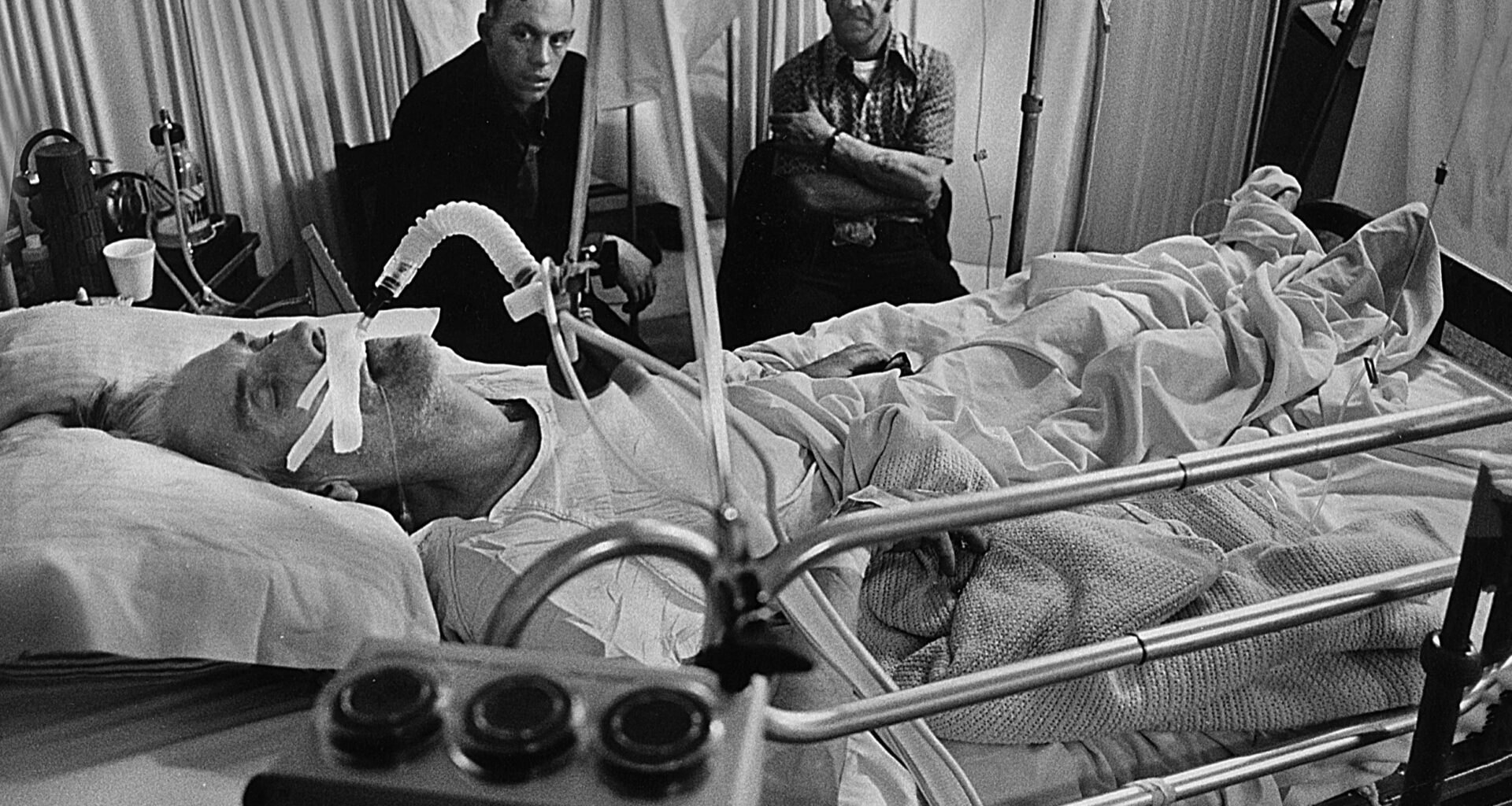
Though the show begins with evocative, montage-like arrangements that tease each artist’s work, it is primarily organized by photographer, starting with images by photojournalist Earl Dotter. His 1970s series “The Quiet Sickness,” made for the United Mine Workers Journal, depicts a critical era when new laws and protections increased screenings and treatments for black lung, but still ended in tragedy for many. Images along the left wall collect scenes from a miner’s life, from sharing a shift meal in the mine’s “dinner hole” to waiting for pulmonary test results with Dr. Donald L. Rasmussen, whose expansive methods helped recognize the disease’s widespread impact early on. Other images stand out for the symbolic story they tell about resistance. Dotter’s 1975 photo of a gaggle of young white-passing men with shaggy hair and aviator glasses, sitting and leaning on the banisters of the US Capitol steps with their “Black Lung Kills” posters in hand, captures a brief moment of rest amid marches and activism, reminding the audience of the perseverance and energy required to sustain a movement.
Several works from Raymond Thompson Jr.’s more recent series “Appalachian Ghost” line the back wall: dramatic contemporary portraits representing the scores of Black workers who made up two-thirds of the crew hired during the Great Depression to drill a tunnel through Gauley Mountain, West Virginia. Many developed silicosis and died due to poor safety, and the project eventually became known as the Hawks Nest Tunnel Disaster. Thompson’s images elucidate the experiences of these often-forgotten workers and preserve their memory, serving as an alternative archive to sparse documentation and memorials. In Tunnelitis #3 (2019), a Black worker’s hand, covered in white dust that also collects in his nailbeds, reaches up as if searching for something to grasp. The background evokes the darkness of the underground, an unlit void. Another image, The Dust #2 (2019), features a Black man with a bundle of hoses wrapped around his neck and draped like a robe, staring out with a piercing gaze as clouds of dust swirl around him. Mount Lookout (2019) shows the resulting Hawks Nest Workers Memorial and Grave Site, an open field with rows of nameless white crosses, inadvertently emphasizing just how little was done to preserve the identity, stories, and honor of the Black workers who perished.