
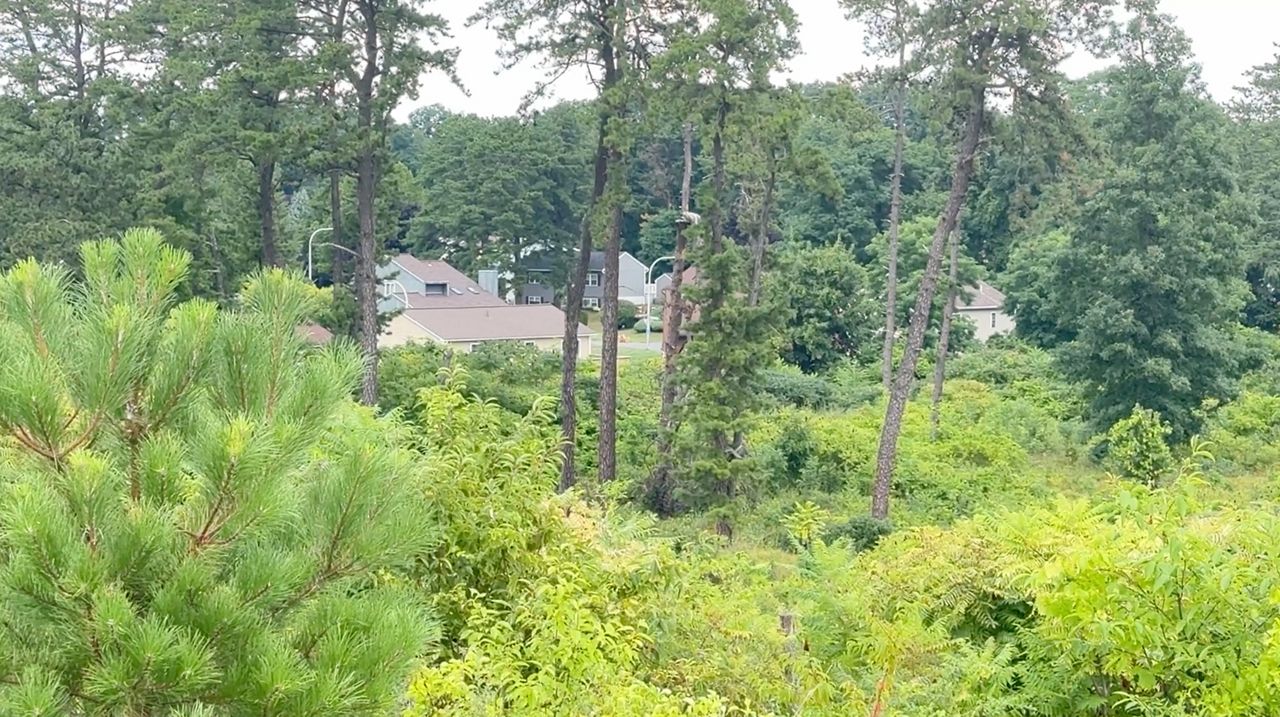
Fire officials say the boundary where forests and neighborhoods meet, known as the wildland urban interface, presents a growing risk to homeowners as development continues to expand into wooded areas across the state.
The wildland urban interface, often abbreviated as WUI, describes the overlap between open space with wildfire risks and areas of human development, said Neil Gifford, conservation director of the Albany Pine Bush Preserve Commission.
At the preserve, fire is used as a tool to manage and maintain natural ecosystems through prescribed burns. But just beyond the tree line lie roads, houses and businesses, all part of that interface zone.
The area isn’t marked on any map, but Gifford said it’s expanding as New York continues to build new housing.
“The wildland urban interface continues to grow,” Gifford said. “We hear a lot in the news about the housing crunch, and people need housing. And providing for that means that we’re going to need to continue to build houses in appropriate places.”
New York is not exempt from wildfire risk, officials said, pointing to a warming climate that is drying out vegetation faster than in the past.
“All the predictions are for increased burn ability across upstate New York and New England moving forward,” Gifford said.
The state Department of Environmental Conservation says the greater danger isn’t the wildland catching fire, it’s what happens once flames reach homes.
“It’s the area where we’re going to lose structures,” said Kevin Slade, assistant fire management officer for the New York State Forest Rangers. “Fire will get established in the wildland, and as it gains steam and interacts with homes and sheds and other human infrastructure, that’s all fuel for the fire. It’ll burn right through a whole neighborhood sometimes, under the right conditions, without slowing down.”
Slade added that fighting fires in residential areas introduces hazards not typically found in large forest fires, including interactions with people, vehicles and other infrastructure.
Fire officials say homeowners can take steps to protect their property, starting in their own backyards.
“[Don’t stack] firewood or burnable material right up against your home,” Gifford said. “[You’re] trying to provide yourself with what’s called defensible space between your structure and the fuels that are around you.”
Slade recommended routine yard maintenance as an added layer of protection.
“Keep that yard raked; get the leaves away from the house; keep the pine needles and leaf litter out of the gutters,” Slade said.
Officials say those small steps could make a significant difference if wildfire ever reaches a homeowner’s property.
Residents can check whether they live in a wildland urban interface area by visiting the U.S. Fire Administration’s website. Homeowners in wildfire-prone areas are also encouraged to visit Firewise USA, a national program that helps residents and neighborhoods reduce wildfire risk.