
American politics can sometimes live through a century in a single week. This was one of those weeks: former Vice President Dick Cheney died, the government remained shut down, and Democratic candidate Zohran Mamdani was elected mayor of New York. The darkness of the past and the possibility of the future appeared on the same stage.
Cheney’s death was the pulling of a plug on an entire era – the era of lies, invasion and the stench of oil. He was the architect of the “weapons of mass destruction” myth that sent millions to their deaths in Iraq. As Halliburton’s CEO, he turned war into a contract and democracy into a subsidiary of corporate interest. The shadow government that dulled America’s moral conscience bore his fingerprints. His death symbolizes not the fall of a man but the collapse of a mindset: the age that sanctified exploitation under the name of “security,” and imperialism under the banner of “freedom.”
Meanwhile, in Washington, another kind of death was anticipated: that of the state itself. A budget crisis had brought the U.S. government to the brink of paralysis. When Transportation Secretary Sean Duffy warned, “If this continues another week, we may have to close parts of the airspace,” he was confessing how fragile the American order had become. The so-called superpower could no longer pay its air traffic controllers. The backbone of the system was cracking. The shutdown continues, and the fear of collapse has become permanent: America no longer trusts even itself.
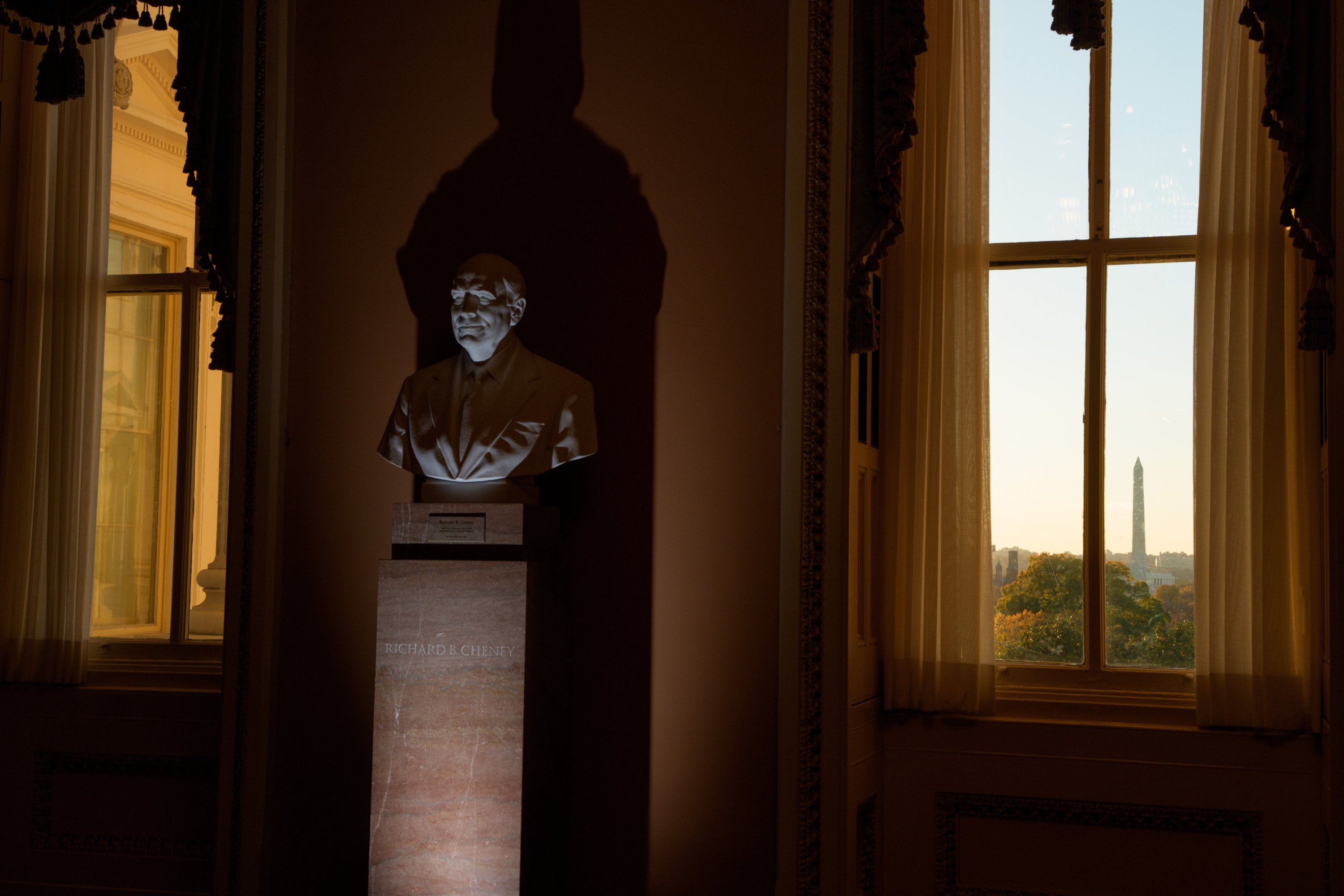
A bust of former Vice President Dick Cheney sits outside the Senate Chamber of the U.S. Capitol, Washington, U.S., Nov. 4, 2025. (EPA Photo)
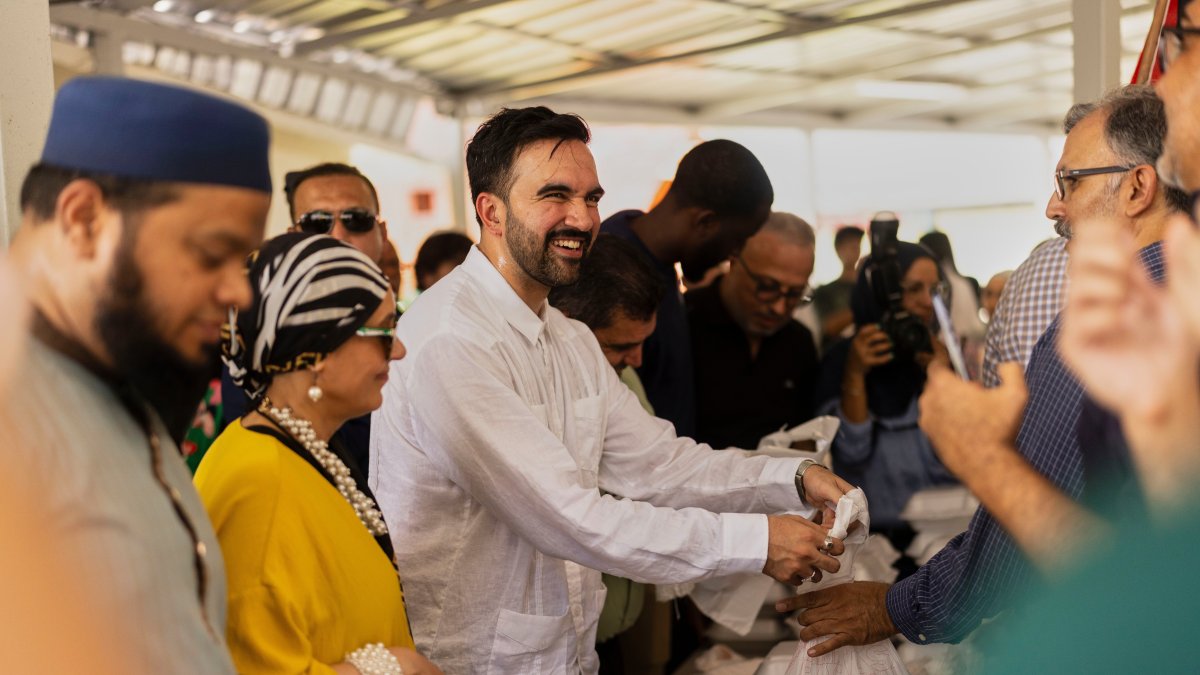
And into that darkness, a light fell in the heart of Manhattan. Zohran Mamdani, the socialist son of immigrants, was elected mayor of New York against the combined weight of billionaires, lobbyists, the American Israel Public Affairs Committee (AIPAC) and titans from Elon Musk to Bloomberg. It was not just a vote; it was an uprising that carried the language of the streets into the pyramid of power. Trump, Walmart heiress Alice Walton, Bill Ackman, and the machinery of capital stood together, yet the crowd’s anger spoke louder.
Mamdani’s victory was more than a political win; it was a living echo of political theorists Chantal Mouffe and Ernesto Laclau’s Hegemony and Socialist Strategy. In Mouffe’s “agonistic democracy,” he re-signified the dominant discourse, constructing “the people” not from liberal abstractions but from the shared grievances of the excluded. He filled Laclau’s “empty signifiers” – justice, equality, the voice of the people – with a new chain of meaning. He understood that to break hegemony, one must challenge it from within. His campaign was less a contest than a discursive revolution: solidarity against capital, plurality against identity and common hope against despair.

The Daily Sabah Newsletter
Keep up to date with what’s happening in Turkey,
it’s region and the world.
SIGN ME UP
You can unsubscribe at any time. By signing up you are agreeing to our Terms of Use and Privacy Policy.
This site is protected by reCAPTCHA and the Google Privacy Policy and Terms of Service apply.