
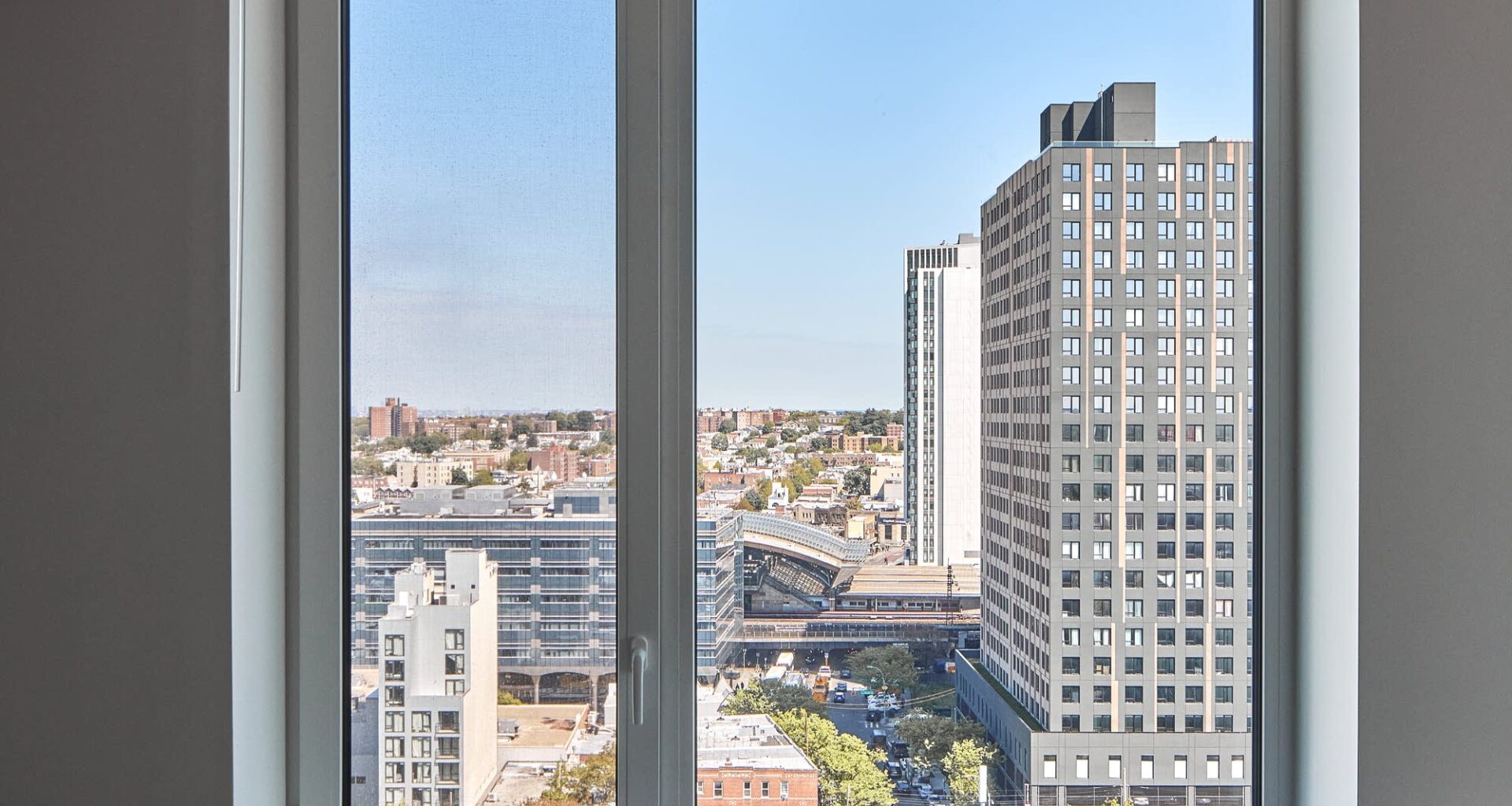
Anthony Russell moved into his new apartment in Queens, New York, earlier this year. He moved here from a shelter in Brooklyn, where he shared a room with seven people. Now it’s just him.
“I never had peace like this in my life,” he says. “Never slept so much in my life.”
His apartment is in a brand new supportive housing building. When he shuts the window, the din of New York City all but disappears.
“Sometimes I open the window because it’s too quiet,” he says with a laugh.
The supportive housing company that owns this building, Breaking Ground, cares about Russell’s peace and quiet. It also cares about cutting its energy costs. If Russell turns on the heat in January, it foots the bill.
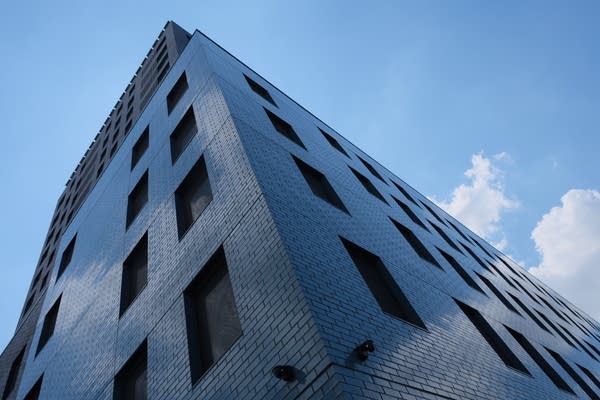
Breaking Ground’s new building, called Sutphin, meets the strict Passive House standard, which means it uses at least 75% less energy compared to other existing buildings.
Wythe Windows 2026
So the designers went for these super airtight windows.
“[It] serves really at the end of the day, all of us — the tenants, the local community, the city, and ultimately the planet — if enough people engage in green building practices,” said Marc Harary, director of design and construction at Breaking Ground.
Harary said the high efficiency stuff — the windows, the insulation, the ventilation system that recovers heat — tacked on about 3-5% to the total build price. This building is so new that he doesn’t know how much energy it’s saving yet.
But the other building the Breaking Ground built to a similar standard is using 61.7% less energy than the average of all the rest of the company’s buildings.
“Which is kind of mind-blowing,” Harary said.
The windows are a big part of that. The U.S. Department of Energy says windows make up about 8% of the outside surface of the average home. But nearly half of the heat that’s lost from that average home goes out through those windows.
“If you were to look at a standard American window, they slide up and down, or they crank out. They’re inefficient by design,” said Darren Macri, co-CEO of Wythe Windows, which worked on the Queens building. “Our windows have multiple locking points, so you have an even compressive seal against the frame and sash to make it airtight.”
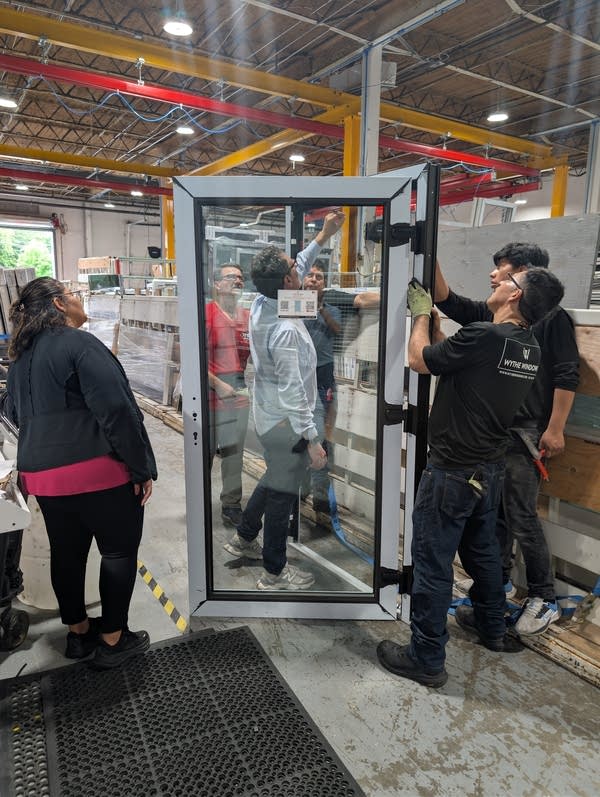
Darren Macri’s company specializes in tilt-turn windows, meaning the entire glass pane tilts from above or swings open, rather than sliding up and down.
Wythe Windows 2026
Macri estimates one of their 3 feet by 5 feet windows costs roughly $600. It’s more than most of the options at The Home Depot, but not by much.
“If you buy a very pretty window that’s a pretty decent performer, and you buy a more basic window that is a great performer, you might pay the same price,” says Michelle Scism, senior manager of quality and accreditation at the National Fenestration Rating Council.
But the window alone isn’t the whole cost. Macri estimates labor will cost several hundred dollars per window, depending on where you are in the country. And it’s about the same for a cheaper window.
Meanwhile the one that’s already in your house costs nothing upfront, which is why roughly 93 million homes have inefficient windows, according to the DOE. But the Environmental Protection Agency estimates that energy-efficient windows alone can trim a building’s energy bill by up to 13%.
“People sometimes are like, ‘I can just keep living with it.’ And they put it off, and they don’t see the advantage,” Scism said.
In new buildings, they’re an easier sell. Macri says he’s put the same model in luxury homes and affordable housing projects.
Scism says a typical window has about a 15-to-25-year lifespan. But lots of houses have windows two, or three, or four times that old. The more efficient windows get put off in existing homes.
“Aside from getting hit with a baseball, a window doesn’t just break. Your refrigerator breaks. You must buy a new one,” she says.
Related Topics