
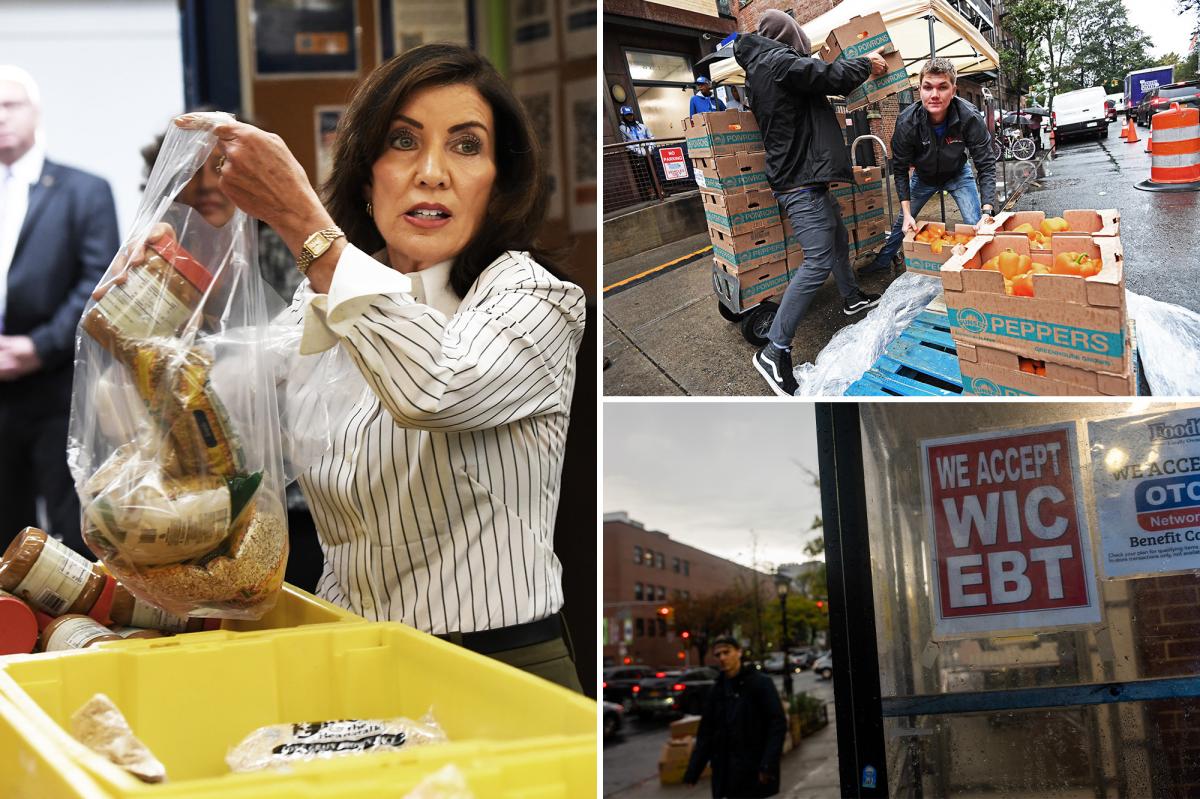
New York Gov. Kathy Hochul ordered the agencies to start paying SNAP benefits to New Yorkers using state funds — after the longest ever federal government shutdown cut off food stamp payments for the first time.
The first payments could come Sunday — nine days after the food payments were stopped.
Roughly 2.9 million New Yorkers rely on SNAP, and Hochul defended the move as necessary due to “chaos and confusion” over the federal shutdown.
Hochul directed New York agencies to ensure the Supplemental Nutrition Assistance Program (SNAP) is fully funded through November. Matthew McDermott
Roughly 2.9 million New Yorkers who rely on SNAP should expect their benefits despite “chaos” triggered by the government shutdown. Matthew McDermott
“Let me be clear, President Trump is hellbent on preventing millions of Americans from putting food on the table,” Hochul said on Friday.
“He’s made decision after decision to withhold funding that feeds families, seniors and children — and continues doubling down on this cruelty by challenging the courts’ clear orders.”
The Department of Agriculture, which runs SNAP, has informed states last week that it is seeking to fully pay out SNAP benefits during November despite a funding lapse caused by the government shutdown.
But last week, the Trump administration appealed a court order requiring it to fully fund SNAP by Friday of last week, as the move would’ve forced the Department of Agriculture to dip into other programs besides the contingency fund.
Trump administration appealed a court order requiring it to fully fund SNAP by Friday of last week. Getty Images
On Friday, the Supreme Court temporarily paused that lower court order.
The average household on SNAP gets $332 per month, and the average household with children gets about $575.
While the Trump administration scrambles to find a makeshift avenue to fund SNAP, Republicans argue that fully restoring payments is simple: Democrats just have to vote for the government funding bill to reopen the government.
So far, Dems are rejecting a clean stopgap to reopen the government — demanding that Republicans add more funding for healthcare and Medicaid subsidies.