
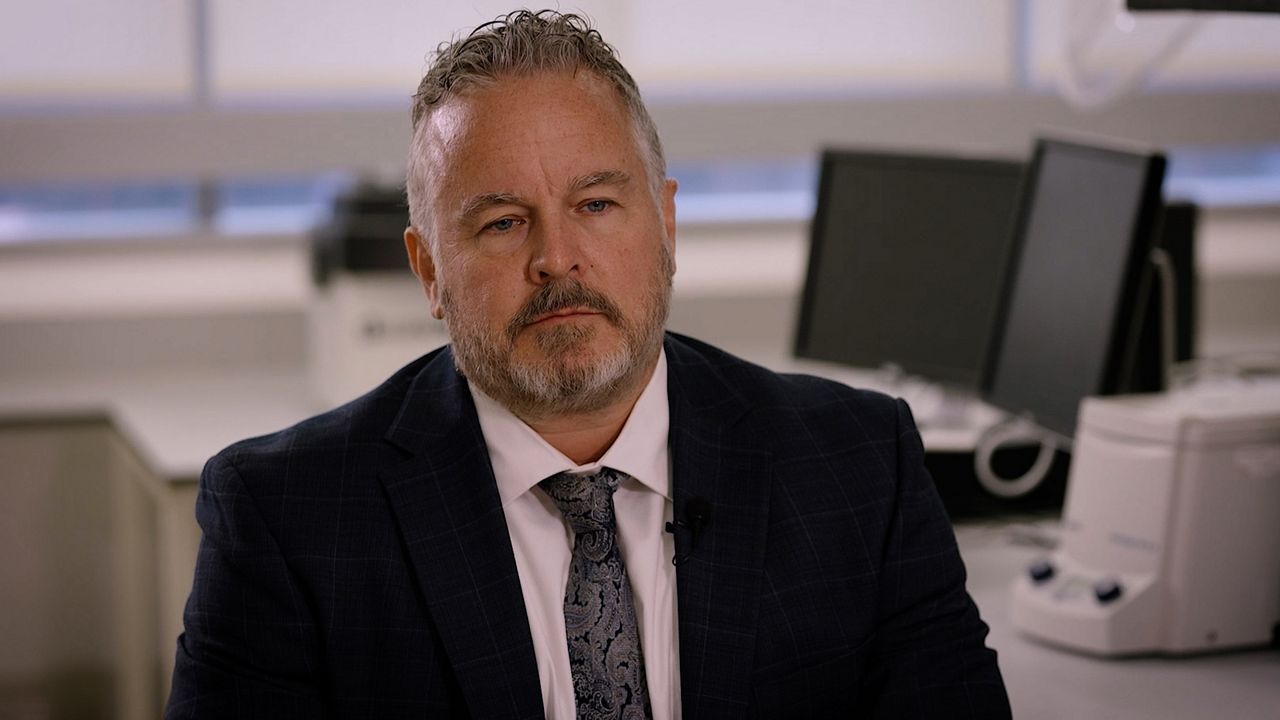
Mark Desire headed down with a small team from the New York City Office of the Chief Medical Examiner. The orders were simple.
“Preserve the evidence. All of the remains. All of the victims,” said Desire, who was called after both the North and South towers were hit on 9/11.
He said they had to create a temporary morgue as well.
Right after he and the team got their orders, he heard a loud boom.
“South tower cracked and it was right over us,” said Desire, who is now an assistant director at the OCME.
“You could see the steel and the fire and the concrete hurling down onto us.”
He said he sprinted across the West Side Highway, heading for a distant building. He hoped to make it inside, but the debris cloud caught him.
“I got hit and it just launched me, knocked me right out of my shoes,” Desire recalled.
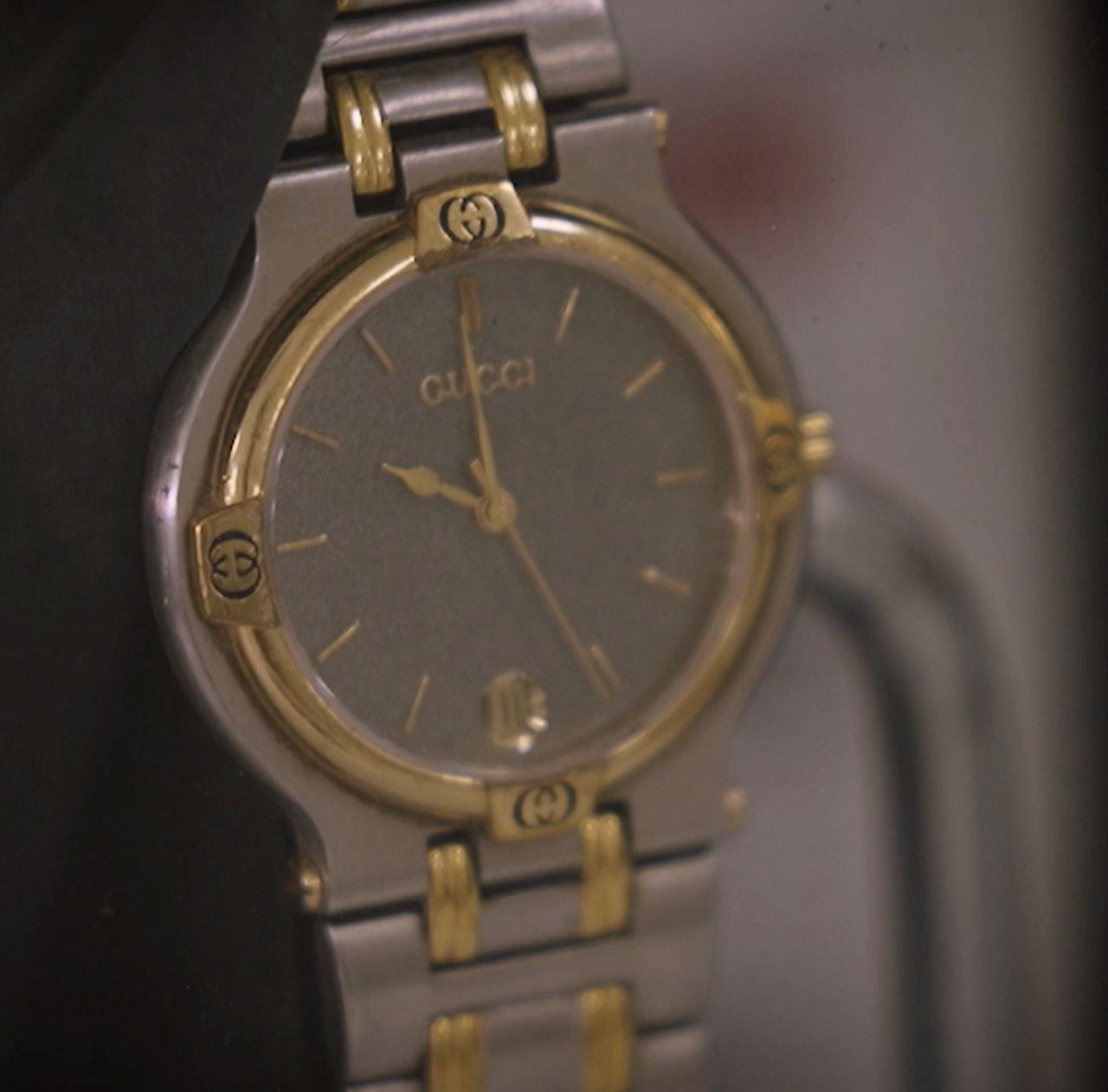
Half his body was able to make it into the building through a broken window. His arm blocked debris from the South Tower from hitting him in the head. His watch was damaged in the process.
The time stopped at about the time the tower collapsed. It is a watch he still has to this day.
“And then all at once, complete silence. Complete darkness,” he said. “It was, oddly enough, the most chaotic moment to the most peaceful moment.”
Desire said he couldn’t breathe, describing the air as feeling solid. As it settled, though, he tried to escape.
“The dust was still too thick,” he said. “I grabbed their shirt, they grabbed mine, and we walked sideways down the hallway for a little bit until the dust settled more,” he said. “And it was my team lead. It was Ralph.”
He had to be transported to a hospital, which meant boarding a boat out of Manhattan.
He stayed at a friend’s house in New Jersey.
“I was in the shower, and I could hear the bits of concrete falling off of me onto the tub and the blood, the debris from the building had dried into the blood of my wounds and created like a shell,” Desire said.
He stared at the tub filling with water, the concrete blocking the drain, and the first thing that came to mind: an appreciation that he was simply alive.
“I had some broken bones,” he said. “Got beat up a little bit, but I was back at work the next day.”
That’s when the largest forensic investigation really began.
“There were 22,000 remains recovered for the 2,753 victims, and they could be anything from a small shard of bone to partially intact,” he said.
But finding the remains was challenging for several reasons.
“The fire, the water to put out the fire, the sunlight, jet fuel, diesel fuel, chemicals in the buildings, chemicals already in the ground, mold, bacteria, insects. All of it destroys DNA,” Desire said. “And everything was present at Ground Zero.”
He said human cremations occur at about 1,800 degrees Fahrenheit over the course of three hours. Meanwhile, the World Trade Center had fires burning at about 2,500 degrees Fahrenheit for three months.
And it wasn’t always simple to decipher what type of bone was even found.
“How many restaurants were in those buildings? How many people brought their lunch that day and had chicken wings or steak bones or something other than human,” Desire said. “To the average person, the difference between a chicken wing bone and a human foot? Like so similar.”
There were anthropologists on hand to help determine those answers. Even if they were human bones, that doesn’t mean they were from 2001.
“There were bones found in that pit excavation that were from the cemetery that were the original settlers to the island, that were Native Americans that were hundreds of years ago finding those remains as well,” he said. “So being able to tell, no, this is from 200 years ago versus this is from within the last few months.”
To date, about 40% of the victims have not been identified.
But Desire said the unit working to make those identifications, which he leads, is not giving up. The DNA division has grown from about 12 to more than 200, he said.
“We’re applying new techniques that will make identifications that we haven’t had before,” he said.
The work is hard and, at times, frustrating.
“The samples we’re working with today have failed over and over, and they’re going to continue to fail,” he said.
Getting to see families bring any remains back after so many years can be rewarding.
“When you when you can hold a piece of someone in your hand, someone that you’ve been able to identify after so many before you have failed,” he said. “And that family’s there in front of you, and they’re crying and shaking, hugging you and thanking you for bringing their little boy home. That’s powerful.”
He said those moments motivate his team on those tough days.
He never imagined his job would be so hands-on with families, since his work focuses on remains. He said he gives presentations to family members, has them at the agency’s labs to observe the work, and meets with them with any questions that arise.
“A lot of a lot of emotion, a lot of tears on both sides. And you’re not supposed to see that with forensic scientists are supposed to be impartial, neutral, unbiased, not supposed to meet family members,” he said. “I could have never imagined meeting families of a homicide victim or sexual assault victim as supposed to stay right in the lab.”
Some of those relationships have lasted more than two decades, he said. One conversation that stood out recently was with a woman who lost her daughter in the South Tower. Her remains are unidentified to this point. She recently met with Desire.
“She’s like, ‘I’m getting up there. I’m getting up there now. Do you think you’ll be able to find her before I die? Because I want to hold her one last time,’” Desire recalled.
He said she knew that he can’t make that promise. So she had another request.
“Can you promise me that after I die and you do identify my daughter, can you bury her with me,” Desire remembered the woman asking him. “I want her by my side.”
That, he said, was a promise he could keep.
“You have my word,” he said he told her. “We will not stop until we find her, and you’ll be together again.”
He said they will work nonstop until they bring everyone home, even if it is impossible.
The improvements in DNA technology have helped identify remains after 9/11, but Desire said what he didn’t anticipate was the assistance his team could provide in cases around the world.
He’s been down to Mexico to help identify people killed by the cartel, went to Japan to assist after the tsunami, and Argentina for government killings from the 1980s, Desire said.
Each time, he used technology developed to identify remains from the aftermath of 9/11.
Back in his offices in Manhattan, Desire said not all families want to be notified when remains are identified. Those remains, even if identified, are at a repository if they ever change their mind.
Other families have relatives reaching out now for the first time, offering new DNA samples to check against the 9/11 remains. Sharing his story publicly — and the OCME’s work — can lead to some of these inquiries, Desire explained.
In the end, though, every family is different in their wishes.
“25 years is a is a long time to wait for answers,” he said.
Desire never expected to be in the OCME’s office more than a year. He said he had been recruited to become an FBI agent in 1997. While he waited for the academy to begin, he said the agency told him to learn something before going to Quantico.
So he picked forensics.
“That year, I did so much work because they always thought I was going to be here a year,” he said. “So I wanted to get a lot of experience.”
When he told the FBI recruiter about his experience, Desire said he spoke so passionately about the work that he was encouraged to stay on a little longer.
“So I just I got promoted because I was doing so much work. I got put in charge of a team. They sent me back to school. I got my law degree working here,” said Desire. “And then 9/11. And then I never look back.”
And he has no regrets, he said.
But when he looks back on those early days after the towers fell, there’s a moment that changed his life. Twenty-five years later, he isn’t sure if it was for the better — or for the worse.
He was in a tent set up by the OCME’s offices where there was a box of letters sent by people presumably from all over the world. He hadn’t opened any at that point. But in there alone, he thought he should.
He took the letter from the top, revealing a picture of a little girl and her dad holding hands. There was a big yellow sun. All of it drawn in crayons.
Then there was the note.
“I know you’ll find my daddy,” Desire recalled reading.
He held that letter for a long time.
“This little girl wrote this letter. Hoping a hero would open it. Read what she wrote. Rush down to Ground Zero. Pull her dad out of that pile. Bring him home to her so she could hug him and grow up having her dad by her side,” Desire said.
He does not have the letter anymore.
But the other feeling he has is the hope to try to bring answers to so many families that are still waiting.
And so the work continues.