
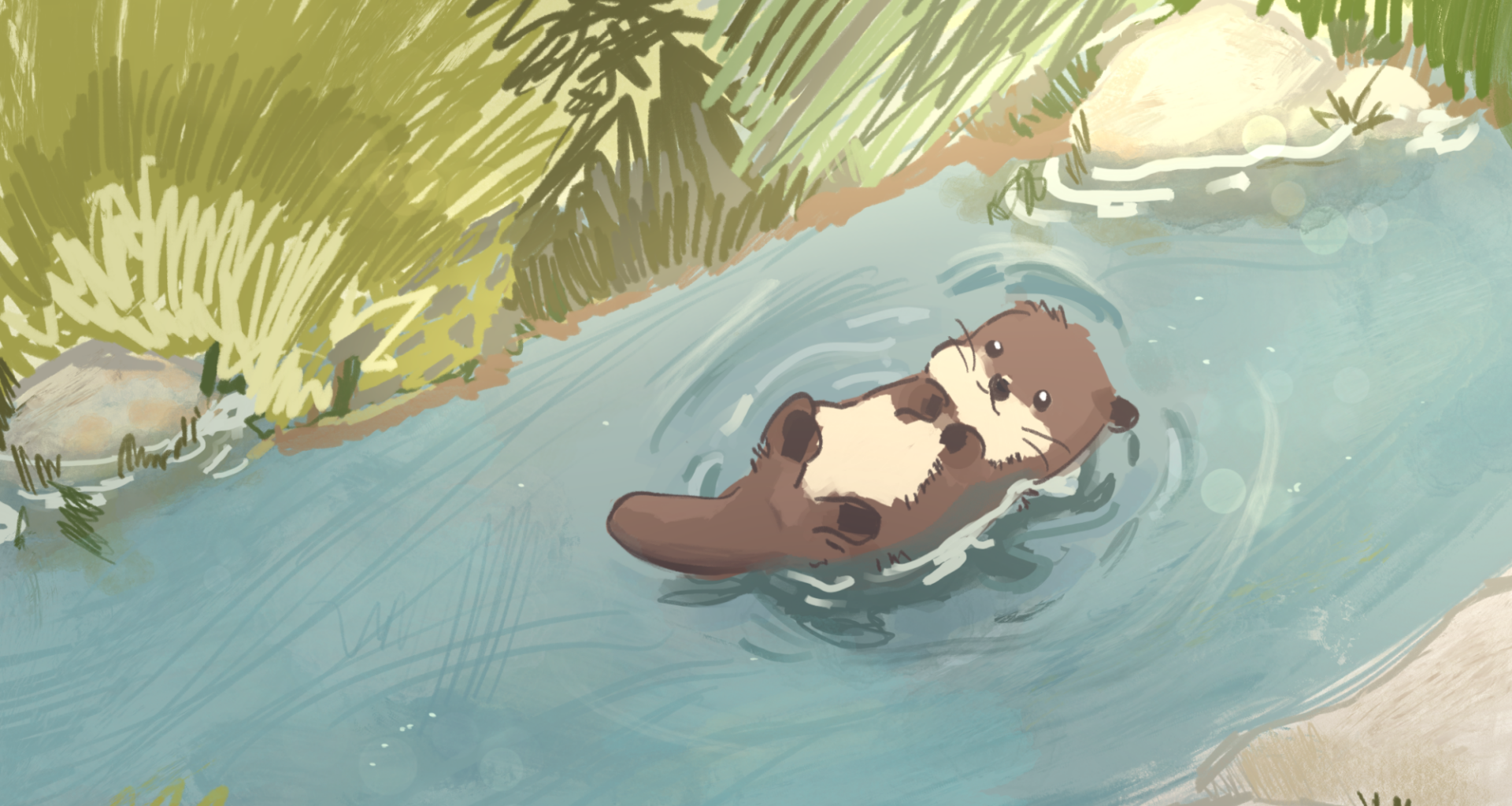
The first North American river otter in over a century was spotted in the Bronx Zoo on Aug. 19.
The otter was confirmed to be seen in the Bronx River on Bronx Zoo grounds. The Wildlife Conservation Society Education Department saw the river otter on camera in mid-June, but it wasn’t until Aug. 19 that RJ Hawkins, a graduate of the Miami University of Ohio Advanced Inquiry Program, was able to confirm and document the finding.
Hawkins described the sighting as both a surprise and a sign of environmental progress, he said, “When I first reviewed the images, I could hardly believe what I was seeing…knowing this may be the first documented river otter in the Bronx in generations was an incredible moment. It shows why long-term wildlife monitoring and environmental restoration efforts matter.”
While river otters can still be found in the western region of New York, the Bronx has a limited number of otters because of overhunting and industrialization in the early 1900s.
Craig Piper, the director of the Bronx Zoo and an interim vice president with WCS’s Zoos & Aquarium, claimed the river otter being present in the community is advantageous for all parties.
“It’s a win for both wildlife and people,” Piper said. “This isn’t simply the story of one animal. It’s the story of an urban river coming back to life…every improvement in water quality, every acre of restored habitat, every community volunteer who has cared for this river has helped make a moment like this possible. We hope it’s the first of many.”
The North American river otter is vulnerable to contaminants from the environment, like heavy metals such as mercury and cadmium, because they are generalists at the top of the food chain.
For river otters, consuming contaminated snails, mussels and fish is hazardous. However, there is reason to believe, according to Hawkins, that their presence means the ecosystem is improving. That being said, Hawkins argues that there still might be room for improvement if otter sightings don’t become more frequent.
“If I don’t see it again, that will be sad but might be an indication that maybe the ecosystem wasn’t quite right and we have more work to do,” Hawkins said.
According to the New York State Department of Environmental Conservation, river otters are considered watchable wildlife. To see them, the department said to look for an animal that is three to four feet long with shiny brown fur and a tail that is around one-third of its total length. River otters also have a designated rock or small section of land near water that serves as a “toilet” that they come back to repeatedly, so areas with large collections of scat might be a sign of them nearby.