
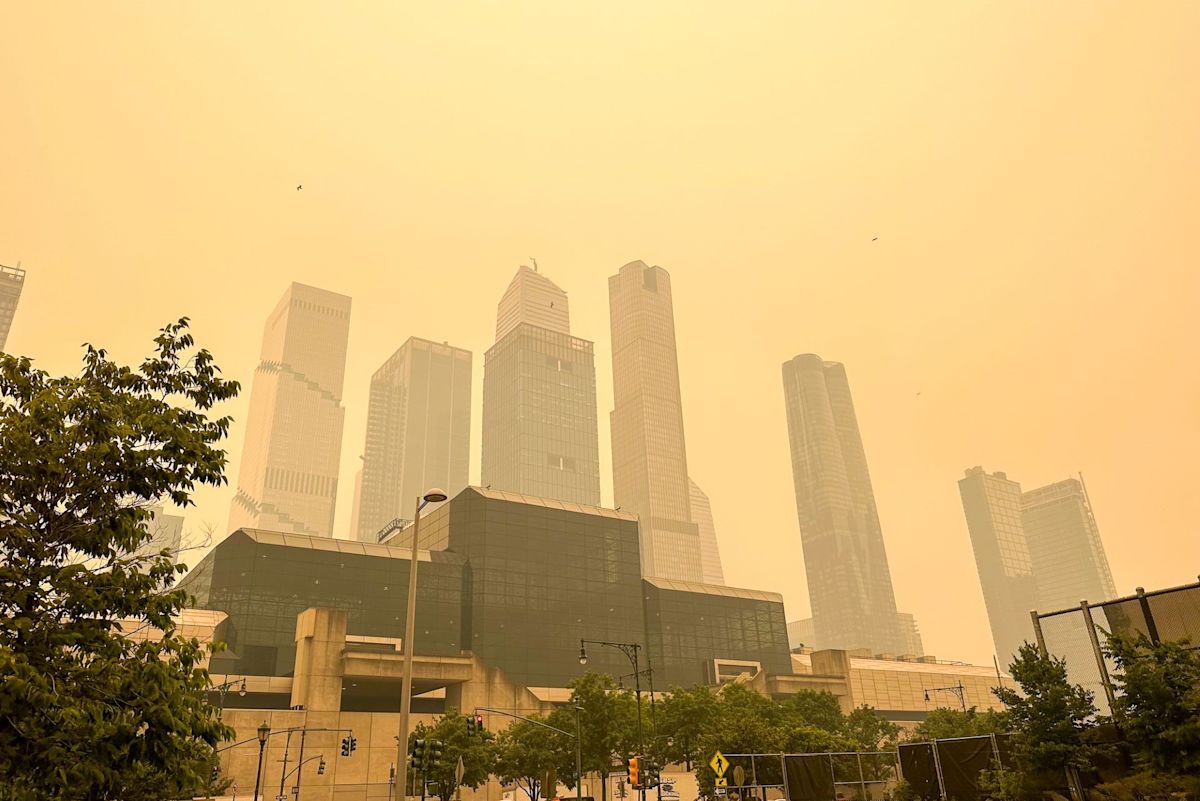
July’s wildfire smoke drove outdoor air pollution in New York City and other densely populated parts of the U.S. to unhealthy levels, prompting renewed concern over indoor air quality as well.
For some commercial landlords, air quality is increasingly treated as both a health protection measure and a tenant amenity.
Here’s what to know
Joe Allen, a professor and director of the Healthy Buildings Program at Harvard University, told real estate news outlet Bisnow that the danger of wildfire smoke does not disappear just because the skies look clearer.
“Wildfires got people’s attention when the skies over New York turned orange a few years ago, and then this summer when again the air pollution was so thick you could taste it,” Allen told the outlet in mid-August. “But I also want people to know that even on the East Coast today, we see the impacts of wildfire smoke.”
Research shows that the air inside offices can influence how well people think and work. Allen’s team published the Global CogFx study, which found stronger cognitive performance as air quality improved in controlled settings and in working offices across multiple countries.
He said cleaner air can support workers and businesses.
More background
With wildfire seasons becoming more severe, building managers and business owners are facing greater pressure to keep properties operating when outdoor air deteriorates. For workers, cleaner indoor air can mean less irritation, fewer headaches, increased focus, and lower risks of long-term health impacts.
Sydney Mainster, vice president of sustainability at the real estate company The Durst Organization, said the company reached out to tenants before July’s smoky stretch.
“We messaged out to our tenants, I think preemptively, to tell them these are the filters we have in place and what that meant in terms of providing, I’ll call it, frankly, a healthier indoor environment than what the outside offered,” Mainster told Bisnow.
What’s being done?
At some major real estate firms, indoor air management is already part of standard building operations.
According to Bisnow, Durst has installed sensors throughout many of its New York buildings to track conditions in real time, including measurements for particulate matter pollution, such as wildfire smoke.
Readings from these sensors help building teams decide when to adjust HVAC settings, replace filters, or change how much outside air is brought into the building.
If wildfire smoke continues to become a more common part of life for so many communities, landlords who invest in indoor air quality may become more attractive to tenants and workers.
As Allen told Bisnow, “We estimate bottom-line gains to the business of up to 10% simply from improving indoor air quality.”
Strengthening public policy and building requirements to ensure everyone has equitable access to cleaner indoor air is also set to become a major priority, whether or not they’re working in an office building.
Get TCD’s free newsletters for easy tips, smart advice, and a chance to earn $5,000 toward home upgrades. To see more stories like this one, change your Google preferences here.