
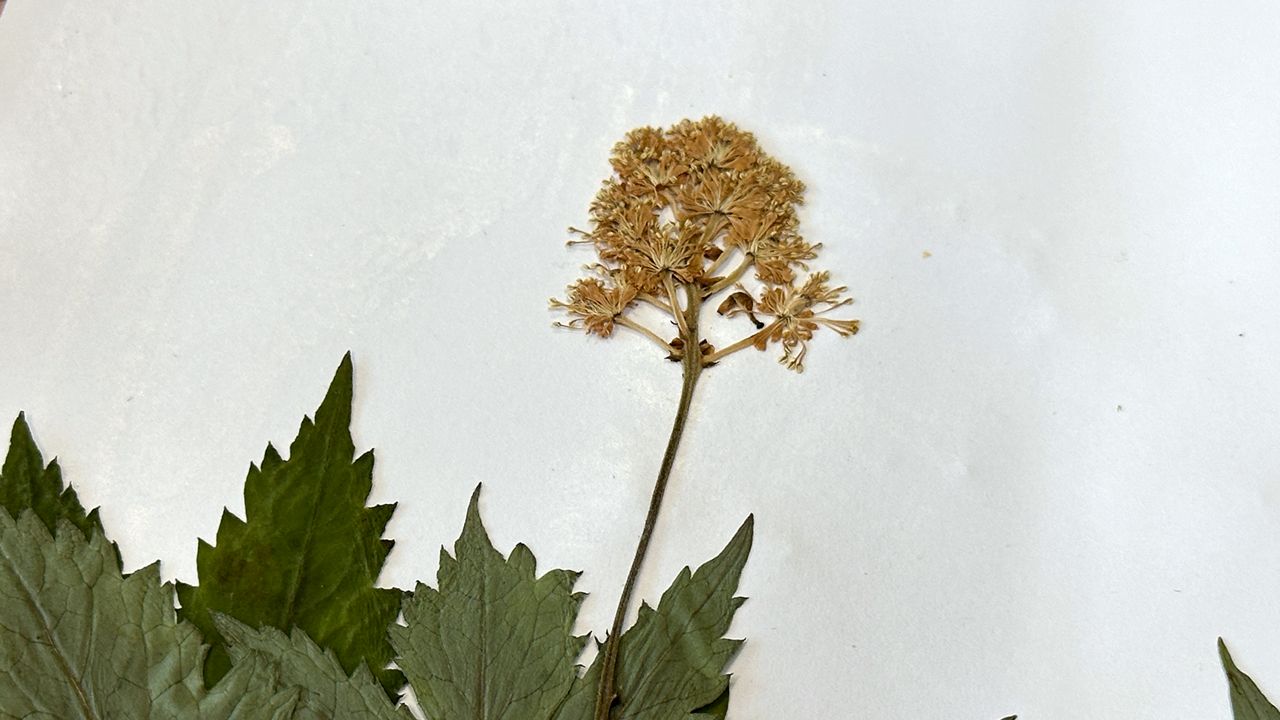
According to Cornell, a new flowering plant hadn’t been found in New York State for a decade until a Ph.D. student discovered it a few years ago.
After discovering it in the woods and spending several years testing and confirming it, researchers decided that pink baneberry is a new species of flower found in upstate New York.
“[It] was very, very fortuitous. Bushwhacking,” said Justin Scholten, an assistant curator at L.H. Bailey Hortorium Herbarium.
“There are strict Latin rules you have to follow with naming new species. In this case, we named it rhodostigma, which in Latin means red stigma, which reflects the easiest recognizable character that differentiates it. So when the flowers are open, there’s a bright reddish-pink stigma at the center of that flower,” said Scholten.
It took two years of testing and research for Justin and his colleagues to confirm the discovery of the pink baneberry.
“It does not happen very often. So it’s part of the reason we’re so excited about this project,” said Scholten.
Pink baneberry is tough to track down. Scholten said there are only about four days when its flower is in bloom, which is what sets it apart from other baneberries.
“It’s very pretty and it actually smells really good, too. It smells quite phenomenal, actually,” said Scholten.
The pink baneberry produces both flowers and berries.
“No matter how tempting they look, please, please don’t try to eat them,” said Scholten.
Scholten said the flower smells of citrus.
“Since publishing the paper, we’ve actually had a lot of people reach out to us over email and they have reportedly found this growing as far north as Ontario and Quebec and as far east as New Hampshire and Vermont,” said Scholten.
If you think you’ve spotted a pink baneberry out in the wild, you can upload a photo to iNaturalist.org or reach out to Scholten and his colleagues.
“There are still things left to find. This was not growing in a remote tropical rainforest somewhere afar,” said Scholten.
In the future, researchers are hoping to continue their work on the pink baneberry to identify more places it could be found and learn more about the flower.