
When the Republican Party has been voted away and “Trump” is just a cuss-word even adults won’t use, there will be a lot of repairing and rebuilding and restoring to do to put our country back in order. Some of the actions needed to repair land and restore our institutions and rebuild a path into the future will be easy, some will be hard and most will take years to complete. The good news is we can and will take on the task of healing and rebuilding our Nation. And there are examples of restoring mistakes and other damage of the land in the past already in place.
The following information is about one restoration project taking place on Staten Island, New York. It is Chapter 13 from my recently published book “Healing the Land” which chronicles 20 such land restoration projects. Notice the time frame of the project. It started in 2008 and the master plan is expected to be finished by 2037.
Freshkills: A Park Above a Landfill
Staten Island, New York, United States
“Heaven is under our feet as well as over our heads.”
—Henry David Thoreau, Walden
In 1948, New York City opened a landfill in an area known as the Fresh Kills estuary – land in and around a tidal march on Staten Island as a temporary answer to its garbage problem. Temporary lasted fifty-three years.
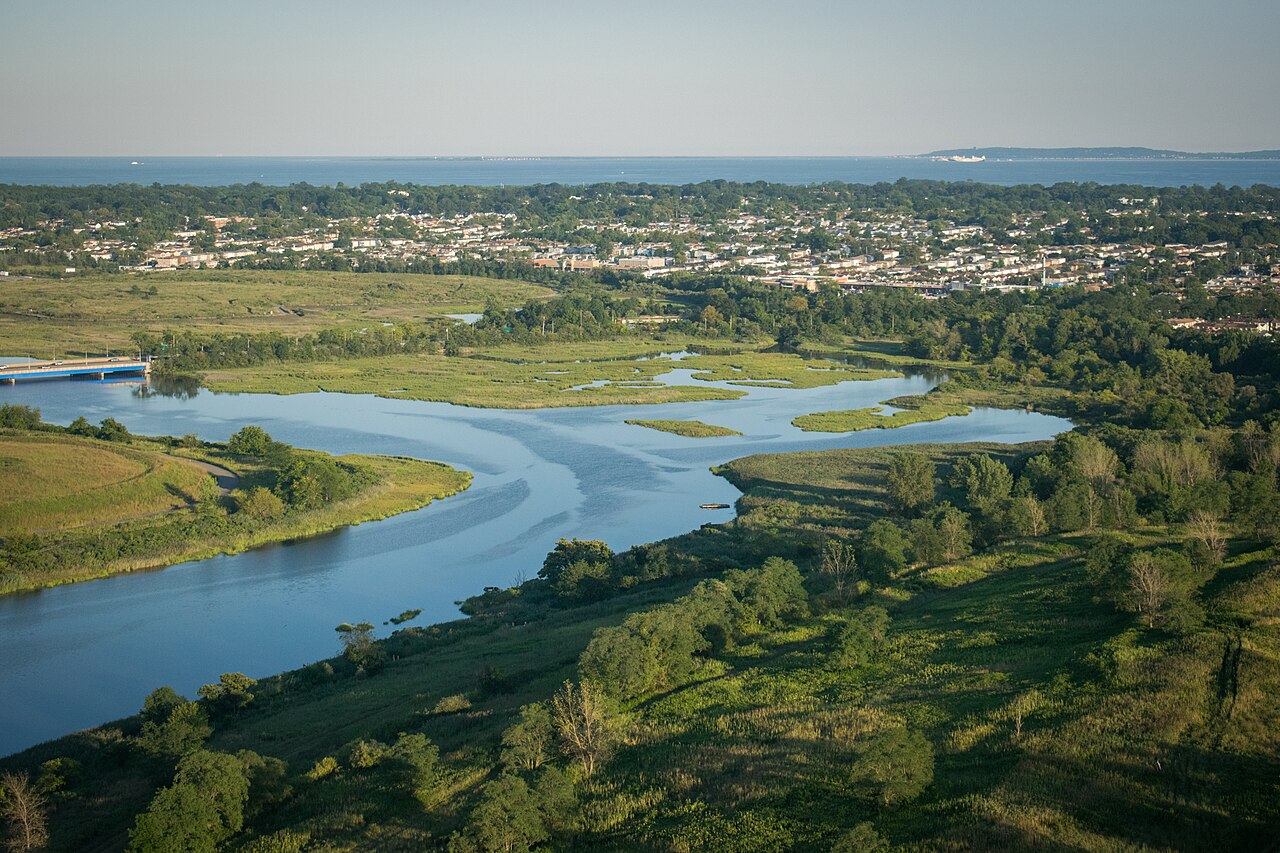
The phrase Fresh Kills comes from the Dutch word kil or kille, meaning creek. Before the landfill, the western shore of Staten Island held a tidal marsh, creeks, mudflats, meadows, and woods. The words, Fresh Kills, thus described water running through or on the land.
Then dumping began: Barges and trucks delivered household waste, construction debris, ash, and similar discarded materials of a bustling metropolis. The landfill expanded across the wet landscape until four immense mounds rose above the marsh. At its peak it was among the largest landfills in the world. Odor, litter, truck traffic, methane, leachate, rats, gulls, and stigma burdened nearby Staten Island communities.
The Fresh Kills dump received its last regular municipal waste in March 2001. It briefly reopened after the September 11, 2001 attacks so workers could sort material from the World Trade Center site. A solemn addendum for the dump that requires its own moment of respect separate from the ordinary landfill story.
Closing a landfill does not end its chemistry. Buried organic waste decomposes and produces landfill gas, including methane and carbon dioxide. Water moving through waste becomes leachate, which can carry dissolved contaminants. The mounds settle unevenly. Slopes erode. A landfill therefore cannot safely become a park merely by spreading grass seed on top of garbage.
in 2008, after much deliberation, engineers began installing a layered cap over the waste mounds. Although details vary by location, the systems installed included grading, gas venting and collection, low-permeability barrier layers, drainage, protective soil, and vegetation. Now leachate is collected and treated. Gas is captured and managed. Groundwater, surface water, air, settlement, and the cap itself are monitored under regulatory oversight.
These systems are the hidden foundation of the beginning and future park. They are not temporary stage scenery to be forgotten when trails open. They may operate for decades, until monitoring demonstrates that particular controls are no longer needed.
Above and between the capped mounds, New York City is creating, in stages, Freshkills Park: roughly 2,200 acres, almost three times the size of Central Park. The master plan, proposed to be completed by 2035-2037, includes grasslands, wetlands, waterways, woodland, trails, recreation, art, research, and habitat. Development is deliberately phased over many years because closure work, settlement, funding, and ecological establishment take time.
Nature began colonizing after the dumps closure before the construction of the park began in 2008. More than two hundred species of birds, mammals, reptiles, and amphibians have been documented since the 2001 landfill closure. Grassland birds use the broad mounds. Raptors hunt over open ground. Native and invasive plants compete. Existing salt marsh along the creeks remains one of the site’s greatest ecological assets.
The first public sections of this restoration project demonstrate what careful access can do. Schmul Park and Owl Hollow Fields provide neighborhood recreation. New Springville Greenway links communities. North Park’s first phase transforms a former landfill edge into restored ecology, trails, overlooks, and connection to Main Creek.
The site is an outdoor laboratory for succession on engineered soil. What plant communities can thrive on a thin growing layer above a protective cap? How should managers control woody roots that might threaten barrier layers? How do birds respond to mowing schedules? Can methane infrastructure coexist with public trails? At Freshkills, design must collaborate with both ecology and waste engineering.
The park also forces every visitor to confront consumption. A city usually exports its garbage from daily sight. Freshkills made that “away” into topography. The hills are not natural hills; they are accumulated decisions about packaging, food, convenience, demolition, inequality, and disposal. Covering them safely is necessary. Forgetting what they contain would be dangerous.
This is why restoration at Freshkills should preserve legibility. Interpretation can help people understand gas wells, leachate systems, the original marsh, landfill operations, and the return of wildlife. Beauty is not diminished by this knowledge. It becomes accountable.
There are limits to the recovery. Deep-rooted forest cannot be planted everywhere on the caps. Some areas must remain closed. Maintenance costs are permanent on the scale of a human career. The landfill cannot again become the exact tidal complex it displaced.
Still, a capped landfill is not condemned to ecological and social uselessness. Safe soils can support meadow. Wetlands between the mounds can be protected and enhanced. Miles of paths can return an enormous fenced landscape to public experience. Birds can turn a disposal site into migratory habitat without asking whether the hills have an honorable origin.
Heaven underfoot is not always untouched earth. Sometimes it is three feet of carefully built soil above a membrane above fifty years of waste. The holiness, if you wish to use that word, lies in refusing to abandon the consequences, and in making a place that teaches future citizens to create fewer of them.
©2026 Carl Scott Harker
_____________________________________________
My latest book on Amazon can be found here: HEALING THE LAND: Twenty True Stories of Nature’s Return.