
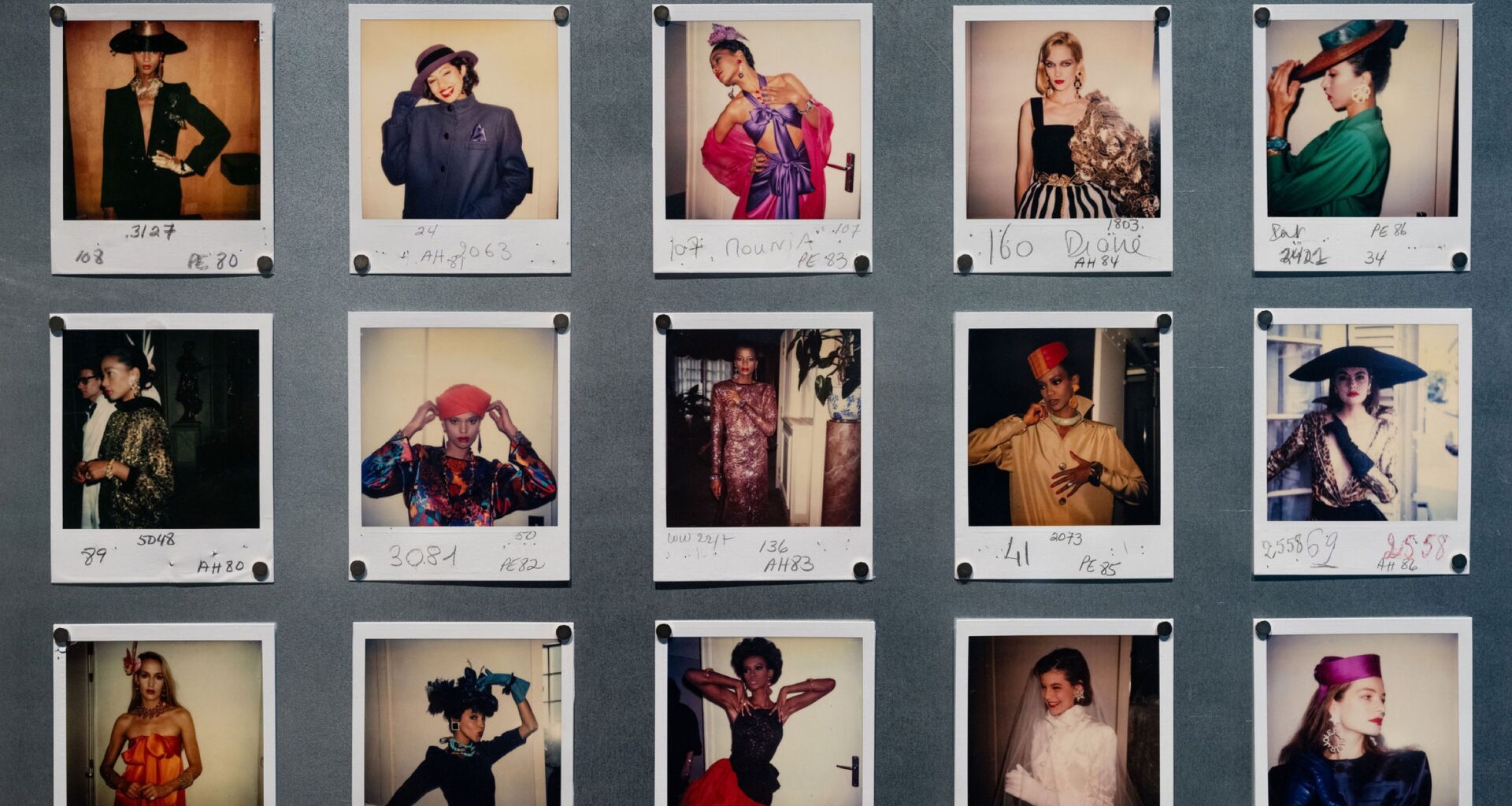
Yves Saint Laurent and Photography
International Center of Photography
June 11–September 28, 2026
New York
Rich women need love too. As hard as it may be for resentful personalities to tolerate, such an adage comes with urgency. How, in this season of animosity and trite eat-the-rich diatribes, are wealthy women expected to survive?
Soothing as it may be to pretend there is no such thing as hierarchy, every creature in the animal kingdom begs to differ. And, in the vicious jungle that is fashion, hierarchy—like beauty and her twin sister perfection, however much encroached upon by passionate non-believers—is not only profitable, it is nature’s first law.
Of the highest strata, the absolute peak remains the griffe—French for “claw”—a term so rare it is only afforded to a couturier who has plunged into the depths of fashion fantasy and wrought designs of true eminence. It is the summit, considered “materialized perfection”—an article that can never be reproduced—intended to create a mode of divine completion designed to humble. Of the many designers still reigning from beyond the grave, the most lasting who created in this spirit is Yves Saint Laurent.
Such is the thesis of Yves Saint Laurent and Photography, an exhibition at the International Center of Photography. Curated by Simon Baker, Nastasia Alberti, and Clémentine Cuinet, nearly every facet of Saint Laurent’s contributions and memorabilia is thrust into a survey of images that once stopped time.
We begin with an unbearably intense image from Saint Laurent’s personal collection: Mainbocher Corset (1939) by Horst P. Horst. Taken just before World War II, it was the last image Horst would photograph before fleeing Paris and the last he would contribute to Saint Laurent’s personal collection. And thank God, because the high-magic lighting technique Horst used still manages to plunge a viewer into a stream of swan dreams that protect and broker no illusion of reproduction. The beguiling manner of light and its subterranean shadows, the superb spillage of corset-ribbon drippings, and especially the model’s pose: her neck craned, lips kissing her shoulder—oh, what a model of anticipation and of a kind of superior vulnerability. Are we watching a woman come undone? Or are we witnessing her step further into becoming? And, more importantly, what did Saint Laurent see in such an image?
Dovima with Elephants (1955), lensed by Richard Avedon, begins to answer this question. There, in a dress designed by Saint Laurent for Christian Dior, Dovima’s hands form an arabesque against the elephants’ trunks—a composition that continues to inform cheaper imitations. Whether its genius can be attributed to a larger budget or bolder photographer is up for debate. But one cannot deny the perfect taste of the most exacting eyes.
These eyes belong to Yves Saint Laurent, Paris (1957), captured in black and white by Irving Penn. Saint Laurent’s gaze discriminates coolly, equally appraising and assuming, yet wide and empathetic enough to anticipate your needs. There is also, made obvious in the gelatin silver print that has aged too well, a hint of his habit for sublimation. It is before his cheekbones have formally cruelled and his beauty has attained its full heat, and yet in his incandescence there is the suggestion that he would have no fear of the dark. You can tell by his carefully composed expression: he was the most prime of fire starters.
And what blaze the images that follow offer. Turning to ash the tepid contributions of modern technology, one wonders how we’ve regressed in terms of imagemaking, for how many inventions were made by old-world flashbulbs and perfect lighting? Case in point: Yves Saint Laurent backstage at the first runway show under his name, 30 bis rue Spontini, Paris (1962) by Pierre Boulat. His back is straight as a die. With his reedy frame, his face kissing his shadow, you can tell—despite his lily-of-the-valley posture, however deep his nerves—he is far too civilized to break a sweat. Creeping behind him is a woman whose glamour precedes her, her sculptural Dior hat overlaying his back. What evocation. What drama. If today’s film posters were as revelatory, I’m certain more seats would be filled in theaters. Amid so much to see, one wishes this image had been given its own wall—space to breathe. Even with his back turned, one has the sense that Saint Laurent craved adulation. There he is—the Boy from Oran—posed, poised, and with perfect posture.