
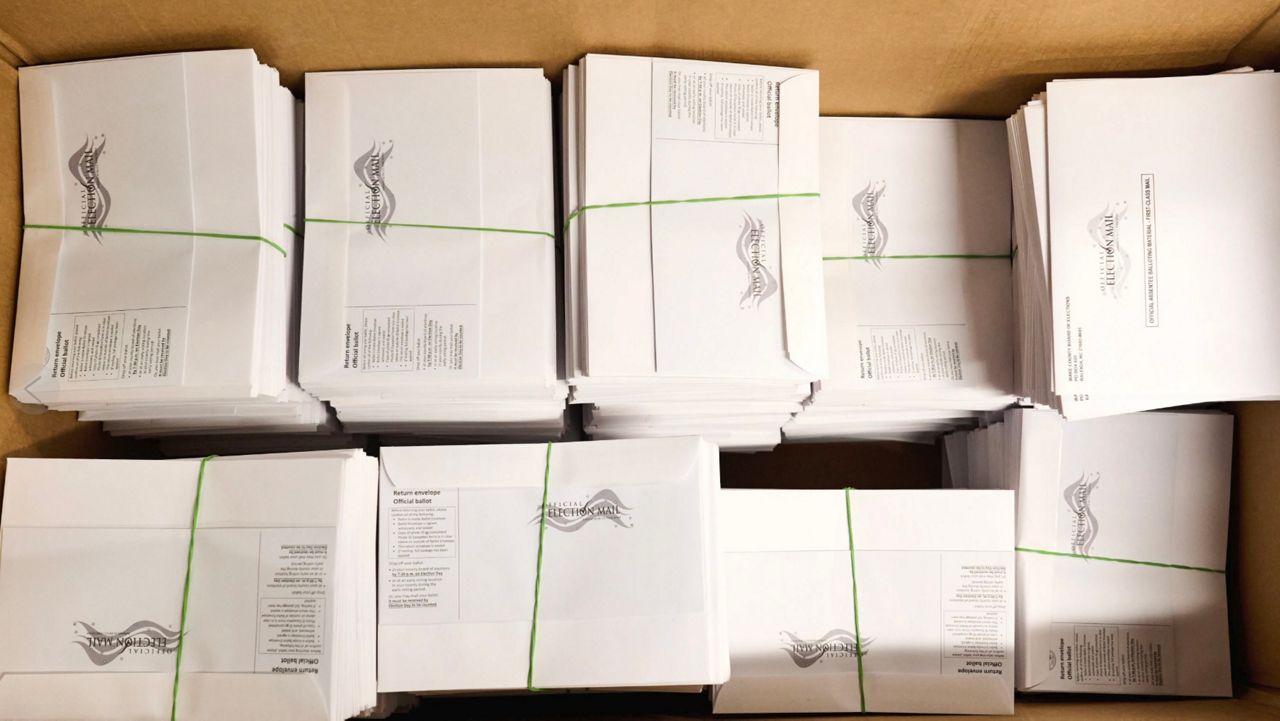
The state of New York responded Wednesday to the U.S. Supreme Court following the Trump administration filing an emergency application this weekend with the high court to pause an order that blocks the government from implementing parts of a U.S. Postal Service rule that would change mail voting.
In its response to SCOTUS, the New York State Attorney General’s Office wrote in part:
“Among other things, officials would have to obtain USPS approval of new ballot-envelope designs on an unprecedented timetable; purchase new envelopes to replace those already ordered (if they can find vendors who can fulfill last-minute orders, which is doubtful); develop and upgrade technological systems to generate IMbs; upload voter-specific information to the portal; ensure that ballots have the proper IMb for each recipient; and train state and local officials on how to undertake these tasks.”
The USPS rule requires state election offices to supply names and addresses of registered voters to USPS. It also requires for mail-in ballots to have specific bar codes on envelopes. Without those codes, USPS will not deliver the ballots to voters.
Last Friday, a federal judge in Boston froze the rule.
This Wednesday was the deadline for groups challenging the new rule to respond to the Trump administration’s emergency application with the U.S. Supreme Court.
The Legal Defense Fund has responded to the high court.
“Our voting organizations and the plaintiffs that we represent have repeatedly talked about the confusion that this rule is putting in place,” said John Cusick, assistant counsel for the Legal Defense Fund.
In a statement provided to Spectrum News 1, USPS Postmaster General David Steiner said in part:
“We stand behind both the rigor of our process and the resulting system. At the same time, we recognize that responsible system management does not end at deployment. We will continue to monitor performance, address issues as they arise, and make adjustments when warranted.”
As legal challenges play out, voting rights groups continue to urge voters to have a plan.
“There has been a lot of legal maneuvering, but what I think what people should understand is that the current situation is that there’s no impediment to voting by mail,” said Susan Lerner, executive director of Common Cause New York.