
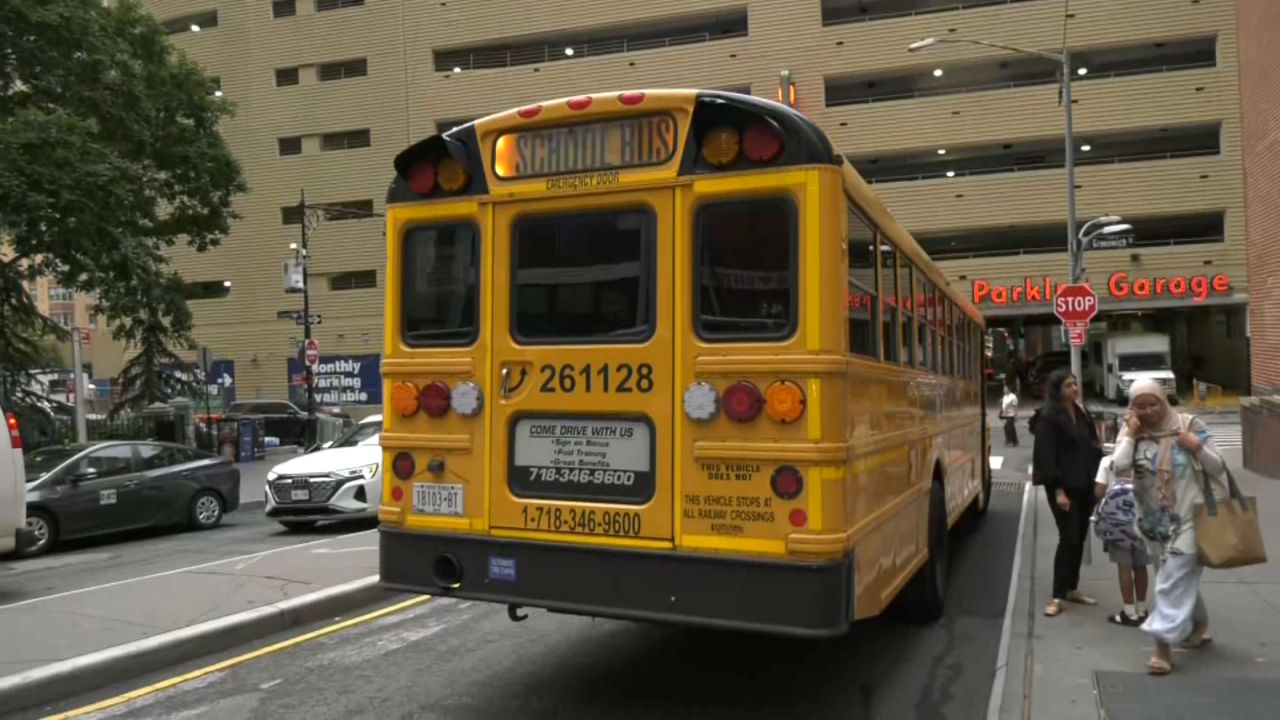
Backpacks were packed and school buses were rolling again Thursday as New York City public school students returned to classrooms for the first day of the new academic year.
The first day also marked the launch of the city’s new 2-K program, with around 2,000 2-year-olds starting free early childhood programs across the city.
The spots were offered to families across the five boroughs in August, after the city said it received around 5,700 applications, or nearly three applicants for every spot.
Universal childcare is a major initiative of Mayor Zohran Mamdani’s administration. The 2-K program is set to expand to 12,000 seats next year, and the mayor previously said every family who wants a seat will get one by the time his first term ends.
“While this morning has brought a new kind of stress to thousands of young families across the city, it is the stress of excitement and new beginnings, not the stress of wondering whether they can afford to be here at all,” Mamdani said at a press conference.
Gov. Kathy Hochul, who has partnered with the city on the program, said the first day represents an important step toward expanding access to childcare.
“This is an extraordinary day,” she said. “You cannot underestimate what this day means to thousands of New York City parents who cannot believe this gift they’ve been given.”
Students are also returning under new restrictions on artificial intelligence and screen use.
For the 2026-27 school year, the city has imposed a one-year moratorium on generative AI for students in 2-K through eighth grade.
Students will also see screen time restrictions.
Students in second grade and under will see restricted one-on-one screen time. The city is also recommending screen time caps of 30 minutes per day for third through fifth grade students and 45 minutes for sixth through eighth grade students.
This is the second school year in which students will not be permitted to use cellphones from the first to the last bell of the school day. Schools determine how devices are collected and stored.
Schools Chancellor Kamar Samuels said the city is also continuing to work to get students to and from school amid ongoing school bus driver shortages.
“We’ve been working to make sure that they have OMNY cards, rideshare, and that they can find their way to school,” Samuels said. “However, we’re also continuing to work with those bus companies to make sure that we are approving bus drivers to our system so that we can actually get all those kids on the road.”
Samuels also said the city is closely monitoring declining reading scores and shrinking enrollment as officials look ahead to the rest of the school year.
Meanwhile, Mamdani also announced changes intended to improve the way the school system purchases supplies and technology for educators.
He said the city is training staff to ensure purchases are made correctly the first time, modernizing older software and “canceling the contracts that no longer serve our students, teachers and school staff.”
Mamdani said those changes are expected to save more than $100 million over the next two years, money he said can be reinvested in the school system.