
The 50 most dangerous arterial roads in New York City are collectively within a quarter-mile of over 2,300 schools and child care centers, according to a new report from a pair of street safety advocacy groups.
The report, authored by the organizations Transportation Alternatives and Families for Safe Streets, lists the city’s 50 thoroughfares where they found the highest number of traffic deaths and serious injuries occurred between the beginning of 2022 and the end of last year. The group branded the roads “boulevards of death,” which they define as arterial streets with high volumes of pedestrians, bike riders, or drivers who have either been killed or seriously injured on them.
Raul Ampuero, a Families for Safe Streets member whose 9-year-old son was hit and killed by a driver on Queens’ Northern Boulevard in 2018, one of the 50 boulevards of death, said that streets need to be redesigned to prevent more young children like his son from being mowed down.
“These streets are deadly; they’re killing our children, and yet they remain unchanged for years or decades,” Ampuero said in a statement. “The best time to fix Northern Boulevard was before my son was killed, but the next best time is now, before we lose another neighbor to a traffic crash.”
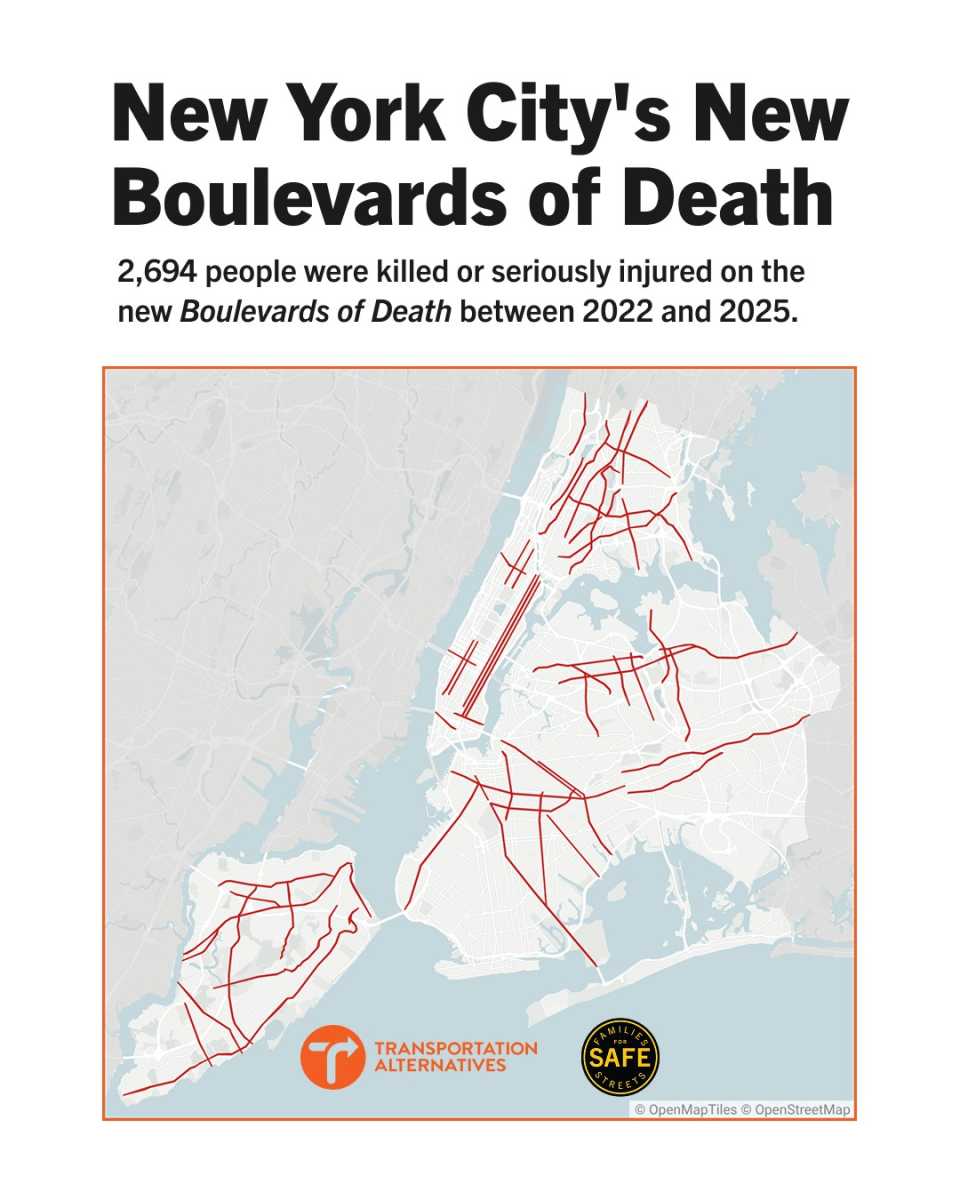 A map of the ‘boulevards of death’ the advocacy groups Transportation Alternatives and Families for Safe Streets identified in a new report.Image Courtesy of Transportation Alternatives and Families for Safe Streets
The groups released their report as the city’s over 900,000 public school students returned to class from summer break on Thursday.
“As New York City’s students return to school, my thoughts are with my son, who deserved to go to middle school and high school like the rest of his classmates,” Ampuero said.
Hundreds of deaths on NYC’s most dangerous streets near schools
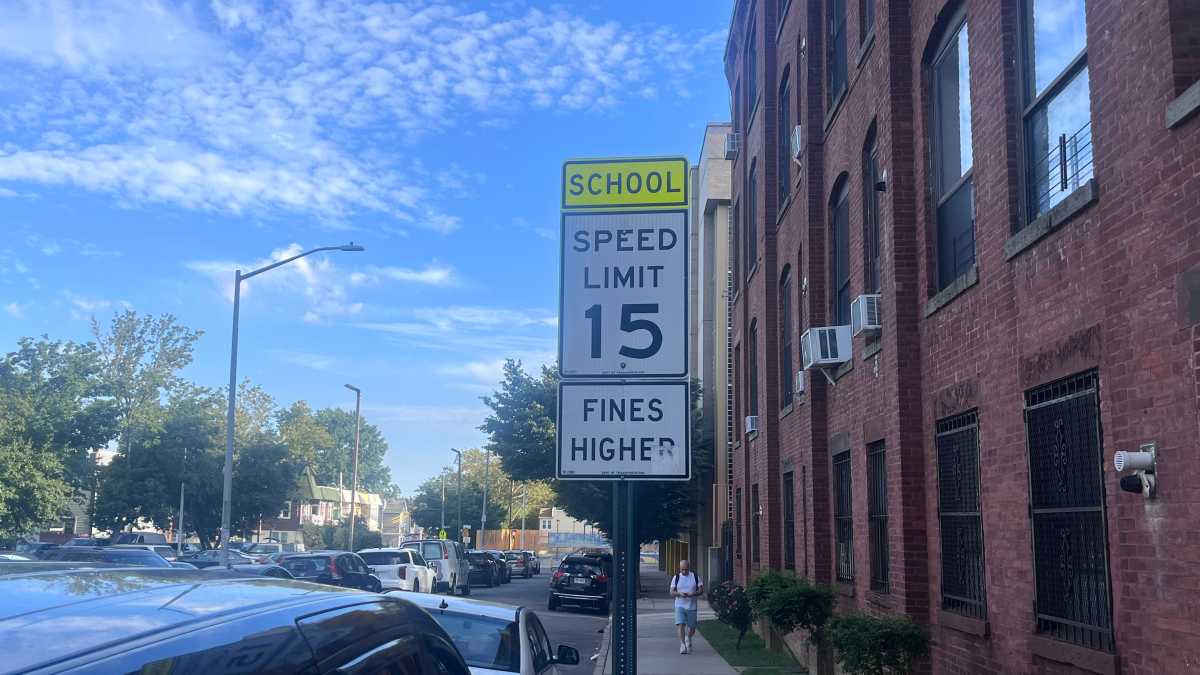 A school speed limit sign on a Queens street. (Photo by David Pozarycki)
The streets identified in the report saw 212 deaths and 2,482 serious injuries from traffic crashes over the four-year period it covers, according to the analysis. More than one in five deaths and serious injuries occurred on the deadly arterials, even though they make up just 4% of the city’s road miles.
The boulevards of death span all five boroughs. They include: the Bronx’s Jerome Avenue, Brooklyn’s Eastern Parkway, Manhattan’s West 125th Street, Queens’ Broadway, and Staten Island’s Bay Street. Those roads saw 19, 22, 25, 14, and 9 deaths or serious injuries per mile over the four years analyzed by the groups respectively.
Transportation Alternatives Executive Director Ben Furnas said making the wide roads safer will require the city Department of Transportation to narrow them by shortening crossing distances, cutting down the width of traffic lanes, installing protected bike lanes, and allowing fewer cars and trucks to traverse them.
“It’s time to bring attention and resources to the next generation of ‘Boulevards of Death’ to ensure our deadliest streets get the upgrades they need before another New Yorker is lost,” Furnas said. “Just last week, a pedestrian was hit and killed by a driver on one of these new Boulevards of Death: Boston Road in the Bronx. This New Yorker died in the hospital — killed by a driver just for trying to cross the street.”
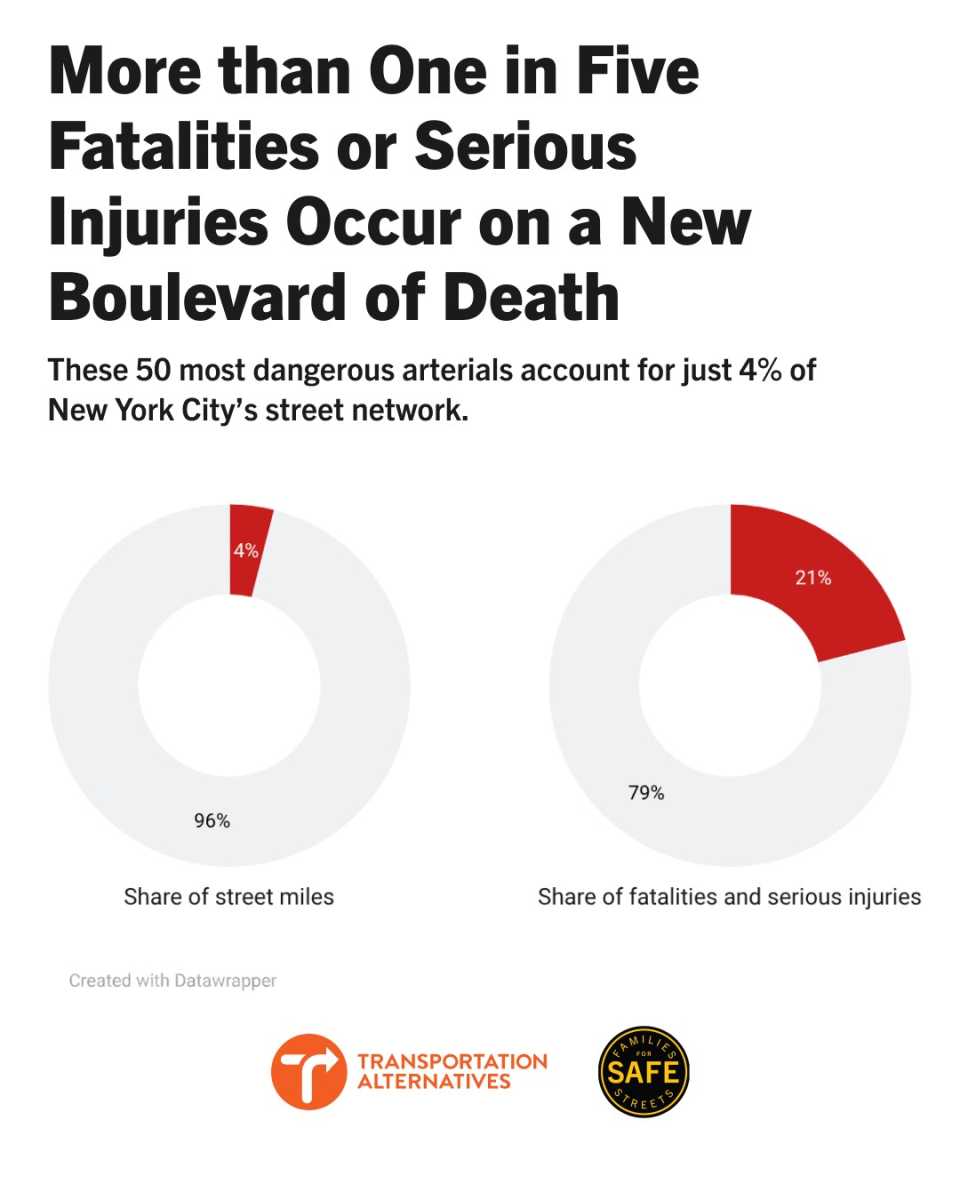 A graphic showing how few of the city’s road miles newly identified ‘boulevards of death’ account for compared to the high concentration of deaths and serious injuries on them.Photo courtesy of Transportation Alternatives and Families for Safe Streets
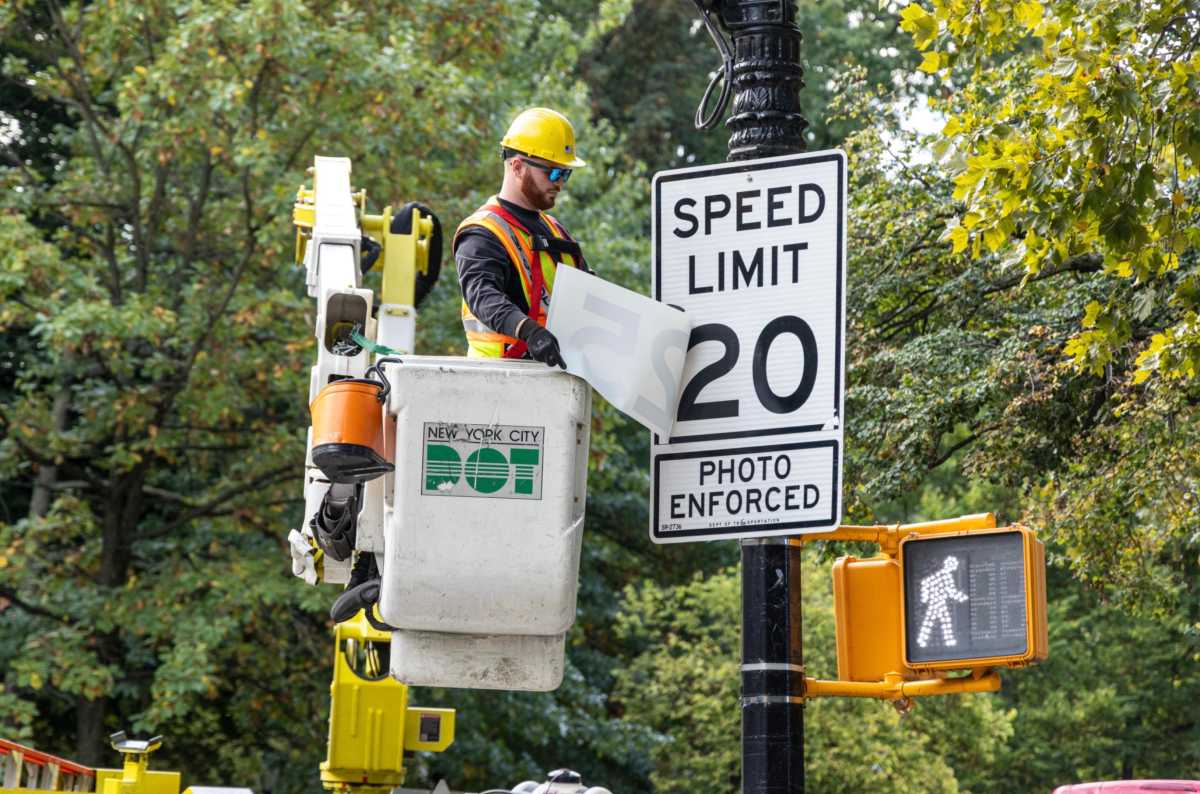
The groups are recommending that the DOT fast-track street safety improvements as well as aggressively begin implementing Sammy’s Law, which allows it to lower speed limits to 20 miles per hour on most streets and 15 mph in school zones.
The city has already made overtures toward implementing Sammy’s Law near public schools. Earlier this year, Mayor Zohran Mamdani pledged to use the law to lower speed limits to 15 mph on 800 streets adjacent to schools earlier this year.